Unmissable Travel Offers
Discover the world with South Coast Cruise & Travel’s Special Tours Around the World. From vibrant cities and cultural landmarks to breathtaking natural wonders, curated journeys that take you beyond the ordinary. Whether you’re drawn to luxury ocean voyages, boutique small-ship adventures or immersive river cruises, our expert team ensures every detail is tailored to create unforgettable travel experiences.
India In-Style - Nagaur Cattle Festival
Tour Enquiry
India In-Style - Nagaur Cattle Festival
About the tour
Itinerary
1
Depart Australia – Arrive Delhi
‘Namaste’ and welcome to India, a captivating country of bustling cities, tranquil landscapes, incredible architecture and tradition. India’s rich history is etched into every wall, with stories spanning back over 5,000 years. It’s one of the world’s oldest civilisations, being home to the ancient Indus Valley and Vedic cultures to powerful empires like the Maurya, Gupta, and Mughals. Colonised by the British in the 18th century, India finally gained independence in 1947 and has since grown into the world’s largest democracy and a vibrant, diverse nation. Our journey begins in Delhi, the capital of India, where the past and present seamlessly coexist. This city is a hub of colourful chaos, with rickshaws, cars and pedestrians filling the busy streets adorned with lively markets, street vendors and more. Having hailed as the seat of power of several empires, Delhi has been destroyed and rebuilt many times. Steeped in history, you'll find ancient monuments and traditional architecture scattered throughout the city, rendering Delhi a diverse and endlessly fascinating metropolis to explore.
2
Delhi
Modern Delhi is a cultural melange of two distinct lineages — Old Delhi and New Delhi. And today, we’ll dive deep into the beauty of both. We begin with a photo stop at the 17th century Red Fort, built by Mughal Emperor Shah Jahan in 1638. Towering 22 metres above Old Delhi, this UNESCO World Heritage-listed citadel splices the skyline in brilliant sandstone, standing as a powerful reminder of the opulence of the Mughal Empire. Leaning into our adventurous side, brace for a riot of colour, spice and soul as we zip through the heart of Old Delhi and the lanes of Chandni Chowk aboard a cultural icon — the humble rickshaw! Allowing us access to a labyrinth of narrow lanes, we’ll glide past colourful shops, crumbling havelis and historic landmarks. Next, we’ll discover the Humayun Tomb, the first significant example of Mughal architecture in India. Built in 1565 AD, this magnificent garden tomb is framed by four garden squares (Charbagh) with elegant pathways and water channels that lead to a central mausoleum. We’ll spend the afternoon admiring the grand façades of New Delhi’s government buildings, including Parliament House and Rashtrapati Bhawan (the President’s residence), before a photo opportunity at the towering India Gate. Deluxe Experience Savour a sumptuous welcome dinner at The Spice Route, where vivid murals and beautiful antiques echo the fragrant legacy of the ancient spice trade.
3
Delhi – Varanasi
Today, we fly to Varanasi, the spiritual heart of India. Known as ‘Kashi’ (The City of Light), Varanasi lies between the Varuna and Assi rivers in northern India. Considered one of the oldest living cities in the world, Varanasi is a significant pilgrimage site for Hindus, believed to have been founded by Lord Shiva himself. Special Experience Drift along the Ganges at dusk, accompanied by the strains of live sitar music as the Ganga Aarti ceremony bathes the river in flickering light. As the afternoon sun begins to creep over the Ganges, embark on a tranquil boat ride out along the river’s sacred waters. Accompanied by the soulful strains of live sitar music, glide past ancient ghats and shrines as our guide shares insights into the centuries-old rituals practiced along the river. A poignant moment awaits at the Manikarnika Ghat, the city’s most sacred cremation ground, where funeral pyres burn continuously — an unforgettable sight from the water. As twilight descends, we’ll approach Dasashwamedh Ghat to witness the spellbinding Ganga Aarti ceremony. Floating gently on the shimmering waters, we’ll be immersed in a spiritual experience that defies description — drenching our senses in a chorus of chanting and the flickering of flaming lamps as the riverfront is transformed into a spectacle of light, sound and sacred energy.
4
Varanasi
Waking before first light, we’ll once again take to the water to witness the sun rising over Varanasi’s ancient ghats. In this quintessential experience, glide past the sacred sites of Assi Ghat, Kedar Ghat and Dasashwamedh Ghat, for a glimpse into the spiritual rhythm of daily life. As we make our way back to the hotel, we’ll visit the prestigious Banaras Hindu University, founded in 1917 by Pandit Madan Mohan Malaviya. A thriving hub of Indian art, culture and learning, the walled campus is just as beautiful as the knowledge it holds within, standing bright in a buttery-lemon hue. Enjoy entry to the campus’ Kashi Vishwanath Temple, a peachy-pink marvel inscribed with sacred Hindu scriptures throughout its marble interiors. Return for breakfast at the hotel and some free time before we embark for Sarnath in the afternoon. Located just 10 kilometres out from Varanasi, this sacred site is believed to mark the grounds where Buddha delivered his first sermon. Today, the site is a sprawling archaeological park, offering a peaceful space for reflection. We’ll wrap up the day’s sightseeing at the Sarnath Archaeological Museum, before returning to the hotel for an evening at leisure.
5
Varanasi – Khajuraho
Following breakfast this morning, we’ll transfer to the airport to depart Varanasi for our flight to Khajuraho. Built between the 10th and 12th centuries when the Chandela dynasty rose to power, this spectacular UNESCO World Heritage-listed site is famous for it’s extraordinary temple architecture and elaborate stone carvings. Once home to more than 80 structures, only 25 temples remain within the Khajuraho Group of Monuments, which spread across 20 square kilometres of sandstone. Revered not only for their religious significance, these temples are also renowned for their bold and expressive sculptures that depict various aspects of life, including sensuality, spirituality and daily rituals — all of which we’ll explore in more detail tomorrow! Upon arrival in Khajuraho, we’ll be transferred to the hotel, where the rest of the afternoon is yours to enjoy as you please. You may wish to relax and unwind in the hotel amenities or perhaps indulge in some authentic Indian flavours for dinner.
6
Khajuraho – Gwalior
Fuelled by a delightful breakfast, we’ll depart for the eastern and western group of temples in Khajuraho. The eastern group of temples are primarily devoted to Jainism and more specifically, the faith’s ‘Tirthankaras’ (saviours and supreme teachers), Parsvanatha, Adinatha, and Shantinatha. Each temple in this cluster is elaborately decorated with carvings of deities, celestial being and intricate motifs. The western group is more renowned, made up of grand shrines such as Kandariya Mahadev, where sculptures of gods, goddesses, dancers, and musicians appear almost lifelike in their grace and movement. Following the tour, we’ll return to the hotel before transferring to the railway station to board the Vande Bharat Express to Gwalior. Relax back into your seat and enjoy another side to India as you zip through rural towns and countryside in air-conditioned comfort. We’ll reach the historic city of Gwalior in the evening. According to legend, Gwalior was founded by Suraj Sen, a chieftain cured of a fatal disease by the sage Gwalipa, after whom the city is named. Over centuries, Gwalior flourished under various dynasties, leaving behind a rich tapestry of palaces, temples and monuments. Checking into the hotel, soak up a tranquil night’s rest ahead of an exciting day of sightseeing tomorrow.
7
Gwalior
A morning exploring the historic roots of the city awaits, beginning with a visit to the Gwalior Fort. This tile-clad stronghold is an extraordinary sight to behold. Teetering above a steep, rocky hill, the 8th century fortress has borne witness to centuries of dynastic rule and is an incredible testament to the architectural mastery of the region. Once inside, we’ll explore the Man Mandir Palace or ‘Palace of Paintings’, echoing the legacy of the great warrior and one of the most influential rulers of Gwalior, Raja Man Singh Tomar. Built between 1486 and 1516, you’ll get a taste of the artistic finesse of the era as your gaze glides across vibrant tile work and intricate carvings of peacocks and other birds. Located just nearby, we’ll also explore the Sas-Bahu Temples, twin shrines dedicated to Lord Vishnu in his Padmanabha form. With origins tracing back to the 10th century, enjoy some time here to admire the detailed carvings that offer a glimpse into medieval temple architecture. The remainder of the afternoon is yours to relax in quiet comfort or to explore more of the city. Optional Excursion Optional Excursion: Visit the Jai Vilas Palace Museum – Spend the afternoon exploring the architectural marvel of the Jai Vilas Palace Museum, a wing of the private residence to the Maratha royal family. Wander lavish halls, marvel at colossal chandeliers and admire the many galleries home to objects dating from 18th to the 20th centuries for a glimpse into Maratha history and the opulent lifestyle of the Scindia Dynasty of Gwalior. 2hrs – from US $6pp (minimum 2 people)
8
Gwalior – Chambal River Safari – Agra
Our journey takes us to the Chambal River this morning, home to an array of freshwater species, including the Ganges River Dolphin. Jumping aboard a small boat, we’ll embark on a relaxing river safari through the National Chambal Sanctuary, a haven for local and critically endangered wildlife. This one-hour journey offers a rare glimpse into one of India’s most pristine river ecosystems. Glide through gorges in search of Gharial Crocodiles, Marsh Crocodiles, softshell turtles and nearly 300 species of resident and migratory birds — all thriving in protected habitat. Returning from our safari, we’ll set off for Dholpur Palace, where we’ll pause for a simple lunch before continuing to Agra. Steeped in Mughal grandeur and home to some of India’s most iconic monuments, the city of Agra was once the capital of the Mughal Empire and remains renowned for its architectural legacy. Enjoy a moment to refresh at the hotel, ready for an evening of cultural immersion as we attend the Mohabbat-e-Taj live theatre performance at Kalakriti Cultural Centre. This captivating show brings to life the legendary love story of Emperor Shah Jahan and Mumtaz Mahal, the inspiration behind the Taj Mahal, through dramatic storytelling, dance and dazzling visuals.
9
Agra
Resting on the banks of the Yamuna River, Agra is famous for its exquisite marble inlay work and craftsmanship. And this morning, we’ll immerse in one of the most sophisticated examples of this legendary artistry with a sunrise visit to the Taj Mahal. Commissioned in 1632 by Emperor Shah Jahan in memory of his beloved wife Mumtaz Mahal, the Taj Mahal is a masterpiece of white marble architecture. Perfectly symmetrical from all sides, this breathtaking complex took over 22 years and 20,000 artisans to complete. Living up to its nickname as ‘The Jewel of Muslim Art in India,’ the Taj reflects different colours as the sun climbs over its silhouette, making each visit a unique experience. Enjoy a moment of quiet awe as the first light of day bathes the monument in a warm, golden hue. Return to the hotel for breakfast before we make our way to the Agra Fort, home to a rich legacy of art, politics and royal life. Once the residence of the Mughal emperors until 1638, the fort houses a series of exquisite structures including the Moti Masjid (Pearl Mosque), Musamman Burj (where Shah Jahan spent his final days), Jahangir’s Palace, Khas Mahal, and Sheesh Mahal. In the afternoon, visit a marble inlay workshop to witness the intricate craftsmanship behind the art of Parchin Kari — the same technique used in the Taj Mahal. Watch skilled artisans transform marble into delicate floral patterns using semi-precious stones, continuing a tradition passed down through generations. Back at the hotel, we'll enjoy a High Tea on the Sky Deck. It's a great opportunity to relax and take in the sunset views over Agra after a wonderful day of sightseeing.
10
Agra – Kalakho – Ranthambore
Once we’ve enjoyed a hearty breakfast, we’ll farewell the beautiful city of Agra for Ranthambore, making a delightful cultural detour through Bhandarej village near Kalakho. Jumping into the back of a Jugaad (an open-top truck affectionately known as the ‘Village Mercedes’), ride through open countryside and rustic trails for a fascinating glimpse into the heart of rural India — traditional homes, friendly smiles and perhaps even a warm welcome into a local home for a cosy cup of chai! Leaving the rustic life in our rearview, we then make our way to the nearby Umaid Lake Palace. This heritage retreat is spread over a twenty-acre organic farm, providing a lush backdrop for a delightful lunch. With our appetite satisfied, we’ll continue our journey to Ranthambore, one of India’s most renowned wildlife sanctuaries. Well-known for its population of prowling Bengal Tigers, Ranthambore National Park is set against the Aravalli mountains and stretches across 392 square kilometres. A tangle of lakes and forests, watched over by the ancient Ranthambore Fort, the park provides a lush habitat for leopards, hyenas, sloth bears, sambar deer, langurs and a spectacular array of birdlife. Deluxe Experience Experience two incredible nights in a luxury tent nestled within the wilderness, right in the heart of Ranthambore National Park.
11
Ranthambore
Waking in the wild luxury of our jungle retreat, prepare for a thrilling morning as we explore the open grasslands of Ranthambore. Special Experience Set off on an early morning safari adventure through the wildlife haven of Ranthambore National Park in open top jeeps. Nestled in the heart of India’s Rajasthan, Ranthambore is a biodiversity hotspot. Dotted by hills and grassy meadows, the dry forest landscape is known to be one of the best places to see wild tigers in their natural habitat. Keep your camera at the ready as we bump along the wilderness aboard modified jeeps. As the sun rises over the rugged landscape, keep an eye out for Bengal Tigers and other species interacting with the environment. The thrill of spotting a tiger in the wild is unmatched, and the park’s dramatic scenery only enhances the experience. Return to the camp for a leisurely breakfast and some time to relax before we embark on our second safari in the afternoon. Exploring a different zone of the park, we’ll have the chance to encounter even more elusive species and landscapes, from serene lakes to ancient ruins hidden within the jungle. As evening falls, prepare for a barbecue bonfire night featuring local music and folk dances.
12
Ranthambore – Jaipur
Departing Ranthambore after breakfast, settle into the coach as we pass through rugged terrain and rural countryside with our eyes set on the dazzling city of Jaipur. Affectionately referred to as the ‘Pink City’ after the distinctive hue of its historic buildings, the vibrant capital of Rajasthan was established in 1727 by the famed military leader, mathematician and astronomer, Maharaja Sawai Jai Singh II. Drawing on his expertise and featuring the legendary finesse of architect Vidhyadhar Bhattacharya, the city is a sensory feast from start to finish — buzzing with rich traditions, lively marketplaces and architectural marvels. Special Experience Ride a Pink Rickshaw through Jaipur’s fabled Pink City, skimming past palaces, temples and spice-scented bazaars. In the late afternoon, set off on a delightful Pink Rickshaw Tour through the heart of Jaipur — an exhilarating welcome to the city. Our expert guide will whirl us past iconic landmarks such as Tripolia Bazar, Hawa Mahal, Badi Chaupar, Choti Chaupar, Ajmeri Gate, and Chodha Rasta. Glide through Jaipur’s bustling streets, soaking in the vibrant energy, intricate architecture and local life. This unique experience is a proud initiative that supports women from low-income homes, providing economic opportunities for the incredible women who custom design and manage the vibrant e-rickshaws. The tour concludes back at the hotel where a relaxing evening awaits, the perfect exhale after our afternoon adventure.
13
Jaipur
Optional Excursion Optional Excursion: Hot Air Balloon Ride – Begin your day with an unforgettable balloon ride over Jaipur’s rugged landscapes. As the balloon gently lifts off, float peacefully over rural villages, forts and the Aravelli hills, witnessing Jaipur from a breathtaking new perspective. The excursion includes transfers, briefing and post flight refreshments. Balloon ride is subject to weather conditions. 1hr - from US $314 pp (minimum 2 people) Today, enjoy a photo stop at one of the most iconic landmarks to grace Jaipur’s skyline — the Hawa Mahal. This peachy-red monument towers in brilliant contrast to the blue skies surrounding it, stretching five stories high and featuring 953 intricately carved windows (jharokhas), designed for royal women to observe street life while remaining unseen. Our journey continues to the 16th century Amber Fort, where we’ll travel to the mind-blowing monument by jeep. Perched on a rugged hillside, this UNESCO World Heritage-listed site showcases a stunning fusion of Hindu and Mughal architecture. Navigating the vast grounds, we’ll discover the dazzling Sheesh Mahal (Hall of Mirrors), where thousands of tiny mirrors reflect even the faintest light, and enjoy a glimpse into royal life and military strategy as we explore the fort’s ornate hills, courtyards and ramparts. As afternoon creeps in, we’ll travel out to Dera Amer Camp, nestled in the wilderness that hides beneath the hills of the Amber Fort. Special Experience Savour a starlit barbecue banquet with local folk music and dance performances in the protected wilderness of Dera Amer. Arriving at camp, we’ll be invited in for a traditional welcome before enjoying a barbecue dinner under the twinkling night sky. In the wild luxury of the camp, soak up an evening of folk music and dance performances that echo the grandeur of Rajasthan’s royal courts.
14
Jaipur – Nagaur
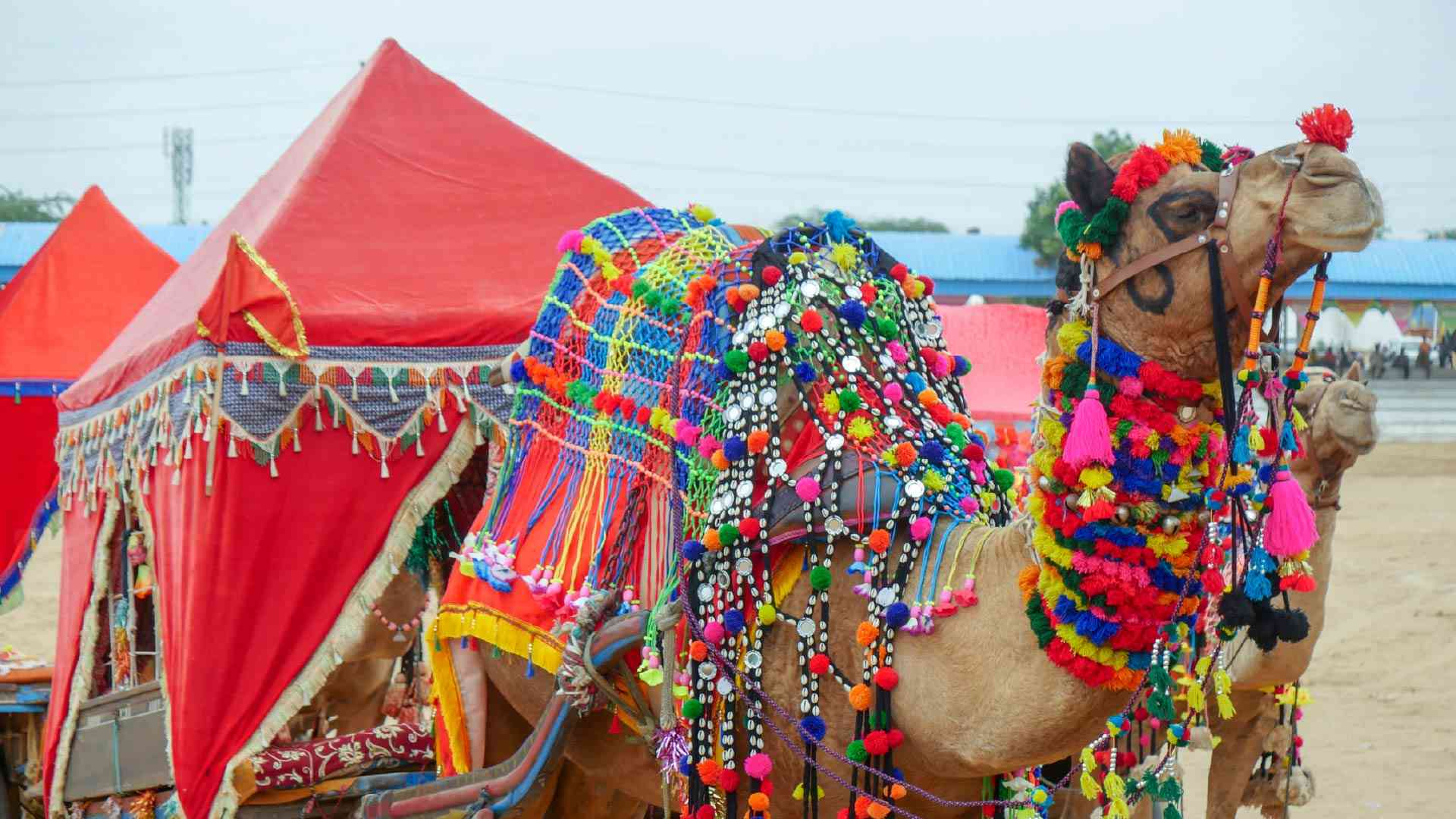
Enjoy a morning of scenic splendour as we pass through the arid landscapes of rural Rajasthan. We’ll reach the desert oasis of Nagaur in the afternoon. Once an important hub for traders and travellers through the Thar Desert, the city’s legacy is anchored in the Ahhichatragarh Fort, originally a mud structure built by the Nagavanshi Kings in the 4th century. Over time, it evolved into a stunning example of Rajput architecture, and later Mughal influences. Deluxe Experience Step back in time for two unforgettable nights within Ahhichatragarh, a restored heritage fort that was once the residence of Rajput and Mughal royalty. Slip into the spell of the 18th century as we check into Ranvas, an exquisite stay nestled within the fort itself. Relax in the regal setting of this meticulously restored residence or take to the ramparts to witness the daily kite feeding — a fluttery spectacle against the desert sky. Special Experience Indulge in a decadent High Tea experience at the 18th century residence of Ranvas, offering sweeping views of the sunset and the city below. As the day draws to a close, enjoy a guided stroll along the fort’s ramparts, culminating in a High Tea experience with panoramic views over the city. With every delightfully decadent bite, watch the sky shift through hues of gold and crimson as day turns to dusk. Tonight, we’ll experience an immersive glimpse into one of India’s most vibrant rural traditions — the Nagaur Cattle Festival. Full of energy and brightly coloured livestock, this centuries-old celebration is a spectacular sensory feast. Witness the Opening Ceremony, when festival-goers arrive to a chorus of folk music and dance performances.
15
Nagaur
Step beyond the fort walls and into the soul of Nagaur today on a tuk-tuk tour of the city. Kicking off our exploration of the town’s spiritual and architectural gems is the Sufi Mosque, a tranquil space echoing centuries of devotion and mysticism. Continue to the Cenotaphs of Amar Singh Ji, where intricately carved memorials rest in peaceful courtyards. Our journey then takes us deep into the vibrant atmosphere of the Nagaur Cattle Festival. Joining the central hub of festivities, delight in lively livestock competitions featuring the best-decorated and strongest animals. Immerse in spirited trading sessions, explore the colourful MirMirchi Bazaar, renowned for its fiery Mathaniya red chilies, and browse through handicraft markets. In the late afternoon, we’ll delve into the masterful design of the Ahhichatragarh Fort this afternoon. Our guide will lead us through the lush Mughal Gardens, the shimmering Sheesh Mahal, the elegant Hadi Rani Mahal, the evocative Picture Gallery, Deepak Mahal and the Bakht Singh Mahal. Each section reveals layers of history, artistry and royal legacy. As the day winds down, indulge in the local flavours of the region at the Baradari, an open-air pavilion where history and hospitality mingle under an open sky.
16
Nagaur – Jodhpur
Refreshed from our final night in the Ahhichatragarh Fort, we depart Nagaur for Mharo Khet, a regenerative farm that stretches over 40-acres of lush greenery. Special Experience Take a guided stroll through the lush Mharo Khet farm retreat, followed by a nine-course farm-to-table feast of locally harvested produce. Chemical-free and rooted in sustainable practices, Mharo Khet is lovingly tended by a team from neighbouring villages. Most of what’s served is harvested locally before it reaches our plate, with the menu changing with the seasons. Gain insight into desert greening and regenerative agriculture during a guided farm tour before harvesting fresh ingredients and relaxing under straw canopies on traditional charpoys. Then, prepare your senses for Paeru, the farm’s open-air dining space nestled in a guava orchard, for a nine-course culinary journey. Each dish is a chapter in a story that celebrates the stages of life from playful childhood to reflective eternity. After this unforgettable feast, we continue to Jodhpur, where the grandeur of the Blue City awaits. Situated on the outskirts of the Thar Desert, Jodhpur is Rajasthan’s second-largest city and is protected by a 10-kilometre-long wall. With the imposing Mehrangarh Fort to the west and the regal Umaid Bhawan Palace to the east, the city’s landscape is dotted with colour, mountains and majestic temples.
17
Jodhpur
We begin the day with a visit to one of the world’s largest private residences, the Umaid Bhawan Palace Museum. Featuring an elegant blend of Indo-colonial and Art Deco architecture, the palace is home to 347 rooms, with a portion converted into a luxury hotel and the remainder housing a museum. Inside, displays of royal memorabilia, vintage clocks and photographs offer a glimpse into the regal lifestyle of the Marwar dynasty. We then drive to the Old City for a heritage walk through the Sardar Market, set around the city’s 19th century Clock Tower. Wind through vibrant lanes filled with Rajasthani textiles, spices, jewellery and local delicacies. We’ll also see out over the tranquil Gulab Sagar Lake and visit the 18th century stepwell of Toorji Ka Jhalra. Stepping into a tuk-tuk, next is a leisurely ride to Khaas Bagh, nestled within a restored haveli. We’ll first explore the collection of rare and vintage automobiles, before delighting in a sumptuous spread of Rajasthani and international cuisine. Deluxe Experience Enjoy a private evening tour of Mehrangarh Fort, hosted by the museum’s Curator and paired with a delightful pour of local sparkling wine. Tonight, we’ll be treated to an exclusive evening tour of Mehrangarh Fort with the Curator. Learn stories of valour, artistry and royal life as we admire the galleries and palatial rooms. Bringing our experience to a close, we’ll delve into the tingling flavours of Rajasthani cuisine over a 4-course dinner at the Mehran Terrace, located within the fort and overlooking the twinkling city below.
18
Jodhpur – Mumbai
Today, we fly to Mumbai, India’s financial and entertainment capital. Originally a cluster of seven islands gifted to King Charles II in 1661, Mumbai has evolved into a dynamic metropolis that reflects the spirit of modern India. It’s a city of contrasts, where colonial architecture meets contemporary skyscrapers and vibrant street life coexists with serene coastal views. Explore some of Mumbai’s iconic landmarks this afternoon, beginning with a photo stop at the Gateway of India, a grand basalt arch overlooking the harbor. We’ll then reach the UNESCO World Heritage-listed Chhatrapati Shivaji Maharaj Terminus. Blending Victorian Gothic and Indian styles, this palatial structure is one of the most striking railway stations in the world. Our immersion continues at the open-air laundry of Dhobi Ghat for a fascinating glimpse into Mumbai’s industrious spirit. We’ll also visit Mani Bhawan, a peaceful memorial dedicated to Mahatma Gandhi, where he lived and worked between 1917 and 1934. The house now features a pictorial gallery, research library and dioramas depicting Gandhi’s life and legacy. Wrapping up the tour, explore the Hanging Gardens atop Malabar Hills, offering panoramic views of the Arabian Sea. We then end the day with a scenic drive along Marine Drive, enjoying the salty sea breeze and if time permits, a leisurely stroll along the promenade. Tonight, we’ll clink a glass to our favourite moments on tour at a farewell dinner.
19
Depart Mumbai
This morning’s breakfast brings our journey through India to a close. We hope the warmth and wonder of this vibrant corner of the world lingers long after you’ve returned home.
20
Arrive Australia
Tour dates
Tour Enquiry
India In-Style - Nagaur Cattle Festival
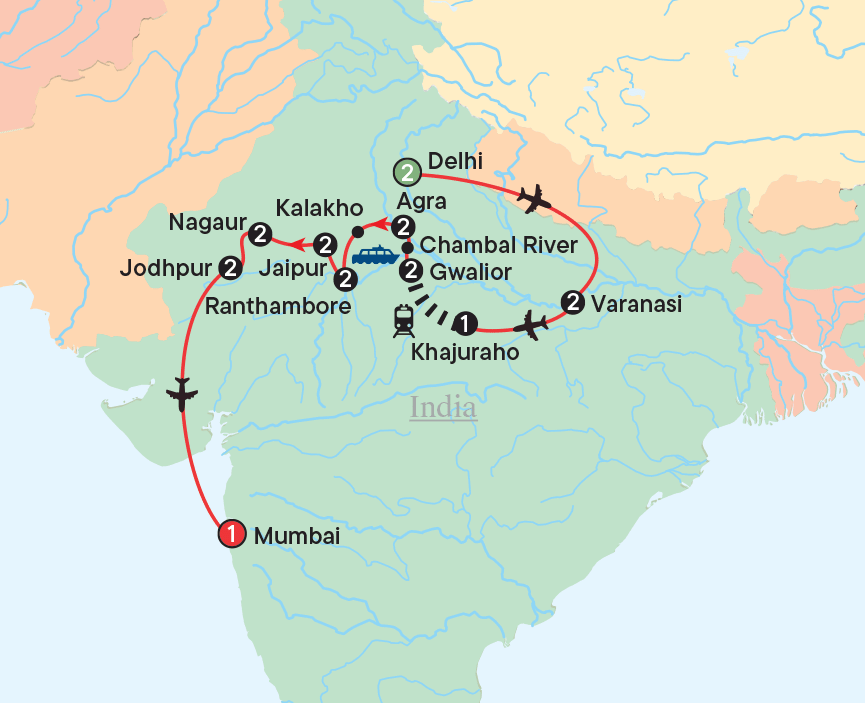
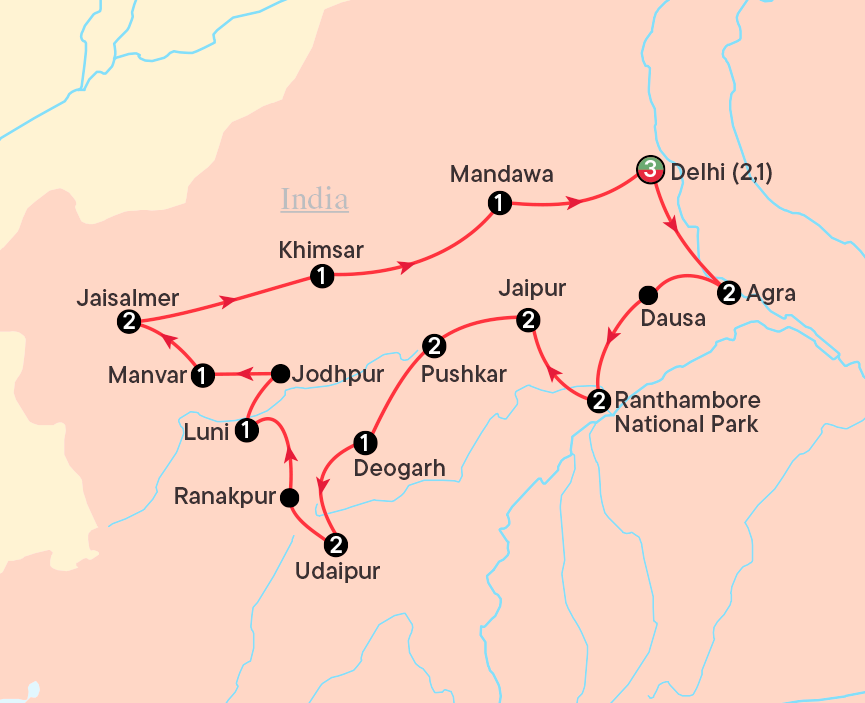
Tour map
India In-Style
Tour Enquiry
India In-Style
About the tour
Itinerary
1
Depart Australia – Arrive Delhi
‘Namaste’ and welcome to India, a captivating country of bustling cities, tranquil landscapes, incredible architecture and tradition. India’s rich history is etched into every wall, with stories spanning back over 5,000 years. It’s one of the world’s oldest civilisations, being home to the ancient Indus Valley and Vedic cultures to powerful empires like the Maurya, Gupta, and Mughals. Colonised by the British in the 18th century, India finally gained independence in 1947 and has since grown into the world’s largest democracy and a vibrant, diverse nation. Our journey begins in Delhi, the capital of India, where the past and present seamlessly coexist. This city is a hub of colourful chaos, with rickshaws, cars and pedestrians filling the busy streets adorned with lively markets, street vendors and more. Having hailed as the seat of power of several empires, Delhi has been destroyed and rebuilt many times. Steeped in history, you'll find ancient monuments and traditional architecture scattered throughout the city, rendering Delhi a diverse and endlessly fascinating metropolis to explore.
2
Delhi
Modern Delhi is a cultural melange of two distinct lineages — Old Delhi and New Delhi. And today, we’ll dive deep into the beauty of both. We begin with a photo stop at the 17th century Red Fort, built by Mughal Emperor Shah Jahan in 1638. Towering 22 metres above Old Delhi, this UNESCO World Heritage-listed citadel splices the skyline in brilliant sandstone, standing as a powerful reminder of the opulence of the Mughal Empire. Leaning into our adventurous side, brace for a riot of colour, spice and soul as we zip through the heart of Old Delhi and the lanes of Chandni Chowk aboard a cultural icon — the humble rickshaw! Allowing us access to a labyrinth of narrow lanes, we’ll glide past colourful shops, crumbling havelis and historic landmarks. Next, we’ll discover the Humayun Tomb, the first significant example of Mughal architecture in India. Built in 1565 AD, this magnificent garden tomb is framed by four garden squares (Charbagh) with elegant pathways and water channels that lead to a central mausoleum. We’ll spend the afternoon admiring the grand façades of New Delhi’s government buildings, including Parliament House and Rashtrapati Bhawan (the President’s residence), before a photo opportunity at the towering India Gate. Deluxe Experience Savour a sumptuous welcome dinner at The Spice Route, where vivid murals and beautiful antiques echo the fragrant legacy of the ancient spice trade.
3
Delhi – Varanasi
Today, we fly to Varanasi, the spiritual heart of India. Known as ‘Kashi’ (The City of Light), Varanasi lies between the Varuna and Assi rivers in northern India. Considered one of the oldest living cities in the world, Varanasi is a significant pilgrimage site for Hindus, believed to have been founded by Lord Shiva himself. Special Experience Drift along the Ganges at dusk, accompanied by the strains of live sitar music as the Ganga Aarti ceremony bathes the river in flickering light. As the afternoon sun begins to creep over the Ganges, embark on a tranquil boat ride out along the river’s sacred waters. Accompanied by the soulful strains of live sitar music, glide past ancient ghats and shrines as our guide shares insights into the centuries-old rituals practiced along the river. A poignant moment awaits at the Manikarnika Ghat, the city’s most sacred cremation ground, where funeral pyres burn continuously — an unforgettable sight from the water. As twilight descends, we’ll approach Dasashwamedh Ghat to witness the spellbinding Ganga Aarti ceremony. Floating gently on the shimmering waters, we’ll be immersed in a spiritual experience that defies description — drenching our senses in a chorus of chanting and the flickering of flaming lamps as the riverfront is transformed into a spectacle of light, sound and sacred energy.
4
Varanasi
Waking before first light, we’ll once again take to the water to witness the sun rising over Varanasi’s ancient ghats. In this quintessential experience, glide past the sacred sites of Assi Ghat, Kedar Ghat and Dasashwamedh Ghat, for a glimpse into the spiritual rhythm of daily life. As we make our way back to the hotel, we’ll visit the prestigious Banaras Hindu University, founded in 1917 by Pandit Madan Mohan Malaviya. A thriving hub of Indian art, culture and learning, the walled campus is just as beautiful as the knowledge it holds within, standing bright in a buttery-lemon hue. Enjoy entry to the campus’ Kashi Vishwanath Temple, a peachy-pink marvel inscribed with sacred Hindu scriptures throughout its marble interiors. Return for breakfast at the hotel and some free time before we embark for Sarnath in the afternoon. Located just 10 kilometres out from Varanasi, this sacred site is believed to mark the grounds where Buddha delivered his first sermon. Today, the site is a sprawling archaeological park, offering a peaceful space for reflection. We’ll wrap up the day’s sightseeing at the Sarnath Archaeological Museum, before returning to the hotel for an evening at leisure.
5
Varanasi – Khajuraho
Enjoy a morning at leisure to further enjoy this beautiful hotel, before we transfer to the airport to depart Varanasi for our flight to Khajuraho. Built between the 10th and 12th centuries when the Chandela dynasty rose to power, this spectacular UNESCO World Heritage-listed site is famous for it’s extraordinary temple architecture and elaborate stone carvings. Once home to more than 80 structures, only 25 temples remain within the Khajuraho Group of Monuments, which spread across 20 square kilometres of sandstone. Revered not only for their religious significance, these temples are also renowned for their bold and expressive sculptures that depict various aspects of life, including sensuality, spirituality and daily rituals — all of which we’ll explore in more detail tomorrow! Upon arrival in Khajuraho, we’ll be transferred to the hotel, where the evening is yours to enjoy as you please. You may wish to relax and unwind in the hotel amenities or perhaps indulge in some authentic Indian flavours for dinner.
6
Khajuraho – Gwalior
Fuelled by a delightful breakfast, we’ll depart for the eastern and western group of temples in Khajuraho. The eastern group of temples are primarily devoted to Jainism and more specifically, the faith’s ‘Tirthankaras’ (saviours and supreme teachers), Parsvanatha, Adinatha, and Shantinatha. Each temple in this cluster is elaborately decorated with carvings of deities, celestial being and intricate motifs. The western group is more renowned, made up of grand shrines such as Kandariya Mahadev, where sculptures of gods, goddesses, dancers, and musicians appear almost lifelike in their grace and movement. Following the tour, we’ll return to the hotel before transferring to the railway station to board the Vande Bharat Express to Gwalior. Relax back into your seat and enjoy another side to India as you zip through rural towns and countryside in air-conditioned comfort. We’ll reach the historic city of Gwalior in the evening. According to legend, Gwalior was founded by Suraj Sen, a chieftain cured of a fatal disease by the sage Gwalipa, after whom the city is named. Over centuries, Gwalior flourished under various dynasties, leaving behind a rich tapestry of palaces, temples and monuments. Checking into the hotel, soak up a tranquil night’s rest ahead of an exciting day of sightseeing tomorrow.
7
Gwalior
A morning exploring the historic roots of the city awaits, beginning with a visit to the Gwalior Fort. This tile-clad stronghold is an extraordinary sight to behold. Teetering above a steep, rocky hill, the 8th century fortress has borne witness to centuries of dynastic rule and is an incredible testament to the architectural mastery of the region. Once inside, we’ll explore the Man Mandir Palace or ‘Palace of Paintings’, echoing the legacy of the great warrior and one of the most influential rulers of Gwalior, Raja Man Singh Tomar. Built between 1486 and 1516, you’ll get a taste of the artistic finesse of the era as your gaze glides across vibrant tile work and intricate carvings of peacocks and other birds. Located just nearby, we’ll also explore the Sas-Bahu Temples, twin shrines dedicated to Lord Vishnu in his Padmanabha form. With origins tracing back to the 10th century, enjoy some time here to admire the detailed carvings that offer a glimpse into medieval temple architecture. The remainder of the afternoon is yours to relax in quiet comfort or to explore more of the city. Optional Excursion Optional Excursion: Visit the Jai Vilas Palace Museum – Spend the afternoon exploring the architectural marvel of the Jai Vilas Palace Museum, a wing of the private residence to the Maratha royal family. Wander lavish halls, marvel at colossal chandeliers and admire the many galleries home to objects dating from 18th to the 20th centuries for a glimpse into Maratha history and the opulent lifestyle of the Scindia Dynasty of Gwalior. 2hrs – from US $6pp (minimum 2 people)
8
Gwalior – Chambal River Safari – Agra
Our journey takes us to the Chambal River this morning, home to an array of freshwater species, including the Ganges River Dolphin. Jumping aboard a small boat, we’ll embark on a relaxing river safari through the National Chambal Sanctuary, a haven for local and critically endangered wildlife. This one-hour journey offers a rare glimpse into one of India’s most pristine river ecosystems. Glide through gorges in search of Gharial Crocodiles, Marsh Crocodiles, softshell turtles and nearly 300 species of resident and migratory birds — all thriving in protected habitat. Returning from our safari, we’ll set off for Dholpur Palace, where we’ll pause for a simple lunch before continuing to Agra. Steeped in Mughal grandeur and home to some of India’s most iconic monuments, the city of Agra was once the capital of the Mughal Empire and remains renowned for its architectural legacy. Enjoy a moment to refresh at the hotel, ready for an evening of cultural immersion as we attend the Mohabbat-e-Taj live theatre performance at Kalakriti Cultural Centre. This captivating show brings to life the legendary love story of Emperor Shah Jahan and Mumtaz Mahal, the inspiration behind the Taj Mahal, through dramatic storytelling, dance and dazzling visuals.
9
Agra
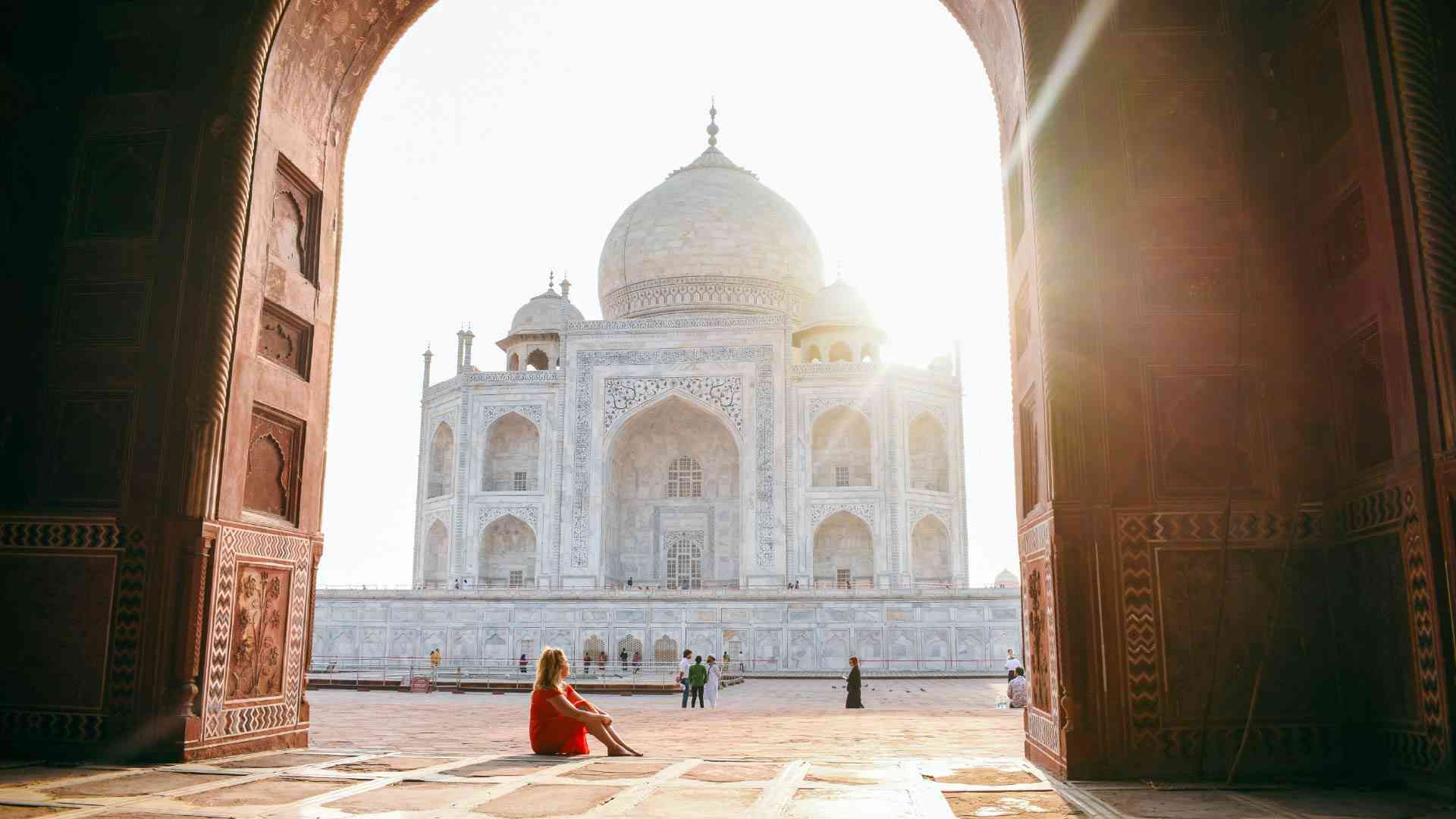
Resting on the banks of the Yamuna River, Agra is famous for its exquisite marble inlay work and craftsmanship. And this morning, we’ll immerse in one of the most sophisticated examples of this legendary artistry with a sunrise visit to the Taj Mahal. Commissioned in 1632 by Emperor Shah Jahan in memory of his beloved wife Mumtaz Mahal, the Taj Mahal is a masterpiece of white marble architecture. Perfectly symmetrical from all sides, this breathtaking complex took over 22 years and 20,000 artisans to complete. Living up to its nickname as ‘The Jewel of Muslim Art in India,’ the Taj reflects different colours as the sun climbs over its silhouette, making each visit a unique experience. Enjoy a moment of quiet awe as the first light of day bathes the monument in a warm, golden hue. Return to the hotel for breakfast before we make our way to the Agra Fort, home to a rich legacy of art, politics and royal life. Once the residence of the Mughal emperors until 1638, the fort houses a series of exquisite structures including the Moti Masjid (Pearl Mosque), Musamman Burj (where Shah Jahan spent his final days), Jahangir’s Palace, Khas Mahal, and Sheesh Mahal. In the afternoon, visit a marble inlay workshop to witness the intricate craftsmanship behind the art of Parchin Kari — the same technique used in the Taj Mahal. Watch skilled artisans transform marble into delicate floral patterns using semi-precious stones, continuing a tradition passed down through generations. Back at the hotel, we'll enjoy a High Tea on the Sky Deck. It's a great opportunity to relax and take in the sunset views over Agra after a wonderful day of sightseeing.
10
Agra – Kalakho – Ranthambore
Once we’ve enjoyed a hearty breakfast, we’ll farewell the beautiful city of Agra for Ranthambore, making a delightful cultural detour through Bhandarej village near Kalakho. Jumping into the back of a Jugaad (an open-top truck affectionately known as the ‘Village Mercedes’), ride through open countryside and rustic trails for a fascinating glimpse into the heart of rural India — traditional homes, friendly smiles and perhaps even a warm welcome into a local home for a cosy cup of chai! Leaving the rustic life in our rearview, we then make our way to the nearby Umaid Lake Palace. This heritage retreat is spread over a twenty-acre organic farm, providing a lush backdrop for a delightful lunch. With our appetite satisfied, we’ll continue our journey to Ranthambore, one of India’s most renowned wildlife sanctuaries. Well-known for its population of prowling Bengal Tigers, Ranthambore National Park is set against the Aravalli mountains and stretches across 392 square kilometres. A tangle of lakes and forests, watched over by the ancient Ranthambore Fort, the park provides a lush habitat for leopards, hyenas, sloth bears, sambar deer, langurs and a spectacular array of birdlife. Deluxe Experience Experience two incredible nights in a luxury tent nestled within the wilderness, right in the heart of Ranthambore National Park.
11
Ranthambore
Waking in the wild luxury of our jungle retreat, prepare for a thrilling morning as we explore the open grasslands of Ranthambore. Special Experience Set off on an early morning safari adventure through the wildlife haven of Ranthambore National Park. Nestled in the heart of India’s Rajasthan, Ranthambore is a biodiversity hotspot. Dotted by hills and grassy meadows, the dry forest landscape is known to be one of the best places to see wild tigers in their natural habitat. Keep your camera at the ready as we bump along the wilderness aboard modified jeeps. As the sun rises over the rugged landscape, keep an eye out for Bengal Tigers and other species interacting with the environment. The thrill of spotting a tiger in the wild is unmatched, and the park’s dramatic scenery only enhances the experience. Return to the camp for a leisurely breakfast and some time to relax before we embark on our second safari in the afternoon. Exploring a different zone of the park, we’ll have the chance to encounter even more elusive species and landscapes, from serene lakes to ancient ruins hidden within the jungle. As evening falls, prepare for a barbecue bonfire night featuring local music and folk dances.
12
Ranthambore – Jaipur
Departing Ranthambore after breakfast, settle into the coach as we pass through rugged terrain and rural countryside with our eyes set on the dazzling city of Jaipur. Affectionately referred to as the ‘Pink City’ after the distinctive hue of its historic buildings, the vibrant capital of Rajasthan was established in 1727 by the famed military leader, mathematician and astronomer, Maharaja Sawai Jai Singh II. Drawing on his expertise and featuring the legendary finesse of architect Vidhyadhar Bhattacharya, the city is a sensory feast from start to finish — buzzing with rich traditions, lively marketplaces and architectural marvels. Special Experience Ride a Pink Rickshaw through Jaipur’s fabled Pink City, skimming past palaces, temples and spice-scented bazaars. In the late afternoon, set off on a delightful Pink Rickshaw Tour through the heart of Jaipur — an exhilarating welcome to the city. Our expert guide will whirl us past iconic landmarks such as Tripolia Bazar, Hawa Mahal, Badi Chaupar, Choti Chaupar, Ajmeri Gate, and Chodha Rasta. Glide through Jaipur’s bustling streets, soaking in the vibrant energy, intricate architecture and local life. This unique experience is a proud initiative that supports women from low-income homes, providing economic opportunities for the incredible women who custom design and manage the vibrant e-rickshaws. The tour concludes back at the hotel where a relaxing evening awaits, the perfect exhale after our afternoon adventure.
13
Jaipur
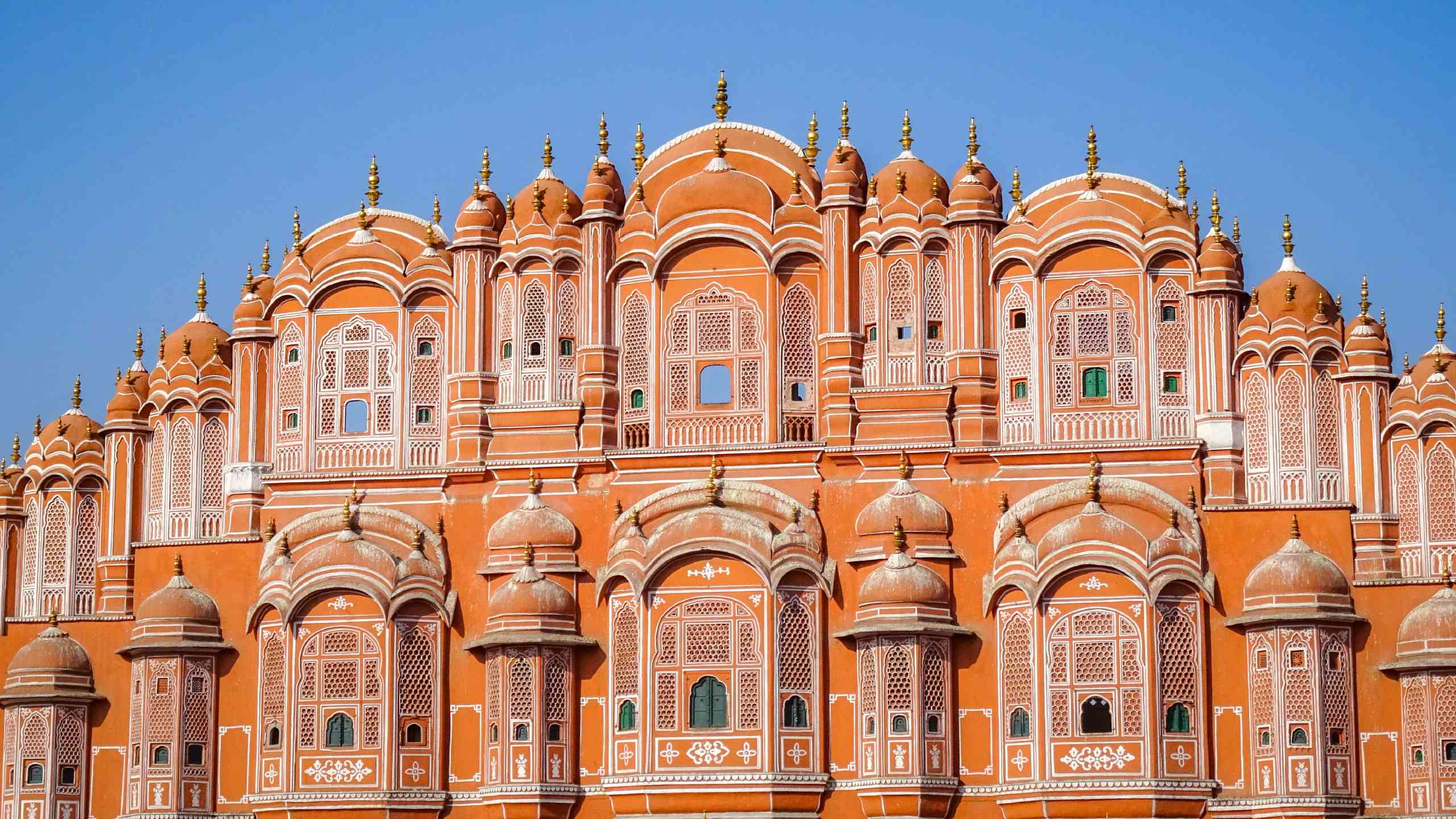
Optional Excursion Optional Excursion: Hot Air Balloon Ride – Begin your day with an unforgettable balloon ride over Jaipur’s rugged landscapes. As the balloon gently lifts off, float peacefully over rural villages, forts and the Aravelli hills, witnessing Jaipur from a breathtaking new perspective. The excursion includes transfers, briefing and post flight refreshments. Balloon ride is subject to weather conditions. 1hr - from US $314 pp (minimum 2 people) Today, enjoy a photo stop at one of the most iconic landmarks to grace Jaipur’s skyline — the Hawa Mahal. This peachy-red monument towers in brilliant contrast to the blue skies surrounding it, stretching five stories high and featuring 953 intricately carved windows (jharokhas), designed for royal women to observe street life while remaining unseen. Our journey continues to the 16th century Amber Fort, where we’ll travel to the mind-blowing monument by jeep. Perched on a rugged hillside, this UNESCO World Heritage-listed site showcases a stunning fusion of Hindu and Mughal architecture. Navigating the vast grounds, we’ll discover the dazzling Sheesh Mahal (Hall of Mirrors), where thousands of tiny mirrors reflect even the faintest light, and enjoy a glimpse into royal life and military strategy as we explore the fort’s ornate hills, courtyards and ramparts. As afternoon creeps in, we’ll travel out to Dera Amer Camp, nestled in the wilderness that hides beneath the hills of the Amber Fort. Special Experience Savour a starlit barbecue banquet with local folk music and dance performances in the protected wilderness of Dera Amer. Arriving at camp, we’ll be invited in for a traditional welcome before enjoying a barbecue dinner under the twinkling night sky. In the wild luxury of the camp, soak up an evening of folk music and dance performances that echo the grandeur of Rajasthan’s royal courts.
14
Jaipur – Nagaur
Farewelling the beauty of Jaipur, enjoy a morning of scenic splendour as we pass through the arid landscapes of rural Rajasthan. We’ll reach the desert oasis of Nagaur in the afternoon. Once an important hub for traders and travellers through the Thar Desert, the city’s legacy is anchored in the Ahhichatragarh Fort, originally a mud structure built by the Nagavanshi Kings in the 4th century. Over time, it evolved into a stunning example of Rajput architecture, and later Mughal influences. Deluxe Experience Step back in time for two unforgettable nights within Ahhichatragarh, a restored heritage fort that was once the residence of Rajput and Mughal royalty. Slip into the spell of the 18th century as we check into Ranvas, an exquisite stay nestled within the fort itself. Relax in the regal setting of this meticulously restored residence or take to the ramparts to witness the daily kite feeding — a fluttery spectacle against the desert sky. Special Experience Indulge in a decadent High Tea experience at the 18th century residence of Ranvas, offering sweeping views of the sunset and the city below. As the day draws to a close, enjoy a guided stroll along the fort’s ramparts, culminating in a High Tea experience with panoramic views over the city. With every delightfully decadent bite, watch the sky shift through hues of gold and crimson as day turns to dusk.
15
Nagaur
Step beyond the fort walls and into the soul of Nagaur today on a tuk-tuk tour of the city. Kicking off our exploration of the town’s spiritual and architectural gems is the Sufi Mosque, a tranquil space echoing centuries of devotion and mysticism. Continue to the Cenotaphs of Amar Singh Ji, where intricately carved memorials rest in peaceful courtyards. The journey then leads to the Bansiwala Temple, adorned with colourful frescoes, before a stroll through Nagaur’s lively lanes. Bask in the rhythm of daily life before concluding our tour at the central hub of Gandhi Chowk. Spend the afternoon at leisure, perhaps with a refreshing dip in the pool or a quiet moment in the shaded courtyards, before delving into the masterful design of the Ahhichatragarh Fort this afternoon. Our guide will lead us through the lush Mughal Gardens, the shimmering Sheesh Mahal, the elegant Hadi Rani Mahal, the evocative Picture Gallery, Deepak Mahal and the Bakht Singh Mahal. Each section reveals layers of history, artistry and royal legacy. As the day winds down, indulge in the local flavours of the region at the Baradari, an open-air pavilion where history and hospitality mingle under an open sky.
16
Nagaur – Jodhpur
Refreshed from our final night in the Ahhichatragarh Fort, we depart Nagaur for Mharo Khet, a regenerative farm that stretches over 40-acres of lush greenery. Special Experience Take a guided stroll through the lush Mharo Khet farm retreat, followed by a nine-course farm-to-table feast of locally harvested produce. Chemical-free and rooted in sustainable practices, Mharo Khet is lovingly tended by a team from neighbouring villages. Most of what’s served is harvested locally before it reaches our plate, with the menu changing with the seasons. Gain insight into desert greening and regenerative agriculture during a guided farm tour before harvesting fresh ingredients and relaxing under straw canopies on traditional charpoys. Then, prepare your senses for Paeru, the farm’s open-air dining space nestled in a guava orchard, for a nine-course culinary journey. Each dish is a chapter in a story that celebrates the stages of life from playful childhood to reflective eternity. After this unforgettable feast, we continue to Jodhpur, where the grandeur of the Blue City awaits. Situated on the outskirts of the Thar Desert, Jodhpur is Rajasthan’s second-largest city and is protected by a 10-kilometre-long wall. With the imposing Mehrangarh Fort to the west and the regal Umaid Bhawan Palace to the east, the city’s landscape is dotted with colour, mountains and majestic temples.
17
Jodhpur
We begin the day with a visit to one of the world’s largest private residences, the Umaid Bhawan Palace Museum. Featuring an elegant blend of Indo-colonial and Art Deco architecture, the palace is home to 347 rooms, with a portion converted into a luxury hotel and the remainder housing a museum. Inside, displays of royal memorabilia, vintage clocks and photographs offer a glimpse into the regal lifestyle of the Marwar dynasty. We then drive to the Old City for a heritage walk through the Sardar Market, set around the city’s 19th century Clock Tower. Wind through vibrant lanes filled with Rajasthani textiles, spices, jewellery and local delicacies. We’ll also see out over the tranquil Gulab Sagar Lake and visit the 18th century stepwell of Toorji Ka Jhalra. Stepping into a tuk-tuk, next is a leisurely ride to Khaas Bagh, nestled within a restored haveli. We’ll first explore the collection of rare and vintage automobiles, before delighting in a sumptuous spread of Rajasthani and international cuisine. Deluxe Experience Enjoy a private evening tour of Mehrangarh Fort, hosted by the museum’s Curator and paired with a delightful pour of local sparkling wine. Tonight, we’ll be treated to an exclusive evening tour of Mehrangarh Fort with the Curator. Learn stories of valour, artistry and royal life as we admire the galleries and palatial rooms. Bringing our experience to a close, we’ll delve into the tingling flavours of Rajasthani cuisine over a 4-course dinner at the Mehran Terrace, located within the fort and overlooking the twinkling city below.
18
Jodhpur – Mumbai
Today, we fly to Mumbai, India’s financial and entertainment capital. Originally a cluster of seven islands gifted to King Charles II in 1661, Mumbai has evolved into a dynamic metropolis that reflects the spirit of modern India. It’s a city of contrasts, where colonial architecture meets contemporary skyscrapers and vibrant street life coexists with serene coastal views. Explore some of Mumbai’s iconic landmarks this afternoon, beginning with a photo stop at the Gateway of India, a grand basalt arch overlooking the harbor. We’ll then reach the UNESCO World Heritage-listed Chhatrapati Shivaji Maharaj Terminus. Blending Victorian Gothic and Indian styles, this palatial structure is one of the most striking railway stations in the world. Our immersion continues at the open-air laundry of Dhobi Ghat for a fascinating glimpse into Mumbai’s industrious spirit. We’ll also visit Mani Bhawan, a peaceful memorial dedicated to Mahatma Gandhi, where he lived and worked between 1917 and 1934. The house now features a pictorial gallery, research library and dioramas depicting Gandhi’s life and legacy. Wrapping up the tour, explore the Hanging Gardens atop Malabar Hills, offering panoramic views of the Arabian Sea. We then end the day with a scenic drive along Marine Drive, enjoying the salty sea breeze and if time permits, a leisurely stroll along the promenade. Tonight, we’ll clink a glass to our favourite moments on tour at a farewell dinner.
19
Depart Mumbai
This morning’s breakfast brings our journey through India to a close. We hope the warmth and wonder of this vibrant corner of the world lingers long after you’ve returned home.
20
Arrive Australia
Tour dates
Tour Enquiry
India In-Style
Tour Enquiry
India In-Style
Tour Enquiry
India In-Style
Tour Enquiry
India In-Style
Tour Enquiry
India In-Style
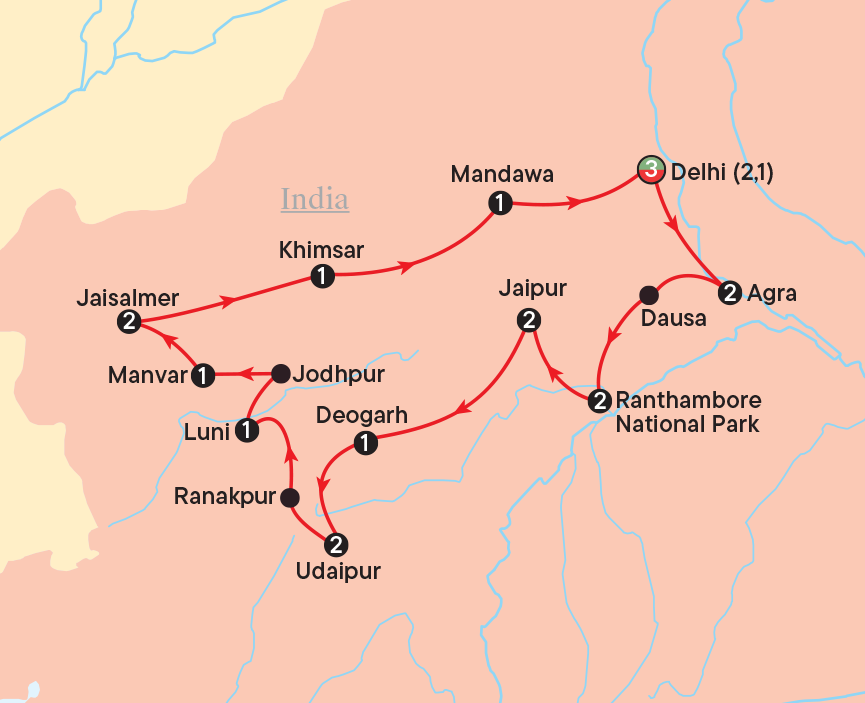
Tour map
Egyptian Discovery
Tour Enquiry
Egyptian Discovery
About the tour
Itinerary
1
Depart Australia
2
Arrive Cairo
‘Salam’ and welcome to the bustling hub of Cairo. Set on the iconic Nile River, Cairo is the capital and largest city of Egypt. Home to an incredible array of famous Egyptian landmarks, visitors will find it to be a fascinating and often bewildering mixture of old and new. The culture, monuments and architecture throughout the sprawling metropolis tell many tales of its captivating history, boasting a vibrant mix of Pharaonic, Roman, Greek and Islamic influences. Hailed as the cultural heart of the Middle East, Cairo today is renowned for its diverse industry landscape, thriving art scene and rich blend of culinary wonders. We don’t want you to miss out on any aspect of your exhilarating adventure, so we recommend that you arrive at your starting destination by 5.00pm. Enjoy some free time to freshen up at the hotel, before meeting our fellow travellers at the group welcome dinner this evening. Please note, in order to undertake the following optional tours additional pre tour accommodation in Cairo may be required. Please check with your Travel Specialist for details. Optional Excursion Coptic Cairo - Discover the ancient sites & culture of Coptic Christians throughout Old Cairo. 3 hours – from $65pp US. Cash only. Optional Excursion Islamic Cairo - Visit the Gayer Anderson Museum, Ibn Toulon Mosque & El Sultan Hassan Mosque. 3 hours – from $65pp US. Cash only. Optional Excursion National Museum of Egyptian Civilisation – Displaying the civilisation of Egypt from the prehistoric period to the present era. 3 hours – from $80pp US. Cash only.
3
Cairo – Giza – Cairo
We’re set for a magical day of touring, visiting some of the sites that frequently top traveller’s bucket lists. We begin at the incredible Step Pyramid of Sakkara, also known as the Pyramid of Djoser. Believed to have been designed by the famous vizier of King Zoser, Imhotep, the pyramid is made up of six structures stacked on top of each other, forming its distinctive ‘stepped’ appearance. Considered the world’s earliest stone monument, the complex is revered as one of Egypt’s most significant structures due to the construction method serving as inspiration for later architectural accomplishments. Venturing to the Giza Plateau for lunch, it’s time to indulge in the delicious Middle Eastern cuisine the city is renowned for, but the best bit? The view! This unique restaurant is unlike anywhere you’ve dined before. Offering panoramic views of the majestic pyramids surrounded by desert, the pictures you’ll take here are guaranteed to be incredible. Special Experience Take in the incredible views of the Great Pyramids of Giza while enjoying a delicious lunch at the Giza Plateau After lunch, we’ll visit the oldest structures in existence and one of the Seven Wonders of the Ancient World, the Great Pyramids of Giza. Serving as the tomb of the pharaoh Khufu, the largest pyramid was originally 481 feet high and has managed to stay largely intact since its construction in 2600 BC. The two slightly smaller pyramids were built for Khufu’s son, Khafre, and grandson, Menkaure, likewise as burial places for three generations of Egyptian kings. We’ll then visit the nearby Great Sphinx, with the body of a lion and the head of a king, often referred to as the national symbol of Egypt. This iconic statue is believed to have been built during the reign of Pharaoh Khafre and is thought to represent him, yet its construction and purpose remains a fascinating mystery.
4
Cairo – Alexandria
After breakfast, we will travel to the 12th century Saladin Citadel, one of Cairo’s most magnificent fortifications. Once a residence for the rulers of Egypt, we’ll venture inside the medieval monument to discover more about the Islamic history of the city and visit the Muhammad Ali Mosque. Also referred to as the ‘Alabaster Mosque’ due to the marble panelling adorning its walls, this incredible structure features an elegant blend of Ottoman and European architectural styles. We then make our way to Cairo’s famous 14th century Khan el Khalili Bazaar. Swarming with local artisans and vibrant vendors, we’ll enjoy a brief coffee stop to soak up the atmosphere. After our visit, we’ll indulge in a late lunch to try a popular local dish called Koshary, considered Egypt’s national dish and a beloved street food. Departing the wonders of Cairo, we continue on to Wadi el Natroun, a once important location for Egypt’s ancient inhabitants. An area rich in sodium salts and carbonates, the natural elements found here were utilised during the mummification process. In the evening, we will arrive in the beautiful city of Alexandria on Egypt’s north coast. Located on the Mediterranean Sea, the port city was founded in 331 BC by Alexander the Great. It is the second largest city in Egypt and is best known for the Lighthouse of Alexandria (Pharos), one of the Seven Wonders of the Ancient World.
5
Alexandria
Waking in the sea-brushed city of Alexandria, we’ll set off early to discover some of its highlights on a half day tour. First, we’ll take a visit to the Graeco-Roman Museum, home to an array of artifacts from the Greco-Roman era that provide a fascinating glimpse into the civilisation of ancient Egypt. We’ll then see the Pompey’s Pillar and Catacombs of Kom el Shogafa, an ancient burial site carved out of bedrock that stretches over three levels underneath the city. We’ll also enjoy a tour of the Bibliotheca, a major cultural centre home to a wonderful collection of museums and a spectacular reading room designed to house eight million books. Our last stop is for a photo at the Citadel of Qaitbay, a spectacular 15th century fortress overlooking the Mediterranean. The defensive structure features high, limestone walls and several towers that have protected Alexandria during a number of infamous sieges over its history. Concluding our tour, enjoy the rest of the afternoon at leisure. Why not explore more of the fascinating museums around the city or take a stroll along the harbour for picturesque views of the coast?
6
Alexandria – El Alamein – Cairo
Enjoy a leisurely start today, with some free time before boarding the coach to our next destination. Our drive takes us westward through the winding dunes along the Mediterranean coast, following the historic path of Field Marshal Montgomery to El Alamein. This coastal town is steeped in history and was once the site of two pivotal battles between British and Axis forces during World War II. These battles became a crucial turning point in World War II’s North African campaign, with the Allied forces then able to invade Italy. Special Experience Visit the Commonwealth War Cemetery and Military Museum in remembrance of the Battle of El Alamein. Venturing to the Commonwealth War Cemetery, we’ll explore the poignant memorial that encompasses 7,367 tombs of soldiers laid to rest from all over Britain, New Zealand, Australia, France, India and Malta. We’ll also stop to visit the El Alamein Military Museum, made up of five main halls representing the countries that participated in the battle. Here, we’ll take a moment to view the unique, and incredibly moving, paintings depicting scenes from the war. We’ll then head back to bustling Cairo, where the evening is at leisure.
7
Cairo – Luxor
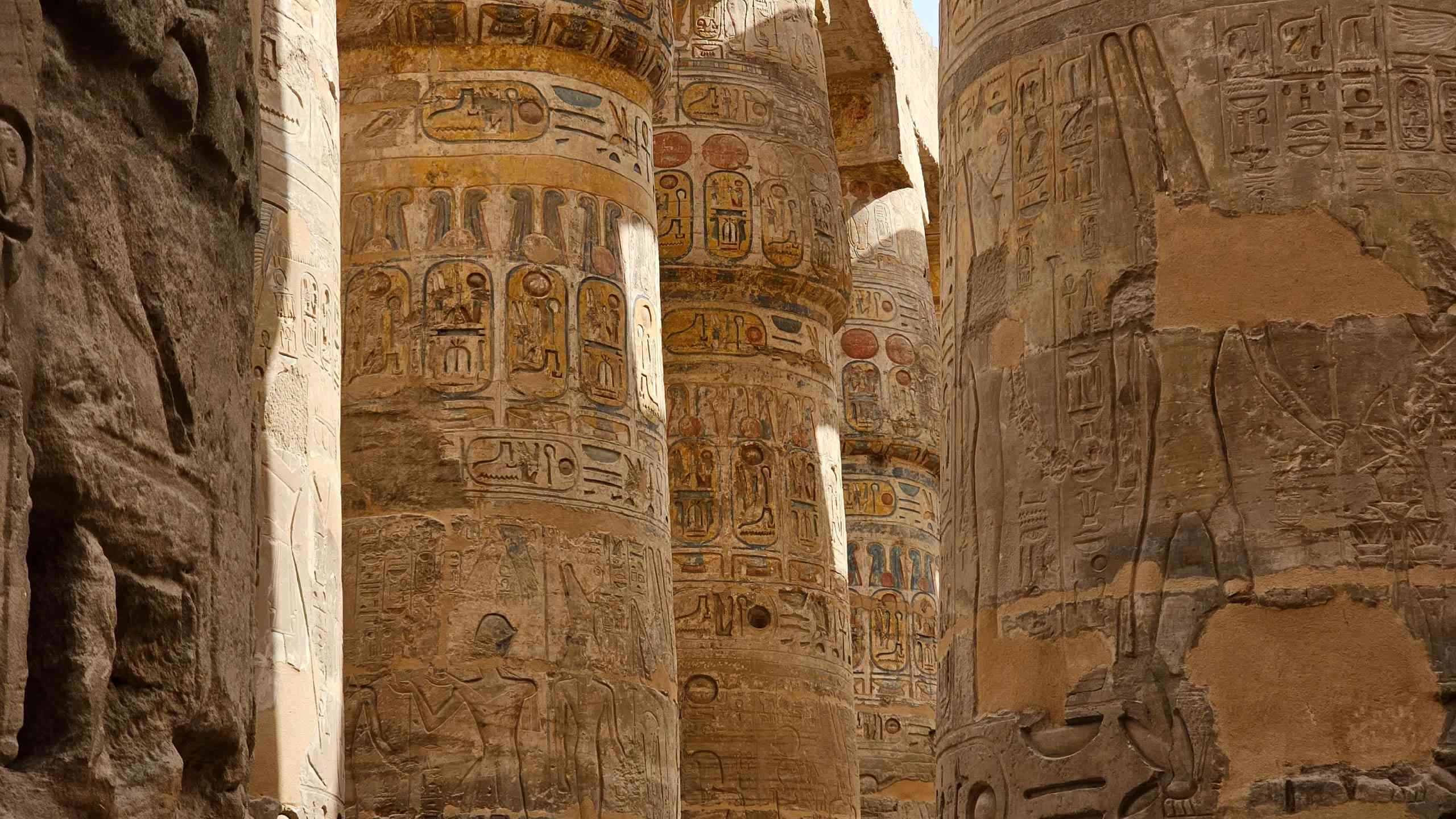
It’s an early start this morning, as we say goodbye to the Egyptian capital and fly to Luxor in Upper Egypt. Located on the east bank of the Nile River, the city surrounds two huge, surviving ancient monuments. Upon arrival, we’ll begin sightseeing with a visit to the fascinating Karnak Temple, dedicated to the Pharaoh Amun. Approximately 30 pharaohs contributed to the temple’s structure over time, which explains its monumental size! This extraordinary complex covers more than 2 square-kilometres, and it was built, restored, and decorated over a 1,500 year time period. Constructed as a cult temple, the site was dedicated to the ancient Egyptian Theban Triad: the deities Amun, Mut and Khonsu. We’ll then visit Luxor Temple, connected to Karnak Temple by a 3-kilometre-long Avenue of Sphinxes. Luxor Temple is also home to a 25-metre-tall pink granite obelisk, which was part of a matching pair until the 1830s when one was given to France. It now stands in the centre of the Place de la Concorde in Paris. We’ll also visit a local gallery to appreciate the ancient artform of papyrus craft, with an opportunity to purchase the artwork to take home.
8
Luxor
Take in the passing views of the agricultural landscape this morning as we journey to one of the best-preserved temple complexes of ancient Egypt. Special Experience Enjoy a half-day tour to the Dendera Temple Complex, exploring one of Egypt’s best-preserved sites, the Temple of Hathor, goddess of love and beauty. The main temple of Dendera is dedicated to the goddess Hathor, who’s associated with love, pleasure, beauty and music. Beauty can be seen everywhere in this complex, with well-preserved artwork and reliefs found within the temple reflecting religious rituals and mythological stories. The large collection of temples and shrines were constructed across numerous Egyptian eras and feature exquisite detailing and vibrant colours. We’ll take our time here, to explore the magnificent ruins that offer a glimpse into the beliefs and practices of this ancient civilisation. Returning to the hotel in the afternoon, enjoy the rest of the day at leisure to relax or explore more of Luxor. And with a history dating back to 3200 BC, there is so much to discover. Why not take a stroll along the Nile for scenic views over the river and surrounding areas? Optional Excursion Hot Air Balloon Ride over the West Bank in the early morning. Includes transport from hotel. 1.5 hours – from $170pp US. Cash only. Optional Excursion Sound & Light Show at Karnak Temple at night. 1.5 hours – from $65pp US. Cash only.
9
Luxor – Nile Cruise
This morning, we discover the sights of Luxor on a half day tour. Our first destination is the spectacular Valley of the Kings. Serving as a royal burial chamber for around 500 years, it is home to legendary kings and queens, their families, and their possessions for the afterlife. Here we’ll explore tombs carved deep into the limestone rock, where each tomb has a similar pattern of three corridors, an antechamber and a sarcophagus chamber. Special Experience Descend underground into Tutankhamun’s tomb, featuring intricate corridors and remarkably well-preserved hieroglyphic paintings that reveal ancient tales. Our next destination is the spectacular Temple of Hatshepsut. Queen Hatshepsut was one of only a few women to be given the title of pharaoh. We’ll then visit the Colossi of Memnon, a historic landmark consisting of two massive statues of the Pharaoh Amenhotep III. Following our exploration, we then stop at a nearby alabaster workshop, to learn how the locally quarried stone is carved and crafted. This afternoon we embark on our Nile River cruise ship. Lunch is served on board and the rest of the afternoon is free to enjoy at leisure. Optional Excursion Luxor Museum – Discover one of Egypt’s best museums, boasting some of the country’s best-preserved artefacts. The Luxor Museum is home to an abundance of ancient antiquities from the Theban region, featuring statues, pottery, jewellery and well-preserved mummies. 1.5 hours – from $60pp US. Cash only. Challenging Day Today is a particularly challenging day, where there will be extended periods of walking time, often across uneven ground and in areas of high altitude or heat and humidity.
10
Nile Cruise
Waking to the sights and sounds of life along the river, enjoy a free morning on the riverboat to relax or soak up the surrounding scenery. Flanked by both lush greenery and arid landscapes, spending the next few days on the water offers us a fascinating perspective of Egypt’s unique natural environment. We’ll then spend the afternoon cruising along the Nile as we set sail for the city of Edfu. Kick back and unwind as we take in the passing views, enjoying a different perspective of the temples and tombs that line the riverbank. As we glide through the water, we’ll also enjoy a glimpse into the daily lives of the Nubian villages that reside on the river’s edge. Continuing our river journey south, we pass through the Esna lock - this crucial piece of infrastructure is designed to manage the Nile’s flow and allows vessels to bypass the Esna Barrage, a dam that regulates water for irrigation purposes. Constructed in the 20th century, the lock ensures continuous river navigation despite varying water levels and seasonal changes. In the evening, we’ll arrive in the port of Edfu where we’ll dock for the night. Optional Excursion Deir El Medina & Medinet Habu – Visit one of the most well-preserved ancient settlements in Egypt and the Mortuary Temple of Ramses ll. 3 hours – minimum 4 participants required – from $105pp US, including Nobles Tombs; from $160pp US, including Nefertari’s Tomb (subject to open times). Cash Only
11
Nile Cruise
Located on the west bank of the Nile River between Esna and Aswan, you will find the small city of Edfu. This Egyptian city has a population of approximately sixty thousand people. It is famous for the Temple of Horus, dedicated to the Falcon God, the main attraction which we’ll visit this morning by bus transfer. This beautiful sandstone temple is one of the best-preserved in Egypt and the second largest after Karnak Temple. Towering at 36m high, it is one of the few ancient buildings with its roof still intact. We’ll then cruise to the riverside Temple of Kom Ombo, dedicated to the gods Sobek and Horus. The temple is unusual in nature as it is in fact a ‘double’ temple, meaning that the complex honours two gods, and remnants of Sobek’s crocodiles and Horus’ falcons can be seen throughout their respective sides. Resting on a bend overlooking the Nile, the structure is perfectly symmetrical along its main, central axis. Departing Kom Ombo in the early evening, we continue on to Aswan. Tonight, we’ll have the opportunity to experience a traditional (and fun!) Galabeya party on board, dressing in festive garments, and enjoying music and dancing.
12
Nile Cruise
Although it’s an early start this morning, we’ll be rewarded with one of the most famous sights in Egypt, as we cross the expansive desert to Abu Simbel. Our destination is the UNESCO World Heritage-listed twin temples of Abu Simbel, carved into a sandstone cliff in the Nubian desert. The temples were originally carved out of the mountainside during the reign of Pharaoh Ramses II in the 13th century BC, as a monument to himself and his queen, Nefertari. The Great Temple of King Rameses II dominates the site with its four, 20-metre-tall, seated statues of the king. Renowned as ruling during one of the most prosperous and powerful eras in ancient Egyptian history, the walls of the main halls are decorated with scenes of Rameses II’s military campaigns. We will spend a few hours exploring the temples before returning to our Nile cruise ship. In the afternoon, we’ll relax on board a traditional felucca sailboat, a small wooden boat that has sailed the Nile for centuries. Soak up the peaceful atmosphere, observing life along the banks of the river as our boat takes advantage of the gentle winds and currents. Optional Excursion Experience the Sound & Light Show at Philae Temple at night as you walk through ancient courtyards illuminated by vivid lights and echoes of powerful narration. Let the dramatic storytelling and visual effects transport you back in time to uncover the secrets, legends and legacy of one of Egypt’s most enchanting temples. 1.5 hours – from $65pp US. Cash only.
13
Nile Cruise – Aswan
Today, we disembark the Nile cruise ship and bid farewell to the amazing crew. Our day will then be spent exploring the incredible sights of Aswan. Our first stop is the enchanting Philae Temple, a temple that was relocated to Agilkia Island to save it from rising waters during the High Dam’s construction. Dedicated to Isis, the goddess of magic, the complex is a seamless blend of ancient Egyptian and Greco-Roman architectural styles. Here, we’ll marvel at the majestic colonnades and intricate reliefs. Special Experience Explore the fascinating Nubian Museum, before navigating the waterways of the Nile to a Nubian village, visiting the local market and a Nubian family in their home. Dotted along the Nile River, you’ll find traditional Nubian villages that feature bright and colourful mud-brick homes. Known for their rich history and traditions, Nubian history can be traced back thousands of years. Renowned for their unique language, vibrant music and colourful crafts, preserving a distinctive cultural identity, we’ll experience the atmosphere of a local market before being welcomed into the home of a Nubian family. Later, we’ll return to our hotel where the evening is at leisure.
14
Aswan – Cairo
After breakfast this morning, we’ll transfer to Aswan airport for our flight back to Cairo. Today, we’ll visit the brand-new Grand Egyptian Museum (GEM) in Giza, located a short distance from the pyramids themselves. One of the largest, most modern and renowned museums in the world, the GEM is home to over 100,000 ancient Egyptian artefacts. After being greeted by a 3,200-year-old, 83-ton statue of Ramses II in the GEM’s main entrance we’ll spend the afternoon exploring the vast collection of exhibition halls, including its centrepiece, the King Tutankhamun galleries. We’ll enjoy some free time to wander around the museum before boarding the coach for a drive out to the Pyramids of Dahshur. This ancient necropolis was used as funerary grounds beginning in the time of the Fourth Dynasty, where King Senefru built two of his three pyramids: the ‘Bent’ pyramid, named for the angle of the sides, and the ‘Red Pyramid’, named for the red limestone used in its construction. This evening, we’ll check into our hotel before farewelling the spectacular sights of Egypt over a flavourful dinner at the hotel restaurant.
15
Depart Cairo
Today marks the completion of our Egyptian adventure as we depart Cairo and begin our journey home. We hope you carry the magic of vibrant bazaars and ancient mysteries with you for years to come!
16
Arrive Australia
Tour dates
Tour Enquiry
Egyptian Discovery
Tour Enquiry
Egyptian Discovery
Tour Enquiry
Egyptian Discovery
Tour Enquiry
Egyptian Discovery
Tour Enquiry
Egyptian Discovery
Tour Enquiry
Egyptian Discovery
Tour Enquiry
Egyptian Discovery
Tour Enquiry
Egyptian Discovery
Tour Enquiry
Egyptian Discovery
Tour Enquiry
Egyptian Discovery
Tour Enquiry
Egyptian Discovery
Tour Enquiry
Egyptian Discovery
Tour Enquiry
Egyptian Discovery
Tour Enquiry
Egyptian Discovery
Tour Enquiry
Egyptian Discovery
Tour Enquiry
Egyptian Discovery
Tour Enquiry
Egyptian Discovery
Tour Enquiry
Egyptian Discovery
Tour Enquiry
Egyptian Discovery
Tour Enquiry
Egyptian Discovery
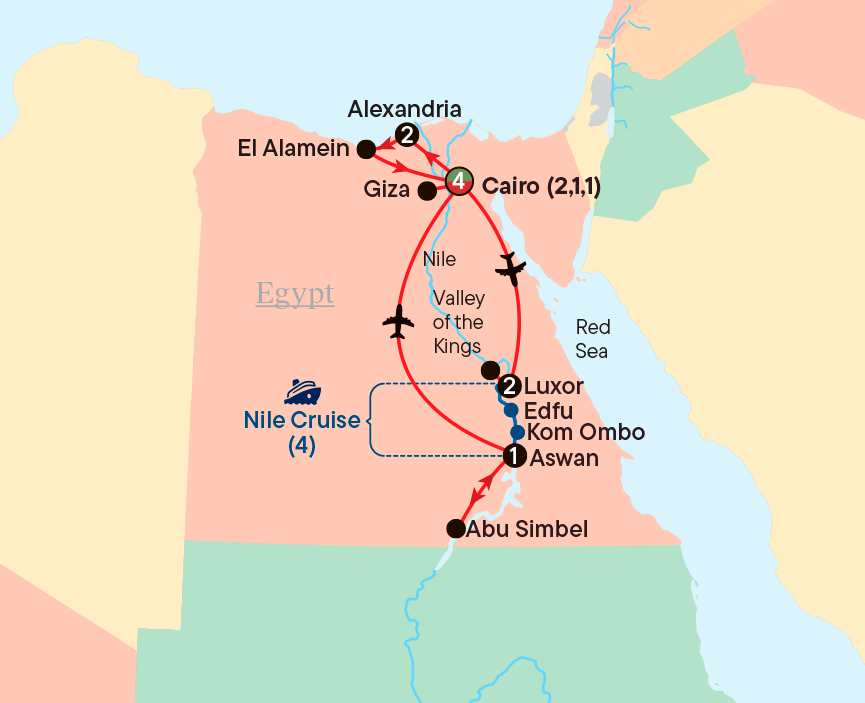
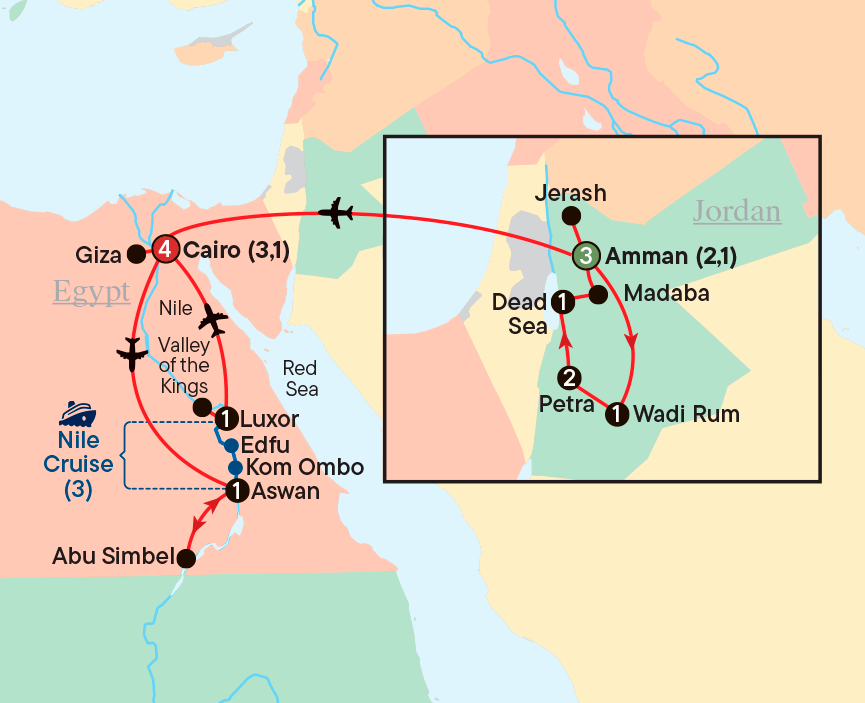
Tour map
Highlights of Egypt & Jordan
Tour Enquiry
Highlights of Egypt & Jordan
About the tour
Itinerary
1
Depart Australia
2
Arrive Amman
Welcome to Jordan, a fascinating country where ancient traditions and modern charm blend seamlessly under desert skies. We begin in Amman, Jordan’s bustling and vibrant capital and one of the oldest continuously inhabited cities of the world. Famous for the seven hills it’s built on, Amman rises and falls like a mosaic of past and present, from the Roman Theatre and Amman Citadel to the buzzing energy of Rainbow Street and its boutiques, galleries and cosy cafes. We don’t want you to miss out on any aspect of your small group tour. To ensure that you don’t, we recommend you arrive at your starting destination by 5.00pm. We’ll enjoy some free time to freshen up, before meeting our fellow travellers at a group welcome dinner this evening.
3
Amman – Jerash – Amman
This morning, we’ll travel to Jerash, one of the most beautiful and well-preserved Greco-Roman cities in the world, where ancient Rome comes spectacularly to life. The ancient city was buried in sand before being gradually revealed through a series of excavations, starting in 1925 and continuing to this day. We’ll tour through the colonnaded street, amphitheatre, churches, temples and the vast Roman Forum. Keep your eyes peeled for the chariot tracks that remain etched in the stone roads. Surrounded by olive groves and the lovely rolling hills typical around Amman, Jerash offers a captivating, and vivid, peek into the ancient past. Later, we’ll take a short drive to the impressive Ajloun Castle or ‘Qalaat Rabadh’ (Arabic for ‘Hilltop Castle’). Perched high on the hill, this striking Islamic Castle was built in the 12th century, serving as a military fort to protect the region from invading Crusader forces and showcases historic Islamic military architecture, complete with winding staircases, arrow slits and hidden passageways. Special Experience Participate in a local baking workshop at the Biscuit House, complete with a cup of aromatic tea and scenic views of the nearby Ajloun Forest. Nestled within the lush Ajloun Forest Reserve, the Biscuit House is a delightful blend of culinary tradition and natural beauty. We’ll have the opportunity to try our hand at baking some traditional Jordanian treats, all the while savouring a steaming cup of herbal tea and the panoramic views of the surrounding woodlands. After baking up a storm, we’ll return to Amman where the remainder of the evening is at leisure.
4
Amman – Wadi Rum
We’ll begin our day with a visit to the amazing Amman Citadel, perched atop the Jabal Al Qal’a, one of the city’s highest hills and one of the seven jabals that originally made up the city. We’ll walk through this ancient ruin to gain insight into Jordan’s history while also enjoying incredible panoramic views. After our visit, we’ll bid Amman farewell as we make our way to the breathtaking Wadi Rum, a protected desert wilderness in southern Jordan. This otherworldly desert is also known as the Valley of the Moon and is a stunning canvas of towering sandstone mountains, narrow canyons and rust-red sands that glow like fire when the sun sets. Upon arrival in Wadi Rum, we’ll enjoy lunch before checking in to our hotel. This afternoon we’ll take an exciting, if somewhat bumpy, 4WD tour through one of the most stunning desertscapes in the world to understand and appreciate why this beautiful area has been the backdrop for many Hollywood films, as well as hopefully having the opportunity to catch a magnificent sunset over the dunes. Optional Excursion Camel Ride - Experience an iconic aspect of Bedouin life, taking a camel ride through Wadi Rum. 1 hour – from $25pp US. Cash only.
5
Wadi Rum – Petra
Checking out of our desert camp in Wadi Rum this morning, we make our way towards Petra. Along the way, we’ll stop to visit the fascinating 'Little Petra', also known as Siq al-Barid. Little Petra has a history dating back some 9,000 years and is one of the oldest archaeological sites in the Middle East. Famous for its ancient buildings sculpted out of solid red sandstone, Little Petra has been a UNESCO World Heritage-listed site since 1985. Next, we’ll travel the short distance to Petra, located in Jordan’s southwestern desert. Petra is one of the world’s most famous archaeological sites and classified as one of the Seven Wonders of the World. Carved from rose-coloured sandstone, Petra is often called the ‘Rose City,’ and has appeared in a number of films including Indiana Jones and the Last Crusade and Arabian Nights. After checking into our hotel, the remainder of the afternoon is at leisure for us to further explore our surrounds or to simply relax at the hotel. Tonight, we’ll enjoy a group dinner at a local restaurant in Petra. Optional Excursion Petra by Night - Discover the magic of Petra after dark, as the rock city is lit by more than 1,000 candles. 2 hours – from $43pp US. Cash only.
6
Petra
This morning, put on your walking shoes and grab your favourite sunhat as we explore the famous lost city of Petra on a guided tour. Carved into the sheer rockface by the Nabataeans more than 2,000 years ago, seeing Petra up close is a jaw-dropping ‘how did they do that?!?’ moment. Ancient capital of the Nabataeans, this complex flourished as an important junction for the silk and trade routes. Attracting visitors from all over the world, much of Petra’s appeal comes from its breathtaking setting deep inside a narrow desert gorge. Our guide will explain the history of this great city and our tour will include a visit to Petra’s most famous monument, whose grand entrance is through the Siq, a narrow gorge that opens up to reveal the iconic Treasury, its ornate façade glowing in the desert sun like a forgotten jewel. Beyond this architectural marvel, the lost city unfolds around us as we wander through the canyon. We’ll also visit Pharaoh's Castle, the Triumphal Arch, the Roman-style Amphitheatre situated near the top of a large hill and the stunning Monastery. The view from here is definitely worth the sweaty climb! After our guided tour, enjoy the rest of the day free to explore this delightful city independently. Challenging Day Today is a particularly challenging day, where there will be extended periods of walking time, often across uneven ground and in areas of high altitude or heat and humidity.
7
Petra – Dead Sea
We’ll begin the day travelling along the ancient King’s Highway, one of the world’s oldest trade routes still in use today. Mentioned in the Old Testament, this historic thoroughfare connected Syria to the Gulf of Aqaba and today is a scenic way to explore parts of Jordan. Along the King’s Highway we’ll find the incredible Shobak Castle, perched atop a hill that was formerly called Mons Realis or 'Royal Mountain'. This imposing castle was built by the crusader King Baldwin I in 1115, and throughout history was the subject of numerous attacks, reflected through the site's weathered architecture. Next, we’ll continue to the Dead Sea where we check in to our hotel and enjoy a group lunch. Nestled between Jordan and Israel, this salty marvel sits at the lowest point on earth – about 430 metres below sea level. As its name evokes, the Dead Sea is devoid of life due to the extremely high content of salts and minerals that give its waters its renowned curative powers, therapeutic qualities and buoyancy. Because the salt content is four times that of most oceans, you can float in the Dead Sea without even trying. The rest of the day is at leisure for us to enjoy our time at the Dead Sea any way we choose!
8
Dead Sea – Amman
Today we make our way back to Amman, stopping in Madaba along the way. Known as ‘The City of Mosaics’, underneath almost every house in Madaba lies a fine Byzantine mosaic. We will visit the Greek Orthodox Church of St George, home to Madaba's main attraction, a wonderfully vivid, 6th century Byzantine mosaic map showing the entire region from Jordan and Palestine in the north, to Egypt in the south. We’ll also stop at Mount Nebo, perched high above the Jordan Valley. More than just a scenic lookout, it’s a spot steeped in history and legend, and the breathtaking views are a lucky bonus! According to legend, this is the spot where Moses stood, making it one of the most revered sites in the Holy Land. On a clear day, it’s possible to see across the Dead Sea to Jerusalem, Jericho and the hills of Judea. Returning to Amman, we’ll have the afternoon to spend as we wish before joining a cooking class. Special Experience Learn about delicious local Middle Eastern cuisine at a cooking class and enjoy our culinary creations for dinner as we bid farewell to Jordan. Tucked into a charming old home in one of Amman’s historic neighbourhoods, this cooking class offers guests more than just a meal – it’s a fun, hands-on celebration of Jordanian hospitality and culture, one fragrant, flavourful bite at a time. We’ll roll up our sleeves as we learn to make our own traditional dishes and get to devour our creations around a shared table.
9
Amman – Cairo
Today we say ‘ma’a al-salama’ to Jordan and take a short flight to Cairo - welcome to Egypt! A country known for its historical sites and world wonders. We begin in Cairo, the sprawling capital of Egypt and the largest city in Africa. A city that never stands still, this buzzing metropolis situated along the banks of the Nile River is a thrilling blend of ancient wonders and lively modern culture. Often called the ‘City of a Thousand Minarets’, it’s famous for its stunning Islamic architecture, vibrant street life and deep historical roots. Rising from the desert just outside Cairo are the iconic Pyramids of Giza and the Great Sphinx, as well as the new Grand Egyptian Museum. This fascinating museum houses a world-famous collection of antiquities, including treasures from Tutankhamun’s tomb, as well as thousands of other artifacts. Cairo itself is a mind-boggling cacophony of sights and sounds, where historic mosques and busy bazaars, like Khan el-Khalili nestle next to modern cafes and high-rise buildings. We’ll enjoy some free time to freshen up, before joining our fellow travellers for a group welcome dinner this evening.
10
Cairo – Giza – Cairo
We begin today with an exploration of Sakkara, where we will see the Step Pyramid of Djoser. Designed by Imhotep, the famous vizier of King Djoser, this was the first pyramid ever built and is a groundbreaking monument of ancient architecture. The Step Pyramid of Djoser marked a major evolution from the traditional flat-roofed mastaba tombs. Rising in six distinct tiers, the pyramid was designed as a grand staircase to the heavens. As the centrepiece of a vast mortuary complex, it symbolised royal power and the afterlife, setting the stage for future pyramid building in Egypt. Special Experience Tour the historic Serapeum of Sakkara, the burial place of the Apis Bulls and home to centuries of cult activity. Venturing to the Giza Plateau for lunch, we’re treated to delicious Middle Eastern cuisine, but the best bit? The view! This unique restaurant is unlike anything you’ve been to before. Offering panoramic views of the majestic pyramids surrounded by desert, the pictures we’ll take here are guaranteed to be incredible. Special Experience Take in the incredible views of the Great Pyramids of Giza while enjoying a delicious lunch at the Giza Plateau. Next, we’ll visit the oldest structures in existence and one of the Seven Wonders of the Ancient World, the amazing Great Pyramids of Giza. Nothing can prepare us for the feeling of standing at the base of the pyramids. Their sheer size is overwhelming and it’s a marvel to wonder at the ancient engineering ingeniousness. We’ll visit the nearby Great Sphinx, with the body of a lion and the head of a king, often referred to as the national symbol of Egypt.
11
Cairo
This morning we’ll visit the Grand Egyptian Museum, Egypt's newest museum, and the largest archaeological museum in the world, showcasing over 100,000 antiquities, including the complete collection of King Tutankhamun’s treasures, many displayed for the first time! Here, we’ll have time to explore the various exhibition halls, marvel at the world’s only Hanging Obelisk and admire the remarkable artifacts on display on the Grand Staircase. We’ll then visit the 12th-century Saladin Citadel of Cairo and the Mohammed Ali Mosque, built in classic Turkish style, it resembles the great mosques of Istanbul. Our tour will also take us to visit a weaving workshop, to learn about locally made Egyptian carpet. Finally, we’ll visit a local jewellery shop, that specialises in customised gold and silver cartouches.
12
Cairo – Aswan
We’ll transfer to Cairo airport early this morning for a short flight south to Aswan, gateway to the incredible history, temples and monuments of the region known as Upper Egypt. Located in southern Egypt on the banks of the Nile, Aswan is a city known for its natural beauty, historical significance and rich Nubian heritage. It served as a strategic gateway to Africa in ancient times and was a major trading hub. Aswan is home to some impressive archaeological sites, including the Philae Temple, the Unfinished Obelisk and the Aswan High Dam, a modern engineering marvel that controls the flow of the Nile. On a half day tour we’ll visit the picturesque Philae Temple, located on Agilkia Island. This stunning temple complex, dedicated to the goddess Isis, is renowned for its majestic architecture and captivating history, set against the backdrop of serene waters and lush surroundings. This afternoon we’ll soak up the serenity on board a traditional felucca sailboat, cruising along the Nile and observing life along the palm-fringed banks of the river as our boat takes advantage of the gentle winds and currents. The slow, quiet pace makes it an ideal way to relax and connect with the timeless rhythm of the Nile. Optional Excursion Experience the Sound & Light Show at Philae Temple at night as you walk through ancient courtyards illuminated by vivid lights and echoes of powerful narration. Let the dramatic storytelling and visual effects transport you back in time to uncover the secrets, legends and legacy of one of Egypt’s most enchanting temples. 1.5 hours – from $65pp US. Cash only.
13
Aswan – Abu Simbel – Nile Cruise
We have an early start this morning as we cross the desert to our destination, the incredible UNESCO World Heritage-listed twin temples of Abu Simbel. The temples were originally carved out of the mountainside during the reign of Pharaoh Ramses II in the 13th century BC, as a monument to himself and his queen, Nefertari. Here, we’ll spend a few hours exploring these fascinating temples before returning to Aswan to board our Nile River cruise ship. We’ll enjoy lunch on board and spend the remainder of the afternoon at leisure. A great way to while away an afternoon would be up on deck with a cool drink, watching the scenery drift by… there’s nothing like it! Optional Excursion Nubian Museum - Visit this fascinating Museum dedicated to Nubian culture and civilisation. 1.5 hours –from $60pp US. Cash only. Optional Excursion Nubian Village - Travel by motorboat to a local village, visit a Nubian family and enjoy tea in their home. 3 hours – from $75pp US, including camel ride; from $65pp US, without camel ride. Cash only.
14
Nile Cruise
After breakfast we’ll cruise to the riverside Temple of Kom Ombo, dedicated to the gods Sobek and Haroeris. We’ll have some time to explore the temple with our guide, before cruising onward to Edfu, located on the west bank of the Nile River between Esna and Aswan. Renowned for the Temple of Horus dedicated to the Falcon God, our main attraction this afternoon will be a visit to this site, which we will access by bus transfer. This beautiful ancient temple is one of the best-preserved in Egypt and the second largest after Karnak Temple. Continuing our river journey, we sail towards Luxor and cross through the lock at Esna, a highlight of many Nile cruises – this lock helps boats navigate the change in water level caused by the nearby dam. It’s a fascinating process to witness, usually accompanied by lively scenes along the riverbanks and with the small boats that approach to sell textile souvenirs, oftentimes involving merchandise being hurtled through the air to land on deck or into the arms of unsuspecting passengers - it has to be seen to be believed! Tonight, we enjoy a lively, traditional Galabeya party on board.
15
Nile Cruise
After breakfast on board, we will set off to explore the West Bank on a half day tour. Our first stop is the spectacular Valley of the Kings, which served as a royal burial chamber for around 500 years. This site is home to legendary kings and queens, their families, and their possessions for the afterlife. Here we’ll explore the network of tombs carved deep into the limestone, where each tomb has a similar pattern of three corridors, an antechamber and a sarcophagus chamber. Hidden in the desert hills, over sixty tombs have been discovered, many adorned with detailed and intricate hieroglyphic scenes of the afterlife. Special Experience Descend underground into Tutankhamun’s tomb, featuring intricate corridors and remarkably well-preserved hieroglyphic paintings that reveal ancient tales. Next, we explore the stunning Temple of Hatshepsut. Queen Hatshepsut was one of only a few women to be given the title of pharaoh. Built into the cliffs of the Theban Mountains, this grand mortuary temple features terraces, colonnades and ramps that blend seamlessly into the surrounding landscape. We then visit the Colossi of Memnon, a historic landmark consisting of two massive statues of the Pharaoh Amenhotep III that stands guard on the west bank of the Nile near Luxor, towering over 18 metres high. Lastly, we’ll stop at a nearby alabaster workshop to learn how the locally quarried stone is carved and crafted. Optional Excursion Hot Air Balloon Ride over the West Bank in the early morning. Includes transport from hotel. 1.5 hours – from $170pp US. Cash only. Optional Excursion Deir El Medina & Medinet Habu – Visit one of the most well-preserved ancient settlements in Egypt and the Mortuary Temple of Ramses ll. 3 hours – minimum 4 participants required – from $105pp US, including Nobles Tombs; from $160pp US, including Nefertari’s Tomb (subject to open times). Cash Only Challenging Day Today is a particularly challenging day, where there will be extended periods of walking time, often across uneven ground and in areas of high altitude or heat and humidity.
16
Nile Cruise – Luxor
Today we disembark our Nile cruise ship after breakfast and explore Luxor. Located on the east bank of the Nile River, the city is celebrated as one of the world's greatest open-air museums, thanks to its two huge surviving ancient monuments, the Egyptian temple complexes of Karnak and Luxor. Our sightseeing begins at the fascinating Karnak Temple, dedicated primarily to the Pharaoh Amun-Ra. Approximately 30 pharaohs contributed to the temple’s structure over time, which explains its monumental size! The temple complex covers about a hundred hectares and features vast courtyards, towering obelisks, colossal statues and intricately carved hieroglyphs. Its most famous section, the Great Hypostyle Hall contains 134 massive columns in 16 rows, creating an awe-inspiring forest of stone. We’ll then visit Luxor Temple, once connected to Karnak Temple by a 3-kilometre-long Avenue of Sphinxes. Luxor Temple is also home to a 25-metre-tall pink granite obelisk, which was part of a matching pair until the 1830s when one was given to France. It now stands in the centre of the Place de la Concorde in Paris. Unlike many temples dedicated to the gods alone, Luxor Temple also celebrated the divine role of the pharaoh. The temple features beautifully lit grand colonnades, statues and wonderfully preserved reliefs depicting many gods and pharaohs and comes alive – especially at night. This temple was the centrepiece of the Opet Festival, where statues of the gods were paraded from Karnak to Luxor. We’ll visit a local gallery to appreciate the ancient artform of papyrus craft, before checking in to our hotel to enjoy the rest of the afternoon at leisure. Optional Excursion Dendera Temple Complex – Visit one of the best-preserved temples and most important sites of ancient Egypt. 5 hours – minimum 4 participants required – from $85pp US. Cash only. Optional Excursion Sound & Light Show at Karnak Temple at night. 1.5 hours – from $65pp US. Cash only.
17
Luxor – Cairo
Today we say goodbye to Luxor as we transfer to the airport for our flight back to Cairo. Upon arrival, we’ll sharpen our haggling skills during a visit to the 14th-century Khan el-Khalili Bazaar, Cairo’s most famous market and shopper’s paradise in the Islamic District. Famous for its handmade crafts, it’s also the perfect place to enjoy a traditional Arabic coffee. This centuries old souk is a fascinating maze of narrow alleys bursting with treasures - handmade jewellery, shimmering lanterns, colourful spices, perfumes and souvenirs galore! The scent of incense lingers in the air as shopkeepers call out cheerfully, ready to bargain with a smile. The bazaar isn’t just a place to shop – it’s a living piece of Cairo’s history, where you can sip mint tea in a traditional café, hear the call to prayer echo and practically feel the city’s heartbeat all around you. For lunch we will try a popular local dish called Koshary, Egypt’s national dish and a beloved street food. Later, enjoy some free time before a group farewell dinner at a local restaurant.
18
Depart Cairo
Today marks the end of our incredible adventure across Egypt and Jordan. Our tour concludes after breakfast this morning. We hope you leave with fantastic memories! Please note, in order to undertake the following optional tours additional post tour accommodation in Cairo may be required. Please check with your Travel Specialist for details. Optional Excursion Coptic Cairo - Discover the ancient sites & culture of Coptic Christians throughout Old Cairo. 3 hours – from $65pp US. Cash only. Optional Excursion Islamic Cairo - Visit the Gayer Anderson Museum, Ibn Toulon Mosque & El Sultan Hassan Mosque. 3 hours – from $65pp US. Cash only. Optional Excursion The Pyramids of Dahshur - Dahshur forms the southernmost area of the Memphis Necropolis & contains a number of pyramid complexes & monuments 3 hours – from $65pp US (cash only). Optional Excursion National Museum of Egyptian Civilisation – Displaying the civilisation of Egypt from the prehistoric period to the present era. 3 hours – from $80pp US. Cash only.
19
Arrive Australia
Tour dates
Tour Enquiry
Highlights of Egypt & Jordan
Tour Enquiry
Highlights of Egypt & Jordan
Tour Enquiry
Highlights of Egypt & Jordan
Tour Enquiry
Highlights of Egypt & Jordan
Tour Enquiry
Highlights of Egypt & Jordan
Tour Enquiry
Highlights of Egypt & Jordan
Tour Enquiry
Highlights of Egypt & Jordan
Tour Enquiry
Highlights of Egypt & Jordan
Tour Enquiry
Highlights of Egypt & Jordan
Tour Enquiry
Highlights of Egypt & Jordan
Tour Enquiry
Highlights of Egypt & Jordan
Tour Enquiry
Highlights of Egypt & Jordan
Tour Enquiry
Highlights of Egypt & Jordan
Tour map
South India Explorer
Tour Enquiry
South India Explorer
About the tour
Itinerary
1
Depart Australia - Arrive Bangalore
Welcome to India and to the beautiful and vibrant South. This region is known for its unique culture, rich history, flavourful cuisine and stunning natural beauty. There’s a warmth to this part of the country that you’ll feel right away — from the people to the landscapes and the food. We’ll begin our journey in Bangalore, officially called Bengaluru. It’s one of India’s most forward-thinking cities and is often referred to as the Silicon Valley of India. But beyond the modern edge, you’ll find green parks, colourful markets, friendly cafés and a lovely blend of tradition and innovation. Settle into your hotel tonight and enjoy that familiar excitement and calm that comes with arriving somewhere new.
2
Bangalore - Mysore
Bangalore, often seen as the gateway to South India, offers a glimpse of modern India woven seamlessly with rich heritage. After breakfast, we’ll head out for an introduction to this lively city. Our first stop is a scenic drive past the Vidhana Soudha, Karnataka’s state legislature building. With its grand granite domes and elegant design, it’s a striking example of modern Indian architecture. Be sure to have your cameras ready because the architecture is truly stunning. Next, we’ll visit the famous Bull Temple, one of Bangalore’s oldest and most cherished landmarks. Built in the 16th century, it houses a colossal statue of Nandi, the sacred bull and faithful companion of Lord Shiva. The scent of incense lingers in the air, and you may even hear temple bells in the distance as we explore. After some free time for lunch, we will set off on a scenic drive to Mysore. This city is known for its magnificent palaces, lively markets and rich cultural heritage that we will have the chance to explore. Tonight, we will come together for a group welcome dinner.
3
Mysore
Mysore, known as the City of Palaces, invites you into a world of regal charm and colourful street life. Once the seat of a powerful kingdom, it still holds an air of quiet elegance and history that’s easy to fall in love with. We begin the day at Devaraja Market, one of the oldest in the city. It’s a lively, local spot where everyday life in Mysore unfolds before your eyes. As we walk through its narrow paths, we’ll pass fragrant flowers, turmeric-stained stalls, gleaming piles of fruit and bundles of incense sticks. The market is a great place to pick up souvenirs like silk scarves, bangles and the city’s famous sandalwood soap. From the market, we’ll step into the grandeur of Mysore Palace. Rebuilt in 1912 after a fire, this palace blends Indo-Saracenic, Dravidian and Islamic influences in dazzling fashion. Inside, light dances across stained glass, marble floors and intricately carved doors. It’s not hard to imagine the royal courts that once filled these halls with music, pageantry and the swish of silk. This afternoon is yours to enjoy at leisure. You may wish to visit the Mysore Art Gallery or simply relax with a cup of chai and take in the charm around you.
4
Mysore - Coorg
This morning, we’ll say goodbye to the energy of Mysore and begin our journey south through the beautiful countryside. Our first stop will be Bylakuppe, the largest Tibetan settlement in India, often referred to as the Golden Temple for its richly decorated monastery. Established in 1960, this peaceful community is home to several monasteries, each offering a glimpse into Tibetan life and spirituality. As we stroll through the grounds, you’ll notice rows of fluttering prayer flags, intricate golden statues and the gentle rhythm of monastic life. Keep an eye out for the Namdroling Monastery, known for its vibrant artwork and serene atmosphere. We then continue into the hills to visit a coffee plantation. Coffee has a long and fascinating history in this region, and today we’ll get an insider’s view into its cultivation and culture. Special Experience Tour a sprawling 300-acre coffee plantation, discover Arabica from Robusta beans and share lunch with a coffee planter’s family. After lunch, we will make our way to Coorg. As we wind through misty forests and hillside farms, you’ll understand why it’s called the Scotland of India. With its red-roofed homes and cool, crisp air, Coorg offers a peaceful change of pace. We’ll check into our hotel, with the rest of the day at leisure.
5
Coorg – Calicut (Kozhikode)
The cool hills of Coorg slowly fade behind us as we make our way toward the coast. This is Kodava country, home to a proud and hospitable community with deep roots in the land. Many families here have grown coffee, cardamom and rice for generations, and you’ll still see traditional homes nestled among the plantations. As we drive, the scenery shifts gently from forested slopes to open fields, sleepy hamlets and roadside fruit stalls. Schoolchildren in colourful uniforms, coconut vendors and farmers at work offer glimpses into everyday life in rural South India. We’ll arrive in Calicut by late afternoon and settle into our hotel. This coastal town holds a special place in world history, as the first Indian port reached by Vasco da Gama in 1498. This momentous landing opened up sea routes between Europe and Asia and helped establish Kerala’s long tradition of global trade. The rest of the evening is free to relax or explore. You may wish to sample the region’s famous Malabar cuisine for dinner, especially its rich, spice-laden seafood curries and delicate biryanis.
6
Calicut (Kozhikode) - Cochin
We leave Calicut behind this morning, following the coastal route south toward Cochin, one of Kerala’s most vibrant and historically rich cities. The drive is scenic, passing through lush countryside, small canals and palm-fringed backwaters. Along the way, you’ll catch glimpses of village life that has changed little over generations. Arriving in Cochin later this afternoon, we’ll check into our hotel. Known as the Queen of the Arabian Sea, Cochin has been a bustling port for centuries. Traders and travellers from across the globe have left their mark, and today you can still spot Dutch, Portuguese, Jewish and British influences in the city’s architecture, food and culture. In the evening, we’ll be treated to a traditional Kathakali dance performance. This classical art form, unique to Kerala, combines expressive hand gestures, dramatic eye movements and colourful costumes to bring Indian mythology to life. Performed entirely by men, the elaborate face painting and headpieces are a show all on their own. It’s a beautiful introduction to Kerala’s artistic spirit and a perfect welcome to Cochin.
7
Cochin
Cochin is a living mosaic of cultures, one of the few places in India where layers of history are not only preserved but proudly on display. From functioning Jewish synagogues and Dutch colonial homes to Portuguese churches and British-era bungalows, the city wears its past beautifully. Today, we’ll uncover a few remarkable ‘firsts’ that make Cochin special. We begin with a walking tour of Fort Cochin, home to the first European-built fort in India. As we wander through the old quarter, the streets and architecture reveal a rich blend of influences. We’ll stroll along the seaside promenade, passing St. Francis Church, the first European church in India and the original burial site of Vasco da Gama. Next, we’ll see Santa Cruz Basilica, one of the few buildings in India granted basilica status by the Pope. Its grand Gothic design is a feast for the eyes. Nearby, the famous Chinese fishing nets still in operation today, are said to have been introduced by traders from the court of a Chinese emperor in the 14th century. Our next stop is the Dutch Palace, originally built by the Portuguese and modified in the 17th century before being gifted to the Raja of Kochi. This historic site has hosted coronation ceremonies and displays beautiful murals of Hindu epics that remain to this day. After our tour, the rest of the day is yours to enjoy at leisure.
8
Cochin - Backwaters
After a leisurely morning, we’ll make our way to the backwaters jetty, where our next adventure begins. The drive will be a lovely one, winding through villages and past lush rice paddies, with coconut palms lining the roads like old friends waving us along. Kerala’s backwaters are a treasure shaped over centuries by the meeting of rivers and sea. As water from the Arabian Sea gently pushed inland, it formed a peaceful maze of canals, lagoons and lakes. These waters are the lifeblood of the region, where daily travel, fishing and farming all happen on or near the water. Upon arrival, we’ll step onto our traditional wooden houseboat, complete with cosy comforts and a warm welcome. We’ll cruise at a relaxed pace, taking in narrow canals, colourful village homes and the occasional splash of a kingfisher or fisherman’s net. As evening falls, we’ll enjoy dinner on board and let the stillness of the water lull us to sleep. It’s a peaceful kind of magic you won’t soon forget.
9
Backwaters - Alleppey
After breakfast, we’ll wave a fond farewell to our lovely houseboat and step back onto dry land, feeling rested and ready for the day. Next, we’ll make our way to Alleppey, often called the ‘Venice of the East.’ This charming town is laced with a network of canals, lagoons and shimmering waterways. Life moves at a gentle pace here, where boats are just as common as bicycles, and everything seems to flow in time with the water. Once we arrive, we’ll have a bit of free time before checking into our hotel. A stroll through the local markets is a lovely way to spend it. Watch skilled artisans spin coconut husks into ropes and mats. Known as coir country, Alleppey is famous for this simple, time-honoured craft. Seeing it done right before your eyes is satisfying and offers a real glimpse into local life. We’ll then check into our hotel, with the afternoon yours to enjoy. Whether you fancy a dip in the pool, a Ayurvedic massage or simply curling up with a book in a quiet corner, this is your time to relax. Later in the evening, we’ll come together for a group dinner at our hotel.
10
Alleppey - Periyar
After an early breakfast, we’ll make our way to Periyar, a scenic region nestled in Kerala’s Western Ghats and surrounded by the Cardamom Hills. Known for its wildlife sanctuary and tranquil lake, Periyar welcomes us with cool air and lush greenery. We’ll arrive by afternoon and head to a local spice plantation. This region plays an important role in India’s spice trade. During our visit, we’ll learn how spices like cardamom, pepper, cinnamon and cloves are cultivated, harvested and processed. It’s an insightful look into how these everyday ingredients are grown and how they make their way from the fields to the kitchen. After checking into our hotel, we’ll come together again in the evening to enjoy a traditional Kalaripayattu performance. Special Experience Enjoy an evening Kalaripayattu performance at a local theatre — an ancient martial art with historical influence on Shaolin Kung Fu. The word Kalari means battlefield or combat arena. The earliest references to this martial art dates back to the Sangam literature era between 300 BC and 300 AD. It is said that after learning the art in India, Buddhist monks later spread it to the Shaolin temples as Shaolin Kung Fu.
11
Periyar - Madurai
Periyar Lake is a striking body of water formed by the construction of a dam on the Periyar River. When the valley was flooded, forests were submerged, leaving tall, bare tree trunks jutting out of the water. The lake’s edges are lined with marshy grasslands and thick forest, making it a peaceful haven for wildlife. Early this morning, we’ll set off on a boat ride to explore this stunning landscape and soak in the calm, refreshing atmosphere. While animal sightings are never guaranteed, we’ll keep an eye out for elephants, wild boar and sambar deer that sometimes wander down to the water’s edge. Even if they remain shy today, the views of the surrounding sanctuary are well worth the trip. This region is not only scenic but also an important watershed for the Periyar and Pamba rivers. After the boat ride, we’ll enjoy breakfast before beginning our journey to Madurai, a city rich in history and legend. According to Hindu mythology, Madurai was born from drops of honey that fell from Lord Shiva’s hair. We’ll arrive later in the afternoon, with the rest of the day free to settle in and enjoy the city’s first impressions.
12
Madurai
Today, we’ll step into the heart of Madurai, one of South India’s oldest and most vibrant cities. Known for its rich culture, deep traditions and timeless charm, Madurai offers a true glimpse into everyday Tamil life we'll get to experience first-hand. We’ll begin with a morning walk through the bustling alleys. As the sun rises, you’ll see locals starting their day. Housewives draw delicate 'kolam' patterns at their doorsteps for prosperity, cows are milked in courtyards and market vendors line the streets with fresh vegetables, herbs and fragrant snacks. We’ll stroll through the busy wholesale market, where produce from across South India is traded and take in the scent of sandalwood drifting from nearby shops. Our walk finishes at the grand gates of the Meenakshi Temple. Next, we’ll explore the temple itself, a masterpiece of Dravidian architecture. Dedicated to Goddess Meenakshi and Lord Sundareswarar (Shiva), this centuries-old marvel is known for its towering gopurams, vivid carvings and vibrant spiritual atmosphere. It truly is one of South India’s greatest wonders. In the afternoon, we’ll visit Madurai’s famous flower market, a joyful explosion of colour and scent. Take your time to soak in the beauty and cultural significance of these blooms that play such an important role in daily life here. Optional Excursion This evening, you can choose to visit the Meenakshi Temple to witness the unique ‘Bedtime of the God’ ceremony. In this traditional ritual, an image of Lord Shiva is carried in a vibrant procession with musicians, priests and singers. He visits nearby shrines before joining Goddess Meenakshi for the night. It is a fascinating glimpse into local temple life and well worth experiencing during your stay in Madurai. Approximately 4 hours – from $17pp USD.
13
Madurai - Chettinad - Thanjavur
This morning, we'll bid farewell to Madurai, a city that lingers in the memory with its colourful streets, rich tradition and warm spirit as we head to Thanjavur. On our way, we'll stop at the Athangudy tile workshop, where we’ll watch skilled artisans at work. These hand-crafted tiles are known for their bold patterns and bright colours, each one made using traditional techniques passed down through generations. It’s a joy to see the care and precision that go into every piece, a beautiful blend of craftsmanship and artistic flair. We’ll then continue to Chettinad, a region famous for its grand mansions, strong heritage and distinctive cuisine. We’ll have a bit of free time to stroll through the village and admire the Chettinadu mansions, with their wide courtyards, detailed woodwork and stately charm. Special Experience Savour Chettinad culinary art in a mansion-style hotel. Witness a chef's demonstration, relish exquisite dishes and enjoy a sumptuous lunch. After lunch, we’ll continue our drive to Thanjavur, a city with a deep artistic and spiritual legacy. On arrival, we’ll visit the remarkable Brihadeswara Temple and Fort. Special Experience Discover UNESCO Brihadeeswara Temple, part of the ‘Great Living Chola Temples,’ a symbol of Chola power, culture and architectural brilliance. Built in the 10th century, it remains one of the largest temples in South India. The temple has been a place of continuous worship for over a thousand years, with fortified walls added in the 16th century. Challenging Day Today is a particularly challenging day, where there will be extended periods of walking time, often across uneven ground and in areas of high altitude or heat and humidity.
14
Thanjavur - Pondicherry
Thanjavur, or Tanjore as the British once called it, takes its name from Tanjan, a demon in Hindu mythology. Today, it is celebrated for its deep cultural roots, grand temples and exquisite bronze artistry. This historic town has long been a centre for classical arts and is especially famous for its beautifully detailed bronze sculptures. This morning, we’ll visit a local bronze factory to see this proud tradition up close. Established in the 20th century to preserve the ancient Chola craft, the factory still uses the lost-wax method that dates back over a thousand years. We’ll enjoy a short demonstration and discover how skilled artisans bring each piece to life with remarkable precision and care. Later, we’ll journey to Pondicherry, a seaside town along the Coromandel Coast. Once a French trading post, the city still reflects its colonial charm in its architecture and boulevards. This afternoon, we’ll head out on a heritage walk through the French Quarter, known as White Town. Along the way, we’ll pass the vibrant Ganesha Temple, the French War Memorial, Gandhi statue, Old Lighthouse, the Ashram Dining Room and the peaceful Sri Aurobindo Ashram. We’ll then make our way to the hotel, with the rest of the evening free to relax.
15
Pondicherry
While the French Quarter often steals the spotlight in Pondicherry, today we’ll turn our attention to the other side of the canal, where the town’s Tamil heart beats strong. This vibrant area is known for its distinctive Franco-Tamil buildings, a fascinating blend of French design and traditional Tamil architecture. It was here that many prominent Hindu families lived, and the neighbourhood still hums with local life, colourful markets and deep-rooted culture. We’ll take a walk through these character-filled streets, soaking up the atmosphere and hearing stories of the people who’ve shaped this part of town. Our walk includes a visit to the Grand Bazaar, a bustling marketplace where locals shop for everything from vegetables and spices to fresh flowers and household goods. To end our tour, we’ll hop into a pedicab for a ride back to the hotel. The afternoon is yours to enjoy. A stroll along the seaside promenade is a lovely way to spend your time, with the salty breeze, ocean views and slow rhythm of the waves offering the perfect chance to unwind.
16
Pondicherry - Mahabalipuram
This morning, we’ll say goodbye to Pondicherry and set off for Auroville, a unique experimental township just outside the city. Known as the ‘City of Tomorrow,’ Auroville was founded in the late 1960s with a dream of human unity. People from all over the world live and work here, creating a peaceful, sustainable community built around shared ideals rather than borders. We’ll take a look around and learn more about what makes this inspiring place tick. From here, we’ll continue our journey to Mahabalipuram, a small coastal town with a big history. Once the second capital of the Pallava kings, Mahabalipuram is best known for its incredible rock-cut architecture and seaside sculptures. What makes this place especially fascinating is that many of the carvings here show scenes from everyday life, not just gods and myths, offering a rare glimpse into the lives of people from centuries ago. We’ll arrive in the afternoon, and the rest of the day is yours to enjoy. If you're feeling peckish, this region is known for its delicious seafood. You may want to try some of the region’s fresh seafood, such as a fragrant fish curry or spiced prawns. Dining by the sea with the breeze in the air is a lovely way to settle in for the evening.
17
Mahabalipuram
We’ll start our day early this morning with a tuk-tuk ride to Kokilamedu, a small coastal village near Mahabalipuram. It’s a lovely way to soak in the local vibe. This village was sadly devastated by the 2004 tsunami, but thanks to a collaborative effort between a German company and the Indian government, it was beautifully rebuilt. You’ll notice the company’s logo (KHW) still marked on many of the homes. Here, we’ll get a glimpse into the lives of local fishermen, experience their culture and see the lively morning fish auction in action. Afterwards, we’ll explore some of Mahabalipuram’s most iconic landmarks, beginning with the Five Rathas, a group of monolithic rock temples carved in the shape of chariots. Each one is dedicated to a figure from the Indian epic Mahabharata and showcases remarkable Pallava craftsmanship. We’ll also visit the Shore Temple, a stunning structure perched beside the sea, admired for its symmetry and serenity. We’ll continue on to Krishna Mandapam and Arjuna’s Penance, famous for their intricate stone carvings. Our final stop is the UNESCO World Heritage listed Butterball, a giant granite boulder that balances mysteriously on a slope. This afternoon, we’ll return to the hotel to relax and recharge. Challenging Day Today is a particularly challenging day, where there will be extended periods of walking time, often across uneven ground and in areas of high altitude or heat and humidity.
18
Mahabalipuram - Chennai
After soaking in the coastal serenity of Mahabalipuram, we’ll set off for Chennai, the final stop on our South Indian journey. On the way, we’ll visit Dakshinachitra, a fascinating living museum that brings the traditions of South India to life. Located along the scenic East Coast Road, it features 18 heritage homes, lively street scenes and hands-on exhibits. Here, we'll meet local artisans and enjoy folk performances that reflect the region’s diverse cultures. We’ll then arrive in Chennai, once known as Madras. This energetic city began in 1639 when British trader Francis Day established Fort St. George near a fishing village. Today, it’s the fourth largest city in India and a major centre for South Indian cinema, often affectionately called the 'Hollywood of India.' We’ll take a short orientation tour, including a visit to Santhome Cathedral. Built in 1523 by Portuguese explorers, this beautiful church stands on what is believed to be the tomb of St. Thomas the Apostle, making it one of only three such churches in the world. Enjoy an afternoon at leisure to do any last-minute shopping before we come together this evening for a farewell dinner.
19
Chennai
Our tour concludes after breakfast this morning. We hope you leave with a heart full of memories, a camera full of moments and new friends to cherish from this wonderful journey through South India.
20
Arrive Australia
Tour dates
Tour Enquiry
South India Explorer
Tour Enquiry
South India Explorer
Tour Enquiry
South India Explorer
Tour Enquiry
South India Explorer
Tour Enquiry
South India Explorer
Tour Enquiry
South India Explorer
Tour map
Colours of Rajasthan - Pushkar Festival
Tour Enquiry
Colours of Rajasthan - Pushkar Festival
About the tour
Itinerary
1
Depart Australia – Arrive Delhi
Welcome to captivating India, a country that boasts a vibrant and bustling mix of cities, tranquil landscapes, incredible architecture and tradition, making it truly one of a kind! India’s rich history is etched into every wall, with stories spanning back over 5,000 years. It’s one of the world’s oldest civilizations, being home to the ancient Indus Valley and Vedic cultures to powerful empires like the Maurya, Gupta, and Mughals. Colonised by the British in the 18th century, India finally gained independence in 1947 and has since grown into the world’s largest democracy and a vibrant, diverse nation. Our journey starts in Delhi, the capital of India, where the past and present seamlessly coexist. This city is a hub of colourful chaos, with rickshaws, cars and pedestrians filling the busy streets adorned with lively markets, street vendors and more. Steeped in history, you'll find ancient monuments and traditional architecture scattered throughout the city, rendering Delhi a diverse and endlessly fascinating metropolis to explore.
2
Delhi
We'll kick off the day with a walking tour of Delhi, allowing us to explore this intriguing city on foot. We will stroll through Mehrauli Archaeological Park, stopping to view the impressive Jamali Kamali Mosque. The mosque was built in the 16th century during the reign of the Mughal Empire and is an excellent example of the architectural style of that period. Surrounded by spruced up lawns, the mosque is a popular picnic spot for locals. We’ll then continue to Qutub Minar, the highest stone tower in India and a masterpiece of Indo-Islamic architecture. This UNESCO World Heritage-listed site is a five-story tower with an incredible height of around 73 metres! Special Experience Savour lunch with a local family, delve into traditional cooking through a demonstration and explore the enchanting realm of Indian herbs. New Delhi houses an array of government buildings and official residences, reminiscent of the British colonial architecture. Our journey will take us past iconic structures such as the Parliament House and the Rashtrapati Bhawan, formerly the Viceroy's abode and now the esteemed residence of India's President. Afterward, we'll pause for a photo stop at the iconic India Gate war memorial, which stands proudly at the Rajpath's terminus, before proceeding to our next destination, Humayun’s Tomb. Built for the emperor of the Mughal dynasty in the mid-16th century, Humayun’s Tomb is a wonderful example of the early years of Mughal structural style. Beautifully blending in Islamic design elements, the tombs façade is complete with white marble and striking red sandstone—a total feast for the eyes! Challenging Day Today is a particularly challenging day, where there will be extended periods of walking time, often across uneven ground and in areas of high altitude or heat and humidity.
3
Delhi – Agra
This morning, we’ll embark on a sightseeing tour of Old Delhi, offering a glimpse into the rich tapestry of India’s past and present. Our first stop is to see the Red Fort, a fascinating structure built from red sandstone by the Mughal Emperor Shah Jahan. Next on today’s agenda is a rickshaw ride through the narrow lanes of Chandni Chowk, a lively street renowned for its vibrant ambiance. This method of transport not only offers an exceptional viewpoint of the city but also plays a vital role in supporting the livelihoods of locals. Next, we’ll visit one of Asia's largest Mosques, Jama Masjid, also built by Emperor Shah Jahan. The mosque features four towers and two 40-metre-high minarets, constructed with red sandstone and white marble. Later today we’ll arrive in Agra. Home to the famous Taj Mahal, Agra is located on the banks of the Yamuna River and is an enticing city for travellers wishing to see the iconic monument. Yet, the Taj Mahal is not the sole attraction here—the enduring legacy of the Mughal empire has bequeathed a splendid fort and an ample array of captivating tombs and mausoleums.
4
Agra
We’ll start our day with the incredible experience of watching the majestic early morning sun over the Taj Mahal—this is a truly unique opportunity to see what is often hailed as the most beautiful building in the world. An epitome of Mughal art, this monument was built by Emperor Shah Jahan in memory of his dear wife and queen Mumtaz Mahal. Made entirely of white marble, the Taj Mahal took a staggering 22 years to build by over 20,000 workers. We continue to the Agra Fort, among the finest examples of the fusion architecture that dominated the Mughal period. Designed and built by the great Mughal ruler, Akbar, in the 1560s, it was initially built as a military establishment, but later his successors made many additions to the main structure and converted half of it into a magnificent palace. This is where Emperor Shah Jahan was kept under house arrest by his third son Aurangzeb and spent the last year of his life viewing the Taj Mahal from across the river Yamuna. Returning to the hotel, we’ll have the remainder of the day to enjoy at leisure. Optional Excursion Mohabbat E Taj Show – Watch a magical theatre show that portrays the love story between Emperor Shah Jahan and his wife Mumtaz Mahal, revealing the romantic inspiration behind the creation of the Taj Mahal. 1 hour – from $40pp USD.
5
Agra – Dausa – Ranthambore National Park
Departing Agra this morning, we make our way towards Ranthambore National Park. Along the way we’ll stop to visit a local village using a Juggad, colloquially known as ‘The Village Mercedes’ among the locals. This unique mode of transportation is widely used by villagers for various purposes, including the transportation of villagers, fodder, cattle, and goods. Your Juggad ride will take you through expansive grazing pastures and fields, where you'll witness the cultivation of crops like wheat, mustard, coriander and chilies. Upon arrival in the Bhandarej village, you'll be welcomed into the homes of the villagers, where you can meet the traditionally dressed residents and observe farmers, herders, and silversmiths as they practice their crafts. You’ll also have the opportunity to visit the local school. Back on the road, we begin our journey into the jungle landscape of Ranthambore National Park, one of the biggest and most renowned natural wonders in northern India. This amazing national park is most famous for its tigers and is one of the best locations in India to see these majestic predators in their natural environment. We’ll enjoy a delicious group dinner at our hotel this evening.
6
Ranthambore National Park
Special Experience Set off on an early morning safari adventure through the wildlife haven of Ranthambore National Park. The search for Bengal tigers begins early as we board a canter vehicle for a morning of shared game drives. Guided by an expert naturalist, we’ll adventure through one of Ranthambore’s ten wildlife zones. As well as tigers, this exceptional national park is home to many other species including leopards, jungle cats, hyenas, jackals, porcupines, wild boars, marsh crocodiles, langur, Indian gazelle, spotted deer, sambar and nilgai. The park is also home to an array of flora with around 300 plant species dotted throughout the landscape. We’ll return to our hotel for a late breakfast, followed by some time at leisure to relax by the pool or refresh before lunch. In the afternoon, we will embark on a second game drive, offering another chance to and admire the park’s historic ruins and natural splendour.
7
Ranthambore National Park – Jaipur
This morning we have our eyes set on reaching stunning Jaipur, the capital city of the Indian state of Rajasthan. Jaipur is a vibrant and historically rich destination known for its distinctive architecture, colourful culture, and strong royal heritage. Often referred to as the ‘Pink City’ because of the terracotta-pink colour of many of its historic buildings, this unique colour scheme was introduced to welcome Prince Albert to the city back in 1876. Arriving early in the afternoon, we’ll enjoy some free time at our hotel before coming together for a workshop on tying turbans and sarees. Turbans worn in Rajasthan are referred to as the ‘pagari’, and they vary in style, colour and size - this indicates the wearer’s social class, caste, region and the occasion it’s being worn for! The turban’s shape and size may also vary with the climatic conditions of the different regions. Traditionally worn by women, in Rajasthan Bandhani sarees are most common, made of vibrant tie-dye patterns that showcase the culture of the region. The process of tying these traditional dresses is an artform in itself, which we will hopefully master today! Optional Excursion Cinema Hall - We’ll immerse in the local culture by visiting a traditional cinema hall, where we can observe the locals enjoying the movie and watch it with them. 1.5-2 hours – from $8pp USD.
8
Jaipur
Our day is dedicated to seeing the sites of beautiful Jaipur. This morning we set off on a city tour, beginning with a photo stop at the iconic Hawa Mahal. The landmark is renowned for its unique and intricate architecture, offering a glimpse into the opulent lifestyle and cultural richness of Rajasthan's royal past. Referred to as the ‘Palace of Winds’, this stunning pink sandstone structure was built in 1799 and was designed for royal women to observe street life while remaining unseen. Our next stop is the Amber Fort, perched atop a hill, overlooking the town of Amer and the city of Jaipur. We will enter the fort by jeep, taking in the timeless beauty and amazing views. Built from red limestone and marble by Raja Man Singh in 1592, the magnificent structure has influences of both Muslim and Hindu architecture. One of the most exquisite creations in the Amber Fort is the Sheesh Mahal (Palace of Mirrors), whose walls are covered in thousands of tiny mirrors – when dark, the room can become a dazzling fantasy with the light of a single match. We’ll also visit the rich and prosperous museums located inside the elegant City Palace Complex. Later this afternoon we’ll embark on a leisurely stroll through Jaipur's historic old town, meandering along its narrow lanes, basking in the vibrant Old Bazaar's ambiance, and exploring the well-structured old city. Its grid-like layout of broad, straight streets unveils a series of charming bazaars. While the new town symbolises contemporary India, the old city preserves the essence of tradition, vividly narrating the story of India's history and culture. Following this exploration, we will venture to a traditional tea shop, immersing ourselves in the local tea culture. Here, we'll savour the diverse flavours, much like the locals who often relish their tea at roadside kiosks. Optional Excursion Bollywood Dancing – This evening, get a chance to be part of a Bollywood dance class. This fun filled class will let the dancer within you come alive. The dancing itself is a fusion of all dance forms. 1 hour – from $32pp USD.
9
Jaipur – Pushkar
This morning, we wave goodbye to Jaipur and travel onwards to Pushkar—one of India’s oldest and holiest cities, and one of the five sacred dhams (pilgrimage sites) for devout Hindus. Famed not only for its spiritual significance, Pushkar also hosts India’s largest camel, horse and cattle fair, a vibrant and colourful annual event that draws visitors and traders from across the entire country. Beyond the spectacle, the fair holds deep religious meaning. On the full moon day, thousands of devotees take a holy dip in the sacred waters of Pushkar Lake, believed to cleanse sins and bring divine blessings and spiritual liberation. The town comes alive with spiritual chants, temple bells, and a deep sense of community in the air. This afternoon, we’ll enjoy a guided tour of Pushkar, including visits to the sacred Pushkar Lake and the incredible Brahma Temple—one of the few temples in the world dedicated to Lord Brahma. We’ll also stroll through the bustling local market, soaking up the vibrant atmosphere as we browse colourful stalls, smell enticing street food and enjoy the lively sounds of wandering musicians. With its mix of spiritual depth and festive energy, our next two nights in Pushkar promise a memorable experience.
10
Pushkar
Today, we dive into the vibrant spectacle that is the Pushkar Festival. Over 14 days, more than 400,000 people gather here, and in the first five days alone, around 20,000 camels, horses, and cattle are brought from across Rajasthan for trade. What began as a humble livestock market has transformed into a dazzling celebration of Rajasthani culture—a whirlwind of colour, sound, and energy unlike anything else in the world. This morning, we’ll enjoy a special camel cart ride through the bustling fairgrounds, where we’ll witness the vibrant event and take in the plethora of festivities on offer. Here, no two days are the same. We might see anything from beautifully decorated camels and horses, and folk performances to puppet shows, turban tying, and even moustache competitions—at Pushkar, anything goes! Make sure to soak up the lively atmosphere, and browse the colourful market stalls brimming with textiles and handicrafts. After, we’ll have the option to stay and further explore the fair on our own or head back to the hotel and enjoy the afternoon at leisure, before we reconvene for a group dinner at our hotel.
11
Pushkar – Deogarh
This morning, before departing for Deogarh, we’ll have some more time to further explore the fairgrounds and experience the wonder of this colourful event. Nestled in the heart of Rajasthan, Deogarh is a hidden gem where history, culture, natural beauty, and heritage come together. With fewer visitors, it provides an excellent opportunity for an authentic and tranquil Rajasthan experience. Along the drive, we’ll traverse Rajasthan’s scenic countryside, enjoying a brief stop along the way to stretch our legs and soak in the rural charm. In the evening, we’ll walk to Deogarh Village, where the vibrant tapestry of daily life unfolds before us. Here we will have time at leisure to witness villagers during their routines, from women drawing water at the communal well and laundering clothes, to their graceful balancing of clay pots filled with water on their heads. We’ll pass by Krishna Temple, and then visit Manak Chowk, the central square which also serves as the social and cultural hub of the village. From here, we'll explore the village market, filled with charming small shops with sweets, groceries, fruits, vegetables and much more. Finally, we’ll visit the potter’s street, where we will observe artisans skilfully crafting traditional pottery.
12
Deogarh – Udaipur
Special Experience Experience local culture on a scenic meter gauge train journey through mountainous Ghats, revealing stunning landscapes, tunnels and towering bridges. The last meter gauge train operating in Rajasthan, this unique journey gives us a glimpse into the history of train travel in India. We’ll travel through a portion of the stunning Ghats, a huge mountain range that stretches over 1,600 kilometres through five Indian states. As we traverse the picturesque countryside in the same way the locals do, we’ll admire rural life and interact with both fellow passengers and villagers. After our short train trip, we continue onto the city of Udaipur by road. The former capital of the Mewar Kingdom, this charming city was founded in 1559 and is often called the ‘City of Lakes’. Situated amid the lush green hills of the Aravalli Range, Udaipur is known for its beautiful regal palaces, serene lakes, and rich history, offering a unique sense of serenity and charm. Situated on the banks of Lake Pichola, the city is renowned for its performing arts, crafts, and its famed miniature paintings. After arriving in Udaipur, we’ll enjoy the evening at leisure.
13
Udaipur
This morning we’ll explore beautiful Udaipur during a city tour, first visiting the majestic City Palace. This architectural masterpiece comprises a series of palaces, courtyards and gardens, showcasing a perfect blend of Rajasthani, Mughal and European architectural styles. Afterward, we’ll walk down the road to the Clock Tower, passing the famous Jagdish Temple, a significant Hindu place of worship. Surrounding the Clock Tower are vibrant markets where you can explore a wide array of traditional Rajasthani handicrafts, textiles, jewellery, and more. The afternoon is free, allowing you to explore the city at your own pace or simply relax and soak in the ambiance of Udaipur. In the late afternoon, we'll reconvene for a shared boat ride on Lake Pichola (subject to water levels). An artificial freshwater lake created in the 14th century, Lake Pichola is home to several islands and even the impressive Pichola Palace, which appears to be floating on the lake’s surface. Our cruise will take us past these islands, as well as the many incredible palaces, temples and mansions which dot the shoreline.
14
Udaipur – Ranakpur – Luni
We say goodbye to Udaipur this morning, setting our sights on Luni. Along the way, we’ll stop to visit Ranakpur Jain Temple. Known for its intricate marble carvings, 1,444 uniquely designed pillars, and exquisite internal and external architectural details, the Ranakpur Jain Temple is a symbol of Jain art and devotion. Built in the 15th century and taking over 50 years to complete, this magnificent structure was dedicated to Adinath, the founder of the Jain religion. Luni is a charming town located in the Jodhpur district of Rajasthan. It is renowned for its historical heritage, exemplified by the majestic Fort Chanwa, a splendid example of Rajput architecture. The town is nestled alongside the Luni River—the largest river in the Thar Desert—adding to its picturesque appeal. While here, we’ll see everyday life unfold, with locals in vibrant traditional dress going about their routines. On arrival in Luni this afternoon, we’ll check into our hotel and enjoy the remainder of the day at leisure.
15
Luni – Jodhpur – Manvar
The Thar Desert and it’s three regions—the sand covered Thar, the Plains and the Hills—covers western India and south-east Pakistan. This morning, we'll journey to the eastern edge of the Thar Desert, where Jodhpur is nestled. We'll begin with a city tour of Jodhpur, delving into the grandeur of Mehrangarh Fort, one of the biggest forts in all of Rajasthan. Built on a rocky hill called Bhakurcheeria, also known as ‘the hill for birds’, the fort is adorned with exquisite palaces like Moti Mahal and Phool Mahal. Our next stop will be the serene marble cenotaphs at Jaswant Thada, offering a glimpse of remarkable marble craftsmanship. Here, we’ll also be able to enjoy the sweeping views from the terrace! Our adventure will then lead us to Manvar, where we'll settle into our desert accommodation. Special Experience Explore the sandy dunes of the Thar Desert on a camel safari, before enjoying a delicious desert dinner. Beginning right at our accommodation, our camel safari will take us through the desert, stopping at a vantage point that allows us to soak in the beauty of the sunset. After plenty of time to capture the perfect photo, we’ll return to our accommodation for a delicious dinner under the stars.
16
Manvar – Jaisalmer
We will continue exploring the heart of the Thar Desert this morning, with a journey across its spectacular sweeping sand hills on the agenda. Special Experience Navigate the Thar Desert on an exhilarating jeep safari, then stop by a Dhani village to discover how communities thrive in the heart of the desert. Our 90-minute adventure will take us across the ridges and over the crests of one of the most beautiful and untouched wildernesses in the world. The arid sands of the Thar Desert, also known as the Great Indian Desert, are home to a unique array of wildlife including gazelle, blackbuck and the fennec fox. We’ll encounter some of the rare flora and fauna as we explore the desert ecosystem. Visiting a rural village in Dhani, we’ll gain insight into the rich heritage of the region. We'll reach Jaisalmer in the afternoon, leaving the rest of the day for your leisure. As you wander the streets of Jaisalmer, it's no wonder that this remote city is often referred to as the 'Golden City.' Its narrow streets are adorned with traditional houses crafted from golden sandstone, leading to the city's main attractions: the sandcastle-like fort, a UNESCO World Heritage listed-site, as well as its beautiful havelis (ornate mansions), desert dunes, and vibrant culture.
17
Jaisalmer
This morning, we embark on a city tour of Jaisalmer. After a steep walk, we'll first explore the majestic UNESCO World Heritage-listed Jaisalmer Fort, also known as the Golden Fort. Constructed in 1156 by king Rawal Jaisal—its namesake—this palace was situated on the caravan route that connected India and central Asia to the Middle East and north Arica. Today, more than 2,000 locals live within the Jaisalmer Fort complex walls, making it the last living fort in India. Next, it’s onto the exquisite Jain temples and the opulent sandstone mansions, known as havelis, belonging to the city's affluent merchants. These lavish homes were meticulously designed in sandstone, featuring intricate details and assembled in various artistic patterns. Later, enjoy a stroll through Jaisalmer's old town. As we stroll the narrow lanes, we'll encounter magnificent havelis and buildings, showcasing the architectural brilliance of the region. Admire Nathmalji Ki Haveli, a masterpiece with its dual-sided design and intricate wall paintings. We’ll see Patwon Ki Haveli, a cluster of five havelis, the first of its kind in Jaisalmer, commissioned by the wealthy trader Guman Chand Patwa for his sons. Finally, be amazed by Salim Singh Ki Haveli, commissioned by Prime Minister Salim Singh, celebrated for its distinctive peacock-shaped roof. After our sightseeing we’ll enjoy the rest of the day at leisure. Challenging Day Today is a particularly challenging day, where there will be extended periods of walking time, often across uneven ground and in areas of high altitude or heat and humidity.
18
Jaisalmer – Khimsar
After breakfast, we bid farewell to the Golden City and make our way east towards Khimsar. A quaint village perched on the fringes of the Thar Desert, it boasts a history dating to the mid-15th century intertwined with the iconic Khimsar Fort. Once an independent realm governed by the Thakurs of Khimsar, the village bears the marks of past battles, evident on the fort's walls and parapets. Today, the current Royal Family of Khimsar still calls the fort their home. Upon reaching Khimsar, we check into our hotel, The Khimsar Fort Hotel. A heritage hotel which still serves as the home to the royal family, we’ll have the evening at leisure to soak in the regal ambience or stroll through the nearby bazaar to experience the local culture.
19
Khimsar – Mandawa
This morning, we will travel to Mandawa, a small town nestled in the Shekhawati region, renowned for its opulent havelis and intricately adorned forts. Once a key stop on ancient trade routes, Mandawa flourished under wealthy merchant families who commissioned lavish mansions adorned with vibrant frescoes depicting mythology, colonial influences, and daily life. Often referred to as an ‘open-air art gallery,’ the town beautifully captures the artistic legacy and grandeur of Rajasthan’s bygone era—we’re in for a real treat! In the afternoon, we’ll take a walking tour of Mandawa Town, wandering through a multitude of old houses and havelis that recount tales of years gone by. Highlights include the imposing medieval fort and renowned havelis, such as the Chokhani and Ladia havelis. The colourful frescoes that adorn the walls of many of the town’s buildings have even served as a popular setting for many Bollywood classics.
20
Mandawa – Delhi
Settling into the coach this morning, we’ll watch the scenery change as we leave wonderful Rajasthan and make our way back to bustling Delhi. Upon arrival, we’ll check into our final hotel and enjoy the rest of the day at leisure. In the evening, we'll get together for a group farewell dinner—a great way to reminisce on the incredible adventures we have shared.
21
Depart Delhi
Our tour concludes after breakfast this morning, marking the completion of our incredible journey through Rajasthan. We hope you leave with fantastic memories!
22
Arrive Australia
Tour dates
Tour Enquiry
Colours of Rajasthan - Pushkar Festival
Tour map
Colours of Rajasthan
Tour Enquiry
Colours of Rajasthan
About the tour
Itinerary
1
Depart Australia – Arrive Delhi
Welcome to captivating India, a country that boasts a vibrant and bustling mix of cities, tranquil landscapes, incredible architecture and tradition, making it truly one of a kind! India’s rich history is etched into every wall, with stories spanning back over 5,000 years. It’s one of the world’s oldest civilizations, being home to the ancient Indus Valley and Vedic cultures to powerful empires like the Maurya, Gupta, and Mughals. Colonised by the British in the 18th century, India finally gained independence in 1947 and has since grown into the world’s largest democracy and a vibrant, diverse nation. Our journey starts in Delhi, the capital of India, where the past and present seamlessly coexist. This city is a hub of colourful chaos, with rickshaws, cars and pedestrians filling the busy streets adorned with lively markets, street vendors and more. Steeped in history, you'll find ancient monuments and traditional architecture scattered throughout the city, rendering Delhi a diverse and endlessly fascinating metropolis to explore.
2
Delhi
We'll kick off the day with a walking tour of Delhi, allowing us to explore this intriguing city on foot. We will stroll through Mehrauli Archaeological Park, stopping to view the impressive Jamali Kamali Mosque. The mosque was built in the 16th century during the reign of the Mughal Empire and is an excellent example of the architectural style of that period. Surrounded by spruced up lawns, the mosque is a popular picnic spot for locals. We’ll then continue to Qutub Minar, the highest stone tower in India and a masterpiece of Indo-Islamic architecture. This UNESCO World Heritage-listed site is a five-story tower with an incredible height of around 73 metres! Special Experience Savour lunch with a local family, delve into traditional cooking through a demonstration and explore the enchanting realm of Indian herbs. New Delhi houses an array of government buildings and official residences, reminiscent of the British colonial architecture. Our journey will take us past iconic structures such as the Parliament House and the Rashtrapati Bhawan, formerly the Viceroy's abode and now the esteemed residence of India's President. Afterward, we'll pause for a photo stop at the iconic India Gate war memorial, which stands proudly at the Rajpath's terminus, before proceeding to our next destination, Humayun’s Tomb. Built for the emperor of the Mughal dynasty in the mid-16th century, Humayun’s Tomb is a wonderful example of the early years of Mughal structural style. Beautifully blending in Islamic design elements, the tombs façade is complete with white marble and striking red sandstone—a total feast for the eyes! Challenging Day Today is a particularly challenging day, where there will be extended periods of walking time, often across uneven ground and in areas of high altitude or heat and humidity.
3
Delhi – Agra
This morning, we’ll embark on a sightseeing tour of Old Delhi, offering a glimpse into the rich tapestry of India’s past and present. Our first stop is to see the Red Fort, a fascinating structure built from red sandstone by the Mughal Emperor Shah Jahan. Next on today’s agenda is a rickshaw ride through the narrow lanes of Chandni Chowk, a lively street renowned for its vibrant ambiance. This method of transport not only offers an exceptional viewpoint of the city but also plays a vital role in supporting the livelihoods of locals. Next, we’ll visit one of Asia's largest Mosques, Jama Masjid, also built by Emperor Shah Jahan. The mosque features four towers and two 40-metre-high minarets, constructed with red sandstone and white marble. Later today we’ll arrive in Agra. Home to the famous Taj Mahal, Agra is located on the banks of the Yamuna River and is an enticing city for travellers wishing to see the iconic monument. Yet, the Taj Mahal is not the sole attraction here—the enduring legacy of the Mughal empire has bequeathed a splendid fort and an ample array of captivating tombs and mausoleums.
4
Agra
We’ll start our day with the incredible experience of watching the majestic early morning sun over the Taj Mahal—this is a truly unique opportunity to see what is often hailed as the most beautiful building in the world. An epitome of Mughal art, this monument was built by Emperor Shah Jahan in memory of his dear wife and queen Mumtaz Mahal. Made entirely of white marble, the Taj Mahal took a staggering 22 years to build by over 20,000 workers. We continue to the Agra Fort, among the finest examples of the fusion architecture that dominated the Mughal period. Designed and built by the great Mughal ruler, Akbar, in the 1560s, it was initially built as a military establishment, but later his successors made many additions to the main structure and converted half of it into a magnificent palace. This is where Emperor Shah Jahan was kept under house arrest by his third son Aurangzeb and spent the last year of his life viewing the Taj Mahal from across the river Yamuna. Returning to the hotel, we’ll have the remainder of the day to enjoy at leisure. Optional Excursion Mohabbat E Taj Show – Watch a magical theatre show that portrays the love story between Emperor Shah Jahan and his wife Mumtaz Mahal, revealing the romantic inspiration behind the creation of the Taj Mahal. 1 hour – from $40pp USD.
5
Agra – Dausa – Ranthambore National Park
Departing Agra this morning, we make our way towards Ranthambore National Park. Along the way we’ll stop to visit a local village using a Juggad, colloquially known as ‘The Village Mercedes’ among the locals. This unique mode of transportation is widely used by villagers for various purposes, including the transportation of villagers, fodder, cattle, and goods. Your Juggad ride will take you through expansive grazing pastures and fields, where you'll witness the cultivation of crops like wheat, mustard, coriander and chilies. Upon arrival in the Bhandarej village, you'll be welcomed into the homes of the villagers, where you can meet the traditionally dressed residents and observe farmers, herders, and silversmiths as they practice their crafts. You’ll also have the opportunity to visit the local school. Back on the road, we begin our journey into the jungle landscape of Ranthambore National Park, one of the biggest and most renowned natural wonders in northern India. This amazing national park is most famous for its tigers and is one of the best locations in India to see these majestic predators in their natural environment. We’ll enjoy a delicious group dinner at our hotel this evening.
6
Ranthambore National Park
Special Experience Set off on an early morning safari adventure through the wildlife haven of Ranthambore National Park. The search for Bengal tigers begins early as we board a canter vehicle for a morning of shared game drives. Guided by an expert naturalist, we’ll adventure through one of Ranthambore’s ten wildlife zones. As well as tigers, this exceptional national park is home to many other species including leopards, jungle cats, hyenas, jackals, porcupines, wild boars, marsh crocodiles, langur, Indian gazelle, spotted deer, sambar and nilgai. The park is also home to an array of flora with around 300 plant species dotted throughout the landscape. We’ll return to our hotel for a late breakfast, followed by some time at leisure to relax by the pool or refresh before lunch. In the afternoon, we will embark on a second game drive, offering another chance to and admire the park’s historic ruins and natural splendour.
7
Ranthambore National Park – Jaipur
This morning we have our eyes set on reaching stunning Jaipur, the capital city of the Indian state of Rajasthan. Jaipur is a vibrant and historically rich destination known for its distinctive architecture, colourful culture, and strong royal heritage. Often referred to as the ‘Pink City’ because of the terracotta-pink colour of many of its historic buildings, this unique colour scheme was introduced to welcome Prince Albert to the city back in 1876. Arriving early in the afternoon, we’ll enjoy some free time at our hotel before coming together for a workshop on tying turbans and sarees. Turbans worn in Rajasthan are referred to as the ‘pagari’, and they vary in style, colour and size - this indicates the wearer’s social class, caste, region and the occasion it’s being worn for! The turban’s shape and size may also vary with the climatic conditions of the different regions. Traditionally worn by women, in Rajasthan Bandhani sarees are most common, made of vibrant tie-dye patterns that showcase the culture of the region. The process of tying these traditional dresses is an artform in itself, which we will hopefully master today! Optional Excursion Cinema Hall - We’ll immerse in the local culture by visiting a traditional cinema hall, where we can observe the locals enjoying the movie and watch it with them. 1.5-2 hours – from $8pp USD.
8
Jaipur
Our day is dedicated to seeing the sites of beautiful Jaipur. This morning we set off on a city tour, beginning with a photo stop at the iconic Hawa Mahal. The landmark is renowned for its unique and intricate architecture, offering a glimpse into the opulent lifestyle and cultural richness of Rajasthan's royal past. Referred to as the ‘Palace of Winds’, this stunning pink sandstone structure was built in 1799 and was designed for royal women to observe street life while remaining unseen. Our next stop is the Amber Fort, perched atop a hill, overlooking the town of Amer and the city of Jaipur. We will enter the fort by jeep, taking in the timeless beauty and amazing views. Built from red limestone and marble by Raja Man Singh in 1592, the magnificent structure has influences of both Muslim and Hindu architecture. One of the most exquisite creations in the Amber Fort is the Sheesh Mahal (Palace of Mirrors), whose walls are covered in thousands of tiny mirrors – when dark, the room can become a dazzling fantasy with the light of a single match. We’ll also visit the rich and prosperous museums located inside the elegant City Palace Complex. Later this afternoon we’ll embark on a leisurely stroll through Jaipur's historic old town, meandering along its narrow lanes, basking in the vibrant Old Bazaar's ambiance, and exploring the well-structured old city. Its grid-like layout of broad, straight streets unveils a series of charming bazaars. While the new town symbolises contemporary India, the old city preserves the essence of tradition, vividly narrating the story of India's history and culture. Following this exploration, we will venture to a traditional tea shop, immersing ourselves in the local tea culture. Here, we'll savour the diverse flavours, much like the locals who often relish their tea at roadside kiosks. Optional Excursion Bollywood Dancing – This evening, get a chance to be part of a Bollywood dance class. This fun filled class will let the dancer within you come alive. The dancing itself is a fusion of all dance forms. 1 hour – from $32pp USD.
9
Jaipur – Deogarh
This morning we travel from Jaipur to Deogarh. Nestled in the heart of Rajasthan, Deogarh is a hidden gem where history, culture, natural beauty, and heritage come together. With fewer visitors, it provides an excellent opportunity for an authentic and tranquil Rajasthan experience. Along the drive, we’ll traverse Rajasthan’s scenic countryside, enjoying a brief stop along the way to stretch our legs and soak in the rural charm. In the evening, we’ll walk to Deogarh Village, where the vibrant tapestry of daily life unfolds before us. Here we will have time at leisure to witness villagers during their routines, from women drawing water at the communal well and laundering clothes, to their graceful balancing of clay pots filled with water on their heads. We’ll pass by Krishna Temple, and then visit Manak Chowk, the central square which also serves as the social and cultural hub of the village. From here, we'll explore the village market, filled with charming small shops with sweets, groceries, fruits, vegetables and much more. Finally, we’ll visit the potter’s street, where we will observe artisans skilfully crafting traditional pottery.
10
Deogarh – Udaipur
Special Experience Experience local culture on a scenic meter gauge train journey through mountainous Ghats, revealing stunning landscapes, tunnels and towering bridges. The last meter gauge train operating in Rajasthan, this unique journey gives us a glimpse into the history of train travel in India. We’ll travel through a portion of the stunning Ghats, a huge mountain range that stretches over 1,600 kilometres through five Indian states. As we traverse the picturesque countryside in the same way the locals do, we’ll admire rural life and interact with both fellow passengers and villagers. After our short train trip, we continue onto the city of Udaipur by road. The former capital of the Mewar Kingdom, this charming city was founded in 1559 and is often called the ‘City of Lakes’. Situated amid the lush green hills of the Aravalli Range, Udaipur is known for its beautiful regal palaces, serene lakes, and rich history, offering a unique sense of serenity and charm. Situated on the banks of Lake Pichola, the city is renowned for its performing arts, crafts, and its famed miniature paintings. After arriving in Udaipur, we’ll enjoy the evening at leisure.
11
Udaipur
This morning we’ll explore beautiful Udaipur during a city tour, first visiting the majestic City Palace. This architectural masterpiece comprises a series of palaces, courtyards and gardens, showcasing a perfect blend of Rajasthani, Mughal and European architectural styles. Afterward, we’ll walk down the road to the Clock Tower, passing the famous Jagdish Temple, a significant Hindu place of worship. Surrounding the Clock Tower are vibrant markets where you can explore a wide array of traditional Rajasthani handicrafts, textiles, jewellery, and more. The afternoon is free, allowing you to explore the city at your own pace or simply relax and soak in the ambiance of Udaipur. In the late afternoon, we'll reconvene for a shared boat ride on Lake Pichola (subject to water levels). An artificial freshwater lake created in the 14th century, Lake Pichola is home to several islands and even the impressive Pichola Palace, which appears to be floating on the lake’s surface. Our cruise will take us past these islands, as well as the many incredible palaces, temples and mansions which dot the shoreline.
12
Udaipur – Ranakpur – Luni
We say goodbye to Udaipur this morning, setting our sights on Luni. Along the way, we’ll stop to visit Ranakpur Jain Temple. Known for its intricate marble carvings, 1,444 uniquely designed pillars, and exquisite internal and external architectural details, the Ranakpur Jain Temple is a symbol of Jain art and devotion. Built in the 15th century and taking over 50 years to complete, this magnificent structure was dedicated to Adinath, the founder of the Jain religion. Luni is a charming town located in the Jodhpur district of Rajasthan. It is renowned for its historical heritage, exemplified by the majestic Fort Chanwa, a splendid example of Rajput architecture. The town is nestled alongside the Luni River—the largest river in the Thar Desert—adding to its picturesque appeal. While here, we’ll see everyday life unfold, with locals in vibrant traditional dress going about their routines. On arrival in Luni this afternoon, we’ll check into our hotel and enjoy the remainder of the day at leisure.
13
Luni – Jodhpur – Manvar
The Thar Desert and it’s three regions—the sand covered Thar, the Plains and the Hills—covers western India and south-east Pakistan. This morning, we'll journey to the eastern edge of the Thar Desert, where Jodhpur is nestled. We'll begin with a city tour of Jodhpur, delving into the grandeur of Mehrangarh Fort, one of the biggest forts in all of Rajasthan. Built on a rocky hill called Bhakurcheeria, also known as ‘the hill for birds’, the fort is adorned with exquisite palaces like Moti Mahal and Phool Mahal. Our next stop will be the serene marble cenotaphs at Jaswant Thada, offering a glimpse of remarkable marble craftsmanship. Here, we’ll also be able to enjoy the sweeping views from the terrace! Our adventure will then lead us to Manvar, where we'll settle into our desert accommodation. Special Experience Explore the sandy dunes of the Thar Desert on a camel safari, before enjoying a delicious desert dinner. Beginning right at our accommodation, our camel safari will take us through the desert, stopping at a vantage point that allows us to soak in the beauty of the sunset. After plenty of time to capture the perfect photo, we’ll return to our accommodation for a delicious dinner under the stars.
14
Manvar – Jaisalmer
We will continue exploring the heart of the Thar Desert this morning, with a journey across its spectacular sweeping sand hills on the agenda. Special Experience Navigate the Thar Desert on an exhilarating jeep safari, then stop by a Dhani village to discover how communities thrive in the heart of the desert. Our 90-minute adventure will take us across the ridges and over the crests of one of the most beautiful and untouched wildernesses in the world. The arid sands of the Thar Desert, also known as the Great Indian Desert, are home to a unique array of wildlife including gazelle, blackbuck and the fennec fox. We’ll encounter some of the rare flora and fauna as we explore the desert ecosystem. Visiting a rural village in Dhani, we’ll gain insight into the rich heritage of the region. We'll reach Jaisalmer in the afternoon, leaving the rest of the day for your leisure. As you wander the streets of Jaisalmer, it's no wonder that this remote city is often referred to as the 'Golden City.' Its narrow streets are adorned with traditional houses crafted from golden sandstone, leading to the city's main attractions: the sandcastle-like fort, a UNESCO World Heritage listed-site, as well as its beautiful havelis (ornate mansions), desert dunes, and vibrant culture.
15
Jaisalmer
This morning, we embark on a city tour of Jaisalmer. After a steep walk, we'll first explore the majestic UNESCO World Heritage-listed Jaisalmer Fort, also known as the Golden Fort. Constructed in 1156 by king Rawal Jaisal—its namesake—this palace was situated on the caravan route that connected India and central Asia to the Middle East and north Arica. Today, more than 2,000 locals live within the Jaisalmer Fort complex walls, making it the last living fort in India. Next, it’s onto the exquisite Jain temples and the opulent sandstone mansions, known as havelis, belonging to the city's affluent merchants. These lavish homes were meticulously designed in sandstone, featuring intricate details and assembled in various artistic patterns. Later, enjoy a stroll through Jaisalmer's old town. As we stroll the narrow lanes, we'll encounter magnificent havelis and buildings, showcasing the architectural brilliance of the region. Admire Nathmalji Ki Haveli, a masterpiece with its dual-sided design and intricate wall paintings. We’ll see Patwon Ki Haveli, a cluster of five havelis, the first of its kind in Jaisalmer, commissioned by the wealthy trader Guman Chand Patwa for his sons. Finally, be amazed by Salim Singh Ki Haveli, commissioned by Prime Minister Salim Singh, celebrated for its distinctive peacock-shaped roof. After our sightseeing we’ll enjoy the rest of the day at leisure. Challenging Day Today is a particularly challenging day, where there will be extended periods of walking time, often across uneven ground and in areas of high altitude or heat and humidity.
16
Jaisalmer – Khimsar
After breakfast, we bid farewell to the Golden City and make our way east towards Khimsar. A quaint village perched on the fringes of the Thar Desert, it boasts a history dating to the mid-15th century intertwined with the iconic Khimsar Fort. Once an independent realm governed by the Thakurs of Khimsar, the village bears the marks of past battles, evident on the fort's walls and parapets. Today, the current Royal Family of Khimsar still calls the fort their home. Upon reaching Khimsar, we check into our hotel, The Khimsar Fort Hotel. A heritage hotel which still serves as the home to the royal family, we’ll have the evening at leisure to soak in the regal ambience or stroll through the nearby bazaar to experience the local culture.
17
Khimsar – Mandawa
This morning, we will travel to Mandawa, a small town nestled in the Shekhawati region, renowned for its opulent havelis and intricately adorned forts. Once a key stop on ancient trade routes, Mandawa flourished under wealthy merchant families who commissioned lavish mansions adorned with vibrant frescoes depicting mythology, colonial influences, and daily life. Often referred to as an ‘open-air art gallery,’ the town beautifully captures the artistic legacy and grandeur of Rajasthan’s bygone era—we’re in for a real treat! In the afternoon, we’ll take a walking tour of Mandawa Town, wandering through a multitude of old houses and havelis that recount tales of years gone by. Highlights include the imposing medieval fort and renowned havelis, such as the Chokhani and Ladia havelis. The colourful frescoes that adorn the walls of many of the town’s buildings have even served as a popular setting for many Bollywood classics.
18
Mandawa – Delhi
Settling into the coach this morning, we’ll watch the scenery change as we leave wonderful Rajasthan and make our way back to bustling Delhi. Upon arrival, we’ll check into our final hotel and enjoy the rest of the day at leisure. In the evening, we'll get together for a group farewell dinner—a great way to reminisce on the incredible adventures we have shared.
19
Depart Delhi
Our tour concludes after breakfast this morning, marking the completion of our incredible journey through Rajasthan. We hope you leave with fantastic memories!
20
Arrive Australia
Tour dates
Tour Enquiry
Colours of Rajasthan
Tour Enquiry
Colours of Rajasthan
Tour Enquiry
Colours of Rajasthan
Tour Enquiry
Colours of Rajasthan
Tour Enquiry
Colours of Rajasthan
Tour Enquiry
Colours of Rajasthan
Tour Enquiry
Colours of Rajasthan
Tour Enquiry
Colours of Rajasthan
Tour map
Best of Southern Japan
Tour Enquiry
Best of Southern Japan
About the tour
Itinerary
1
Depart Australia
2
Arrive Osaka
Welcome to Japan, where ancient traditions and futuristic wonders mingle in the coolest ways imaginable! Our adventure kicks off in vibrant Osaka, the country’s third-biggest city and a total playground for foodies, night owls and curious explorers alike. Think: melt-in-your-mouth street food at every corner, neon lights reflecting in rivers and locals whose energy is downright contagious. We don’t want you to miss out on any aspect of your small group tour. To ensure that you don’t, we recommend you arrive by 5.00pm to meet your guide and fellow travellers. For those arriving in the evening and unable to attend the dinner, we’ll meet you the following morning when our touring begins. Please refer to the letter you received upon check in with further details on the start time and your guide’s information.
3
Osaka – Tokushima – Takamatsu
Get ready for a day packed with fun and unforgettable sights! Our first stop today is Tokushima, where you’ll be swept off your feet by a vibrant Awa Odori dance performance. The infectious rhythms and swirling costumes are guaranteed to get your toes tapping. Dive into the dance’s fascinating history as we check out the museum and maybe pick up a few moves ourselves! Next, we’re off to Takamatsu, a city that’s basically a walking postcard. The star here? Ritsurin Koen, Japan’s largest and hands-down one of its most gorgeous gardens. Be surrounded by glossy ponds, rolling hills, ancient pavilions and lush greenery everywhere we look. You’ll have plenty of free time to leisurely wander the pathways, snap beautiful photos and soak in the serenity. Before we leave, don’t forget to stop by the gift shop for unique souvenirs. Whether you’re a culture buff, garden lover or just hunting for your next adventure, today will fill your senses and camera roll! This afternoon, we arrive at our hotel and have some time to settle in before sitting down to enjoy our welcome dinner.
4
Naoshima Island (Benesse Art Site)
This morning, we’re hopping on a ferry to Naoshima — a quirky little gem in Japan’s Seto Inland Sea that locals lovingly call “Art Island.” Here, creativity spills out everywhere in the coolest possible ways; think rolling hills dotted with world-class museums, jaw-dropping sculptures and installations that seem to spring right from your wildest daydreams. Special Experience Admire the many different works of art across the museums including Chichu Art Museum, Benesse House Museum, Naoshima New Museum of Art and the Art House Project. Our day is spent diving into Naoshima’s arty wonderland! We’ll take a relaxed stroll around the port and see if you can spot the island’s most Instagram-famous residents: Yayoi Kusama’s giant polka-dot pumpkins. Pop into contemporary galleries, get up close with sculptures or just wander. The whole place is an open-air museum begging to be explored. When hunger hits, find a spot for a tasty bite. Soak up the sunshine, snap a few selfies with the iconic spots and feel your imagination come alive at every turn. Naoshima is a breath of fresh, creative air, and trust us, we’ll leave totally inspired!
5
Takamatsu (Shikoku Henro) – Kurashiki Village – Okayama
Lace up those sneakers and get ready to work a sweat if you feel up for a challenge. Today we’re diving into the Shikoku Henro pilgrimage, a legendary trail with 88 historic temples looping around Shikoku Island. While the full pilgrimage takes serious dedication (think 30–60 days on foot!), we’re treating ourselves to the highlight reel—a scenic, soul-soothing 5km stroll from Temple 81 (Shiromine-ji) to Temple 82 (Negoro-ji). This is going to be no easy climb but promises stunning views along the way. Once we’ve finished our mindful walk, it’s feet up as we drive to Kurashiki, a storybook village adored for its postcard-perfect canal lined with classic Japanese architecture, quirky shops, galleries and cute cafes. Pause for lunch amid the charm—find a bistro or bakery that catches your eye—and snap lots of photos of this magical waterway! Finally, we head to Okayama, a city which flourished as a castle town during the Edo Period (1603 – 1868) and became a place of significant influence and power in the region. Okayama is also famed as the setting of Japan’s best loved folklore Momotaro (Peach boy), and you may spot some references to the legendary hero scattered throughout the city. Challenging Day Today is a particularly challenging day, where there will be extended periods of walking time, often across uneven ground and in areas of high altitude or heat and humidity.
6
Okayama – Onomichi – Setoda
Get ready for a day packed with gorgeous scenery and unforgettable flavours! We’ll kick things off at Okayama Korakuen, one of Japan’s Top 3 gardens. Picture peaceful ponds, rolling greenery and hidden teahouses, all designed 300 years ago as the ruling Ikeda family’s ultimate chill-out zone. Don’t miss the stunning Okayama Castle peeking through the garden, it’s seriously majestic! Next, we’re off to Onomichi City. Hold on tight as we ride a cable car up Mount Senkoji for jaw-dropping city views and a visit to the famous Senkoji Park Temple. Hello, panoramic selfie! Our journey takes us to Setoda, nestled in the heart of the Setouchi region. Here, we’ll be surrounded by sparkling coastlines, breezy bike rides and cool art installations. Setoda wraps all that up with loads of local charm. Special Experience Enjoy two nights at the stunning Azumi Setoda, a beautifully reimagined family estate of a formerly affluent merchant. Get ready for a flavour adventure tonight at Azumi Setoda! Feast on local delicacies, everything’s sourced within 50km! Plus, the chef’s throwing in some French flair, so your tastebuds are in for a dazzling, Setouchi-meets-Paris surprise tonight. Challenging Day Today is a particularly challenging day, where there will be extended periods of walking time, often across uneven ground and in areas of high altitude or heat and humidity.
7
Setoda
Today’s your day to let curiosity lead the way—Setoda is all yours to explore. If you’re a cycling enthusiast (or just love a scenic ride), you’re in luck as Setoda is home to the legendary Shimanami Kaido, a cyclist’s heaven that winds across 280 kilometres of jaw-dropping views, island-hopping bridges and quirky roadside charm. With 150+ cyclist-friendly stops along the route, you’ll never be far from a snack, a comfy rest or a photo op. Fancy exploring at your own pace? Go for it! Or hop on an optional bike tour and pedal your way through this spectacular landscape side-by-side with your new friends. More of an art lover than a cyclist? Swing by the Hirayama Ikuo Silk Road Museum, where you’ll discover stunning works by one of Japan’s artistic legends and lose yourself in the colourful world of Nihon-ga painting. After a day of exploring, treat yourself to a blissful soak at Yubune bath house — just steps from our accommodation. Even better? The experience is complimentary for hotel guests. Your ultimate Setoda relaxation begins here. Optional Excursion Shimanami Kaido Cycling – Rent an e-bike and cycle your way across the scenic route of Omishima Island with a local guide. 2.5 hours/17km – from AUD $160pp. Please note your height will be required when booking. The optional activity may be done in lieu of the afternoon sightseeing that is scheduled. Important: You must prebook and purchase this optional excursion in advance, please advise your travel specialist if you would like to include the Shimanami Kaido Cycling in your booking. Challenging Day Today is a particularly challenging day, where there will be extended periods of walking time, often across uneven ground and in areas of high altitude or heat and humidity.
8
Setoda – Matsuyama (Shikoku Henro)
This morning, put on your walking shoes because we’re off to Iwaya-ji temple—number 45 on the legendary Shikoku Henro Pilgrimage. If you see just one temple on this route, make it this one. We’ll kick things off at the mountain’s base, then tackle the 800-meter stairway to the top. Don’t worry, we’ll pause here and there to catch our breath (and snap some jaw-dropping photos of our surroundings.) The climb is totally worth it: the temple is dramatically set into a weathered cliff, creating an atmosphere that feels straight out of an adventure movie. Among these high-altitude cliffs are where monks once practiced their religious disciplines. After soaking up the serenity we depart for Matsuyama, the home to Japan’s legendary Dōgo Onsen, rumored to be the oldest hot spring in the country. Fun fact: the stunning building even inspired the magical bathhouse in Studio Ghibli’s award-winning animation, Spirited Away.’ This afternoon, the city’s yours to explore at your own pace. Will you soak in history at Dōgo Onsen? View the quirky Botchan Train? Or maybe catch the whimsical Karakuri Tokei clock tower come to life on the hour? Tonight get ready for a truly Japanese stay experience as our beds are replaced with traditional tatami mats. Made from woven straw and rice straw cores, these mats are soft yet firm, and not only add aesthetic value to Japan’s minimalist design but also known to have several health benefits for our joints and posture. As the sun sets, a traditional kaiseki ryōri feast awaits! Savour a parade of beautiful courses, each one packed with local flavour, colour and chef-wizardry! Challenging Day Today is a particularly challenging day, where there will be extended periods of walking time, often across uneven ground and in areas of high altitude or heat and humidity.
9
Matsuyama – Yamatahama – Beppu
This morning, get ready for an adventure back in time as we head to the awe-inspiring Matsuyama Castle, one of Japan’s rare “original” castles that’s still standing strong. We’ll hop on a ropeway up the hill, soaring above those famous castle grounds and — you guessed it—get an epic view of over 200 cherry trees. If you’re here in spring, prepare a pink-tastic, picture-perfect panorama! Then it’s time to say goodbye to Shikoku and hop aboard a ferry to our next destination, Kyushu. This island is the third largest in Japan and is famous for its steamy hot springs, gorgeous beaches, active volcanoes and balmy subtropical weather. We’ll land in the lively town of Beppu and to celebrate our arrival in Kyushu, we’ll dig into a delicious group dinner together. Get ready for a day packed with adventure, scenery and some very well-earned food!
10
Beppu
Kick back and enjoy a slow, easy morning. Later, we're turning up the heat with a friendly stroll through Beppu’s steamy Kannawa District, home of the famous “Hells of Beppu.” Get ready to check out these unique hot springs, where we’ll spot clouds of steam swirling everywhere — Beppu’s version of a magic show! But that hot, mineral-rich steam isn’t just for show. Locals have been using it for centuries to whip up “Hell Steam Cuisine.” Think veggies, eggs, and other goodies, all naturally cooked to delicious perfection—talk about flavour that comes from the earth. Special Experience Savour a meal of “Hell Steam Cuisine”, where dishes are cooked using the mineral-packed steam from natural hot springs, intensifying their authentic flavours. The rest of your day is all yours. Perhaps you could try Beppu’s legendary Sand Baths, where you’re gently covered in warm, mineral-rich sand. As your worries melt away (seriously, it works), your blood starts flowing and your body sighs with relief. Interested? Just ask your guide for the details.
11
Beppu – Takachiho Gorge
This morning, we bid farewell to steamy Beppu and head toward dramatic nature at Takachiho Gorge — a true slice of Japanese paradise, carved by Mount Aso’s fiery power over 100,000 years ago. Get ready for a stroll along trails and bridges that zigzag through the gorge, where waterfalls tumble and the scenery is awash in lush greens or a fiery autumn rainbow of reds and golds. It’s a sensory overload in the best possible way. In the evening, we learn about Japan’s intriguing folklore in a traditional Kagura performance. Watch as the gods, myths and legends come alive through an extravagant dance, rhythmic drums and elaborate costumes. Challenging Day Today is a particularly challenging day, where there will be extended periods of walking time, often across uneven ground and in areas of high altitude or heat and humidity.
12
Takachiho Gorge – Aso National Park – Kumamoto
This morning, we’ll drive through the magnificent Aso National Park, home to some of Japan’s most dramatic landscapes. We make a stop in Kusasenri where we’re surrounded by endless green meadows, a shimmering pond (that’s often home to friendly horses) and a vibe that feels straight out of a dreamy postcard. Breathe in that fresh mountain air and maybe even say hello to a horse or two before we head for a delicious lunch. Next, get ready to spot live volcanoes puffing away at the Mt Aso Crater (Nakadake), wild grassy plains that seem to roll on forever and views that’ll totally fill up your camera roll. Our next stop is a fantastic photo opportunity at Daikanbo, where you have access to the best 360-degree views in the area, featuring the Five Peaks of Aso and the Kuju Mountain Range. Once we’ve soaked up all that volcanic magic and snapped enough pictures, we’re off to our next destination, the vibrant city of Kumamoto.
13
Kumamoto
Welcome to Kumamoto, the local favorite spot that’s got scenery so good even Japanese tourists flock here for a getaway. This city is bubbling (literally!) with hot springs, all thanks to the fiery powers rumbling beneath Mount Aso’s famous volcano. Our first stop today is the Reigando Cave, where the legendary swordsman, Miyamoto Musashi, spent the last two years of his life. Here, he penned the ‘The Book of Five Rings’, a philosophical take on a practical guide to swordsmanship and life. Next, we visit Kumamoto Castle, one of the most extensive and impressive castle complexes in Japan. It’s no wonder it is listed among the best. This afternoon, delve into its intriguing history with an in-depth walking tour. The rest of the day is for you to enjoy at your own pace. Perhaps you could consider a wander through the serene, picture-perfect Suizenji Garden, where every turn brings a new little slice of paradise. Challenging Day Today is a particularly challenging day, where there will be extended periods of walking time, often across uneven ground and in areas of high altitude or heat and humidity.
14
Kumamoto – Nagasaki
This morning, we’re hopping on a ferry bound for Nagasaki — a city bursting with history, flavour and plenty of surprises. Nagasaki is Japan’s second oldest port, playing host to the world between 1639 and 1859 (imagine all the stories those ships could tell!). In the early 20th century, it became the country’s shipbuilding hub that, heartbreakingly, made it the target of the second atomic bomb. Today, we’ll take a moving journey through this history at the Nagasaki Atomic Bomb Museum and Peace Park. The stories and artifacts here honor the lives forever changed, highlighting resilience, hope and the determination for peace. This evening, we’ll dine together at a local restaurant. Afterwards, we’ll board a cable car and head high above the city for stunning panoramic views. Nagasaki’s shimmering nightscape has earned a spot among the world’s Top 3 Night Views—and trust us, all those twinkling lights will make your heart skip a beat.
15
Nagasaki
Our morning starts with an orientation tour of Nagasaki, that’ll have you spotting layers of global flair everywhere you look! This is a city where East meets West in the coolest ways, from architecture to tasty street eats. The tour starts at Deijima, the old Dutch trading post. Once off-limits and mysterious, now it’s a time machine to the days when Nagasaki was Japan’s one window to the world. History buffs, you’re going to love it! Next, we’ll stroll through Glover Garden and check out the oldest Western-style wooden building in all of Japan — imagine throwing a 19th-century garden party here! Alternatively, if you have chosen to undertake the optional tour to Hashima Island (must have been pre-booked at time of tour booking), you will make your way to Nagasaki Port and embark on your cruise out to the Gunkanjima sea. Once we’re back at the hotel, the rest of the afternoon is free for you to explore at your own pace. Feeling peckish? You could set off to Japan’s oldest Chinatown, a kaleidoscope of sights, sounds and smells. If you do, be sure to try some of Nagasaki’s famous Chinese-inspired eats—Chanpon and Sara Udon. Trust us, your taste buds will thank you! Optional Excursion Hashima Island (Gunkanjima/Battleship Island) – Cruise out to Hashima Island, once a deep-sea coal mining Island. Closed for over 40 years, this battleship-shaped island has been reawakened and is now open to the public to explore. 2.5 hours – from AUD $60pp. Important: You must prebook and purchase this optional excursion in advance, please advise your travel specialist if you would like to include the visit to Battleship Island in your booking.
16
Nagasaki – Yame – Fukuoka
Today, we’re heading north across Kyushu Island with a tea stop like no other on the way! The gorgeous Yame Tea Fields awaits us, where lush green rows stretch over gentle hills as far as your eye can see. Next, we’ll sip and savor our way into the Hoshino Tea Museum. The museum’s restaurant is a love letter to green tea, and we can expect dishes infused with delicate, delicious tea flavors that will make our tastebuds incredibly happy! Special Experience Learn the traditional art of green tea making during a hands-on experience in the esteemed Hoshino Village. Then it’s back on the road to Fukuoka—Kyushu’s biggest, brightest, most buzzing city! Once we arrive in the evening, we suggest heading to the Yatai Food Stalls for dinner. These iconic open-air food stands each seat a handful of people and provide a unique atmospheric outdoor dining experience.
17
Fukuoka
This morning, we’ll take a tour of the Nakamaru Soy Sauce Factory to learn about the production of Japan’s favourite condiment. After the tour, we make our way back to Fukuoka’s Canal City, a vibrant complex bursting with shops, eateries and even a canal running straight through it! Enjoy a leisurely lunch wherever your nose (and cravings) lead you — Japanese, international or maybe just dessert. In the afternoon, we’re going full culture-mode on a walking tour of Fukuoka’s greatest hits. We’ll wander Hakata Old Town with its charming streets, soak up the serenity at Tochoji Temple (don’t miss the giant wooden Buddha), and time travel through local life at the Hakatamachiya Furusatokan Museum, complete with vintage homes and fun exhibits. This evening, join your fellow explorers for a farewell dinner at a local restaurant. Share your favorite moments, laugh about your Japanese adventures and toast to new friendships. What a way to say sayonara to this unforgettable journey.
18
Depart Fukuoka
Our tour concludes this morning. We hope you leave with fantastic memories!
19
Arrive Australia
Tour dates
Tour Enquiry
Best of Southern Japan
Tour Enquiry
Best of Southern Japan
Tour Enquiry
Best of Southern Japan
Tour Enquiry
Best of Southern Japan
Tour Enquiry
Best of Southern Japan
Tour map
Japan Discovery
Tour Enquiry
Japan Discovery
About the tour
Itinerary
1
Depart Australia
2
Arrive Tokyo
Welcome to Japan, a country that combines the ultra-modern with the ultra-traditional in the most natural way. We’ll start our adventure in Tokyo, a city that’s come a long way from its humble beginnings as the fishing village Edo. Today, Tokyo buzzes with bright neon lights, cutting-edge technology, and a fashion scene that’s as diverse as it is daring, all while keeping its rich traditions close to heart. We don’t want you to miss out on any aspect of your small group tour. To ensure that you don’t, we recommend you arrive by 5.30pm to meet your guide and fellow travellers. For those arriving in the evening and unable to attend tonight’ dinner, we’ll meet you tomorrow morning as we dive into the heart of Tokyo together. Please refer to the letter you received upon check in with further details on the start time and your guide’s information.
3
Tokyo
Tokyo is a city that truly dazzles. It’s where centuries-old temples quietly sit beside towering skyscrapers, and the pace of modern life hums in harmony with deep-rooted tradition. Today, we’ll enjoy a taste of both worlds as we explore the very best of this incredible city. We’ll start our day at the Imperial Palace East Garden, a calm and elegant escape right in the heart of Tokyo. Once the site of Edo Castle and home to powerful shōguns, these beautifully kept gardens are rich with history and perfect for a peaceful stroll. Next, we’ll wander into Ginza, Tokyo’s famous upscale shopping and dining district. It’s known for its elegant boutiques, art galleries and delicious eateries. We’ll have some free time here to enjoy lunch and take in the lively atmosphere. We’ll then experience the pulse of the city at the world-famous Shibuya Crossing, a wildly choreographed moment of urban life where thousands of people cross from all directions at once. It’s pure Tokyo theatre. This evening, we’ll enjoy our welcome dinner aboard a yakatabune, a traditional Japanese houseboat. As we cruise along Tokyo Bay, we’ll enjoy great food, good company and sparkling skyline views.
4
Tokyo
What’s a trip to Tokyo without a little adventure on the subway? Today, we’ll hop on the city’s fast and efficient trains and travel just like the locals. It’s a fun and simple way to get around, and riding the subway really gives you a feel for the rhythm of Tokyo life. We’ll make our way to the Shitamachi district, often called Tokyo’s 'old town.' This area still holds onto the charm of traditional Japan. In Asakusa, we’ll visit Sensō-ji Temple, the oldest temple in Tokyo. It’s a peaceful and striking place, with its large red lantern and the soft scent of incense drifting through the air. Just outside the temple, we’ll wander down Nakamise Street, a lively shopping alley filled with stalls selling local snacks, souvenirs and handcrafted treasures. It’s the perfect stop for a leisurely stroll and a little shopping. Special Experience Delight in an entertaining sumo wrestling show while savouring a traditional Chanko-Nabe (a sumo hotpot-style stew) lunch. Sumo wrestling has been part of Japanese culture for over 1,500 years. What began as a ritual to entertain the gods is now a beloved national sport, rich with tradition. Today, we’ll enjoy a lively sumo demonstration, with an English-speaking host to explain the rules and rituals. If you’re feeling brave, you might even have the chance to step into the ring for a friendly match. As we watch, we’ll enjoy the flavours of a sumo lunch, featuring the hearty and delicious Chanko-Nabe hotpot. After a wonderful day, we’ll return to the hotel and enjoy the rest of the evening at leisure.
5
Tokyo – Hakone
This morning, we’ll leave the energy of Tokyo behind and make our way into the peaceful countryside, heading for the town of Fukasawa. Here, we’ll have some free time to enjoy lunch and explore the Gotemba Premium Outlets. It’s one of Japan’s largest outlet centres with a wide range of shops to browse at your own pace. If the weather is kind, you’ll be treated to some truly breathtaking views of Mt. Fuji in the distance, rising gracefully above the rooftops. In the afternoon, we’ll arrive in the scenic mountain town of Hakone, a favourite getaway spot for both locals and travellers. We’ll hop aboard the Hakone Ropeway, a cable car that gently glides above lush hills and steaming valleys. As we ride from Tōgendai to Ōwakudani, keep your eyes peeled for postcard-perfect views of Mt. Fuji if the skies are clear. Ōwakudani is a fascinating volcanic valley formed over 3,000 years ago. You’ll see steam vents puffing away and might even smell the sulphur in the air. Later, we’ll check in to our traditional ryokan accommodation and enjoy a delicious Japanese-style dinner to round out the day.
6
Hakone – Takayama
Japan’s bullet trains began as a bold dream back in the 1950s as a plan to connect cities faster than ever before and spark a whole new era of travel. After years of clever innovation, the very first shinkansen zoomed onto the tracks in 1964, just in time for the Tokyo Olympics. Since then, these sleek, speedy trains have become a symbol of Japan’s perfect mix of style, safety and precision. Today, we get to experience this incredible ride ourselves as we travel from Hakone to Nagoya. Then connecting with the local regional service which brings us into Takayama Station. Takayama is a delightful town tucked away in the mountains of Gifu Prefecture, famous for its beautifully preserved old town and rich history. When we arrive, we’ll have some time to stretch our legs after travelling by train, soaking up the warm atmosphere of this charming place. We will enter Takayama Jinya, a stunning wooden government building from the Edo period. It’s the only one left in Japan and offers a fascinating peek into how the town was run hundreds of years ago. We’ll also wander down Sanmachi Street, where old merchant houses from the Edo and Meiji periods now house sake breweries, quaint shops and cosy restaurants with an opportunity to pick up a souvenir. After our walk, we’ll finish at our hotel where you’ll have the evening to relax and enjoy at leisure.
7
Takayama – Shirakawago – Gokayama – Takayama
Today, we’ll explore the beautiful area around Takayama, starting with a visit to one of Japan’s largest morning markets, the Miyagawa Open Air Market. This lively market buzzes with local farmers and artisans selling fresh produce, handmade crafts and tasty snacks. It’s a colourful, cheerful spot where you can enjoy browsing and maybe find a special keepsake or a little treat to nibble on. Next, we’ll journey to the UNESCO World Heritage-listed village of Shirakawa-go. This charming village is famous for its unique gasshō-zukuri houses, with their steep thatched roofs designed to handle heavy snowfall. The roofs look like hands pressed together in prayer, exactly what gasshō means. We’ll visit one of these traditional houses, step inside, and get a real feel for how people lived here hundreds of years ago while soaking in the beautifully preserved cultural traditions. After exploring Shirakawa-go, we’ll have some free time to enjoy lunch and explore. You might want to try the local Hida beef, a delicious specialty of the region, or simply stroll the peaceful streets and take in the serene mountain views. In the afternoon, we’ll head to Gokayama, another mountain area known for its gasshō-zukuri houses and rich heritage. We’ll visit the Japanese Paper Village, where you can watch delicate washi paper being handmade using techniques passed down for centuries. It is commonly used in the traditional paper-folding art of Origami. Later, we’ll return to our hotel to relax and enjoy a lovely dinner to end the day.
8
Takayama – Kyoto
We’ll leave the peaceful mountain scenery of Takayama behind this morning and head to the station, where we’ll board the local train to Nagoya. Once we arrive in Nagoya, there will be time to grab a bite before we hop onto the famous bullet train bound for Kyoto. Sit back and enjoy the changing views from the window as we make our way through the countryside. Kyoto is often considered the cultural heart of Japan. With over a thousand years of history, it’s home to elegant temples, serene gardens, traditional tea houses and wooden laneways that seem to pause time. The shift in atmosphere is something you’ll feel as soon as we arrive. Once we arrive in Kyoto, we’ll explore the stunning Fushimi Inari Shrine, famous for its winding trail of more than 10,000 bright red torii gates. Dedicated to the god of rice and sake back in the 8th century, it’s one of Japan’s most iconic and photogenic spots. Later, we’ll head to our hotel for a restful evening in this timeless city.
9
Kyoto
Kyoto is the quiet heartbeat of traditional arts, and this morning we begin with one of its most elegant expressions, Japanese black ink calligraphy known as shodō. This beautiful, meditative art form has deep roots in Kyoto where monks and scholars practised it in ancient temples. The city’s calm and scholarly atmosphere helped it flourish, with generations of masters refining their techniques here over the centuries. This morning, we will have the chance to try it ourselves. Special Experience Delve into the stunning art form of Japanese black ink calligraphy and try your hand at perfecting this ancient art. Afterwards, we will take part in a traditional Japanese tea ceremony. Rooted in Kyoto’s Zen traditions, this graceful ritual is all about mindfulness, quiet hospitality and taking a pause to appreciate the present moment. It is both soothing and deeply cultural. Following this rich cultural morning, we will enjoy a stroll along the Philosopher’s Walk. This peaceful stone path follows a narrow canal lined with cherry trees and weaves gently between temples in northern Kyoto. It is named after a Kyoto University philosopher who walked it daily, deep in thought. Depending on the season, you may see soft cherry blossoms overhead or fiery autumn leaves beneath your feet. Along the way are shrines, little art galleries and cosy cafés perfect for a quiet rest or a sweet treat. We will return to the hotel in the afternoon with the rest of the day free to enjoy at your leisure.
10
Kyoto
Home to over 1,600 temples, Kyoto offers a wonderful glimpse into Japan’s rich spiritual and cultural history. Today, we’ll explore some of its most famous sites, starting with Kinkaku-ji, the stunning Golden Pavilion. This temple, covered in shimmering gold leaf, reflects beautifully in the calm pond that surrounds it. Originally a shogun’s retreat turned Zen temple, it was lovingly rebuilt after a fire in 1950 to preserve its timeless beauty. After soaking in the peaceful atmosphere of Kinkaku-ji, we’ll head to a local restaurant to dive into Japan’s amazing food culture. Special Experience Partake in a hands-on class where you'll make tofu and mix up shichimi, the famous Japanese seven-spice blend — then enjoy your delicious dishes for lunch. Tofu has been a cornerstone of Japanese cooking for centuries, prized for its fresh, delicate flavour and endless versatility. Shichimi, a fragrant blend of seven spices, adds warmth and a gentle kick to many dishes, showing how Japanese cuisine celebrates balance and subtlety in every bite. After our tasty and immersive lunch, we’ll return to the hotel where you’ll have the rest of the day at leisure.
11
Kyoto – Hiroshima
We’ll start our final day in Kyoto with a visit to the nearby Arashiyama district, where the iconic Togetsukyo Bridge awaits. Known as the 'Moon Crossing Bridge,' this charming wooden structure has been a favourite spot for centuries. It frames the river and surrounding mountains perfectly, especially beautiful during cherry blossom season and autumn when the colours burst to life. Next, we’ll wander through the famous Arashiyama Bamboo Forest. Towering bamboo stalks sway gently above us, creating a peaceful, whispering canopy. Walking along the winding paths feels almost magical as soft sunlight filters through the lush green. After our stroll, we’ll explore the UNESCO World Heritage-listed Tenryū-ji Temple. Founded in 1339, this important Zen Buddhist temple is famous for its stunning gardens that blend nature with traditional design. Though rebuilt after fires, Tenryū-ji still holds its peaceful, meditative spirit. For lunch, we’ll enjoy a traditional Japanese meal right on the temple grounds. We'll savour the Buddhist vegetarian cuisine with highlights of fresh, seasonal ingredients with delicate flavours. Later, we’ll board the bullet train at Kyoto Station bound for Hiroshima. This city, known for its inspiring story of resilience and peace, will welcome us as we check into our hotel. The evening is yours to relax and explore at your leisure.
12
Hiroshima – Miyajima – Hiroshima
While Hiroshima is known around the world for the events of 1945, today it stands as a powerful symbol of hope, peace and renewal. This morning, we’ll set out to explore one of Japan’s most scenic and spiritual places, the UNESCO World Heritage-listed Island of Miyajima. We’ll begin with a short drive to Miyajimaguchi Station, then enjoy a peaceful ferry ride across the bay to reach the island. Once there, we’ll visit the famous Itsukushima Shrine. This stunning shrine is built over the water and, during high tide, appears to float in the sea. Its bright red torii gate has become one of Japan’s most iconic views, and the shrine itself is a beautiful example of traditional Shintō design that dates back to the 12th century. After exploring, we’ll take the ferry back to Hiroshima and visit the Peace Memorial Park and the A-Bomb Dome. The park stands as a powerful tribute to the lives lost in 1945 and as a heartfelt call for peace. The A-Bomb Dome, left standing near the blast’s epicentre, has been preserved as a symbol of resilience and remembrance. As we walk through the park, past memorials and thousands of colourful paper cranes, it’s hard not to be touched by the quiet strength of this place. Later, we’ll return to the hotel for a well-earned rest. If you’re in the mood to explore, you might like to try Hiroshima’s famous okonomiyaki, a savoury pancake layered with noodles and local flavour.
13
Hiroshima – Himeji – Osaka
We’ll say goodbye to Hiroshima this morning as we catch our last bullet train of the trip, heading to the city of Himeji. Known as the home of one of Japan’s most spectacular castles, Himeji gives us a wonderful glimpse into the country’s feudal past. Often called the White Heron Castle because of its elegant, white exterior, Himeji Castle is a masterpiece of Japanese architecture and one of the best-preserved castles in Japan. This UNESCO World Heritage-listed site dates back to 1617 and has stood strong through war and earthquakes, making it a true symbol of resilience. We’ll take our time exploring its stunning grounds before strolling over to the nearby Kōkoen Garden, a peaceful haven filled with beautiful traditional landscaping. After some free time for lunch, we’ll learn all about a local beverage which holds a special place in Japanese culture, from family celebrations to spiritual ceremonies, sake. We’ll visit a sake brewery where we discover how this time-honoured drink is carefully crafted. After exploring the process, we’ll enjoy a tasting and savour the delicate flavours that make sake so beloved across Japan. Special Experience Enjoy a tasting experience at a local sake brewery and learn how Japan’s drink of choice is made. After our tasting, we’ll drive to the lively city of Osaka. Known as Japan’s Kitchen for its mouthwatering food, warm locals and energetic spirit, Osaka is a playful city where tradition meets fun. This vibrant city will be our home for the next two nights. Once we arrive, we’ll check in at our hotel and collect our luggage. The evening is yours to enjoy at leisure. For dinner, why not explore nearby Namba? This bustling district is a food lover’s paradise, bursting with eateries, vibrant street stalls and delicious local flavours. After dinner, take a leisurely stroll through the lively streets and soak up the energetic atmosphere that makes Namba truly special.
14
Osaka – Nara – Osaka
Nara’s story begins over 1,300 years ago when it became Japan’s very first permanent capital in 710 AD. Before that, the capital moved with each new emperor, but Nara was chosen to bring stability and grow into a grand centre for culture, religion, and government. This morning, we’ll enjoy a scenic drive from Osaka to explore this historic city. Our first stop is the magnificent Tōdai-ji Temple, home to the world’s largest bronze Buddha statue. This impressive temple is a marvel of ancient architecture and has been a spiritual heart of Japan for centuries. After soaking in its peaceful atmosphere, we’ll stroll through Nara Deer Park, where gentle deer roam freely. These sacred creatures are considered messengers of the gods and have become one of Nara’s most beloved sights. Later, we’ll return to Osaka and explore the lively Dōtonbori district. Famous for its colourful neon lights and bustling streets, it’s the perfect spot to enjoy some free time and lunch. Special Experience Dive into the world of pre-modern Japan with a fun, interactive session on the way of the Samurai. Unleash your inner warrior and learn their legendary skills. The samurai were more than warriors, they were noble guardians living by a strict code of honour, loyalty and discipline. Their stories of bravery still inspire us today, offering a fascinating glimpse into Japan’s rich past and traditions. We’ll explore their art and even try out some of their movements ourselves, which is sure to bring a few laughs along the way! Afterwards, we’ll head back to the hotel and prepare for our group farewell dinner, toasting the wonderful memories we’ve made together.
15
Depart Osaka
Our time together concludes this morning after breakfast, but the laughter, discovery and gentle hospitality of Japan are yours to keep forever. We hope you leave with new friendships and wonderful stories to share!
16
Arrive Australia
Tour dates
Tour Enquiry
Japan Discovery
Tour Enquiry
Japan Discovery
Tour Enquiry
Japan Discovery
Tour Enquiry
Japan Discovery
Tour Enquiry
Japan Discovery
Tour Enquiry
Japan Discovery
Tour Enquiry
Japan Discovery
Tour Enquiry
Japan Discovery
Tour Enquiry
Japan Discovery
Tour Enquiry
Japan Discovery
Tour Enquiry
Japan Discovery
Tour Enquiry
Japan Discovery
Tour Enquiry
Japan Discovery
Tour Enquiry
Japan Discovery
Tour Enquiry
Japan Discovery
Tour Enquiry
Japan Discovery
Tour Enquiry
Japan Discovery
Tour Enquiry
Japan Discovery
Tour map
Peru Explorer
Tour Enquiry
Peru Explorer
About the tour
Itinerary
1
Depart Australia – Arrive Lima
Welcome to the dazzling South America, a continent full of rhythm, colour and soul! With 13 unique countries and some of the world’s most iconic UNESCO World Heritage-listed sites, it’s a place that stirs the spirit and sparks the imagination and lucky for us, we’re about to explore a few of its finest treasures. This evening, we arrive in Lima, the beautiful capital of Peru, nestled right on the Pacific Coast. Founded in 1535 by the Spanish conquistador Francisco Pizarro, it became the heart of Spanish rule in South America for nearly 300 years. Today, Lima surprises at every turn. One moment you’re standing in a peaceful colonial square, and the next, you’re strolling past modern cafés or watching the sunset along a breezy coastal path. From grand churches to peaceful cloisters, the city’s energy is warm, vibrant, and ready to welcome us.
2
Lima
Today is all about discovering some of Lima’s most iconic sights, right in the heart of the city. We’ll kick off our morning with a half-day tour, soaking up the elegance of Lima’s colonial architecture while learning about its colourful past. Our first stop will be the Cathedral of Lima, a baroque beauty built in 1535. Inside, we’ll find the tomb of Francisco Pizarro, the Spanish conquistador who founded the city. From there, we’ll head to the Basílica and Convent of San Francisco, famous for its bright yellow façade, its impressive library filled with centuries-old books, and its eerie catacombs — a fascinating glimpse into Lima’s past. Next, we’ll head to the Larco Museum, tucked inside an 18th century mansion surrounded by blooming gardens. Here, we’ll explore a world-class collection of pre-Columbian art, including ancient gold, textiles, and some cheeky ceramics that always spark a conversation. The afternoon is at leisure for you to relax or explore at your own pace. You might like to visit the nearby Miraflores markets, take a walk along the cliffside promenade, or simply relax with a pisco sour and watch the world go by. Tonight, we’ll enjoy a group dinner at Huaca Pucllana to welcome us to Peru and to celebrate the beginning of our amazing South America tour.
3
Lima – Amazon Jungle
Adventure awaits as we fly to Puerto Maldonado this morning, a laid-back jungle town and the gateway to Peru’s southern Amazon. With steamy weather and lush surroundings, it’s the perfect place to start our journey into one of the world’s most fascinating ecosystems. The Amazon is filled with winding rivers, quiet lakes, dense rainforest, and an incredible variety of native wildlife. Upon our arrival, we’ll cruise along the Madre de Dios River to reach our jungle lodge, where we’ll spend the next three nights. This vast rainforest stretches across nine countries and is home to more plant and animal species than anywhere else on Earth. Keep your eyes peeled for monkeys calling in the treetops or brightly coloured birds flying overhead. After a welcome drink and bite to eat, we’ll head out on our first jungle adventure. We’ll take an afternoon walk through the forest, soaking in the sights and sounds of the jungle. Later, we’ll glide along the river by boat. With a bit of luck, we might spot caimans resting along the muddy banks as the sun sets. Challenging Day Today is a particularly challenging day, where there will be extended periods of walking time, often across uneven ground and in areas of high altitude or heat and humidity.
4
Amazon Jungle
The Amazon Rainforest, known as the ‘lungs of the Earth’ for generating about 20% of the world’s oxygen, is ours to explore even further today. We’ll start with a hike through the lush jungle to reach Lake Sandoval in the Tambopata National Reserve. Once there, we’ll board a canoe and head out in search of the elusive giant river otters, red howler monkeys and vibrant blue-and-yellow macaws. Afterwards, we’ll return to the lodge for a delicious lunch before heading to the Inkaterra Canopy Walkway, where we’ll climb a tower and cross seven hanging bridges high above the forest floor. The views of the jungle below are breathtaking. If we’re lucky, we might spot toucans, woodpeckers, trogons, sloths or monkeys among the treetops. Later, we’ll descend back to the forest floor and cross wooden bridges over swampy wetlands. We’ll learn all about the fascinating flooded ecosystem and how plants and animals have adapted to life in this unique environment. After a day full of exploration, we’ll return to the lodge for a relaxing evening before dinner. Challenging Day Today is a particularly challenging day, where there will be extended periods of walking time, often across uneven ground and in areas of high altitude or heat and humidity.
5
Amazon Jungle
The Amazon is still one of the most unexplored places on Earth. Much of it remains untouched, and deep in the forest, hundreds of Indigenous tribes live as they have for centuries. Today, we’ll catch a small but meaningful glimpse into their way of life and the deep knowledge passed down through generations. After an early breakfast, we’ll visit the Brazil Nut Cabin to learn about the history, uses and socioeconomic importance of the Brazil nut. From there, we’ll head to a nearby botanical garden, where we’ll explore the Amazon’s natural pharmacy. Many of these plants have been used for healing for centuries and still play an important role in Indigenous medicine. After a leisurely lunch at the lodge, we’ll enjoy a Cocha water excursion in a traditional dugout canoe. Row out onto the clay-coloured water to enjoy the scenery and spot hoatzins, fly catchers and graynecked woodrails, perhaps with the sounds of red howler monkeys bellowing in the distance Later, we’ll head to the bird hides for a quiet watch of colourful species in their natural habitat. This evening we’ll discover another side of the rainforest on an incredible nocturnal walk, before returning to the lodge for dinner.
6
Amazon Jungle – Cusco
This morning, we say ‘adios!’ to the beautiful Amazon Jungle. Did you know that the Amazon is home to over 2.5 million species of insects, many of which are found nowhere else on Earth? It’s an incredibly unique place, and though we’re leaving today, the memories of this lush, vibrant rainforest will stay with us. Next, we’ll fly from Puerto Maldonado to Cusco, and you’ll immediately feel the difference. Cusco, once the heart of the ancient Inca Empire, sits high in the Andes and is the gateway to the Sacred Valley and the iconic Machu Picchu. After we land, we’ll head to our hotel, where you’ll be greeted with a soothing cup of coca tea to help us adjust to the higher altitude. Once we’ve settled in, we’ll enjoy a leisurely stroll through Plaza de Armas, Cusco’s historic main square. The city is said to resemble a puma, a sacred animal in Inca culture, with the square forming its head and the surrounding streets representing its body and tail. As we wander, you’ll be captivated by the stunning blend of Colonial and Incan architecture, including the majestic Cusco Cathedral and La Compañía de Jesús. This evening, we’ll enjoy a delicious group dinner at a local restaurant.
7
Cusco
Cusco is a city that beautifully blends Inca and Spanish heritage. You’ll see it everywhere, the ancient stone walls of Inca temples side by side with grand colonial architecture. Today, we’ll explore this fascinating mix as we enjoy a full day of discovery. Our first stop is the lively San Pedro Market, where locals shop for fresh produce, handmade crafts, and colourful textiles. It’s the perfect place to get a feel for local life and perhaps try some fresh fruit juices or a traditional Peruvian snack. Next, we’ll head to Sacsayhuaman, a remarkable Incan fortress known for its massive stone walls. Some of the stones weigh over 100 tons, yet they fit together so precisely that not even a sheet of paper can slip between them. It’s an incredible feat of engineering that continues to puzzle archaeologists to this day! From here, we’ll explore Qoricancha, once the most sacred temple in the Inca Empire. The Spanish later built a church on top of the original walls, and today it stands as a striking example of two cultures meeting in one place. After some free time for lunch, we’ll visit the impressive 17th century Cusco Cathedral, a masterpiece of colonial architecture with a fascinating blend of baroque, Gothic and Indigenous artistic influences. Special Experience Learn how to make the deliciously sweet and sour cocktail, Pisco Sour. For decades it has been regarded as the signature drink of Peru.
8
Cusco – Sacred Valley
The Sacred Valley, once the agricultural heart of the Inca Empire, is famous for its rich soil, mild climate, and breathtaking mountain landscapes. Shaped by the Urubamba River and terraced hillsides still in use today, it’s easy to see why this valley was so important to the Incas. Today, we’ll take in the highlights of this remarkable region. Our first stop will be Manos de la Comunidad, where we’ll meet llamas, alpacas, guanacos and vicuñas. Local artisans will show us how they spin and dye wool using traditional methods, preserving ancient weaving techniques passed down for generations. Next, we’ll wander through the lively Pisac Market, one of the oldest and most colourful in the Andes. From vibrant textiles to sparkling silver jewellery and intricate ceramics, it’s the perfect spot to pick up a unique souvenir or simply soak up the lively atmosphere. Afterwards, we’ll visit the Inkariy Museum, where fascinating exhibits and life-size reconstructions give us a glimpse into Peru’s ancient cultures. After some free time for lunch, we’ll head back to the hotel. The afternoon is yours to unwind, perhaps enjoy a peaceful walk, curl up with a good book, or sip some coca tea as you watch the sun set behind the mountains.
9
Sacred Valley
Today begins with a visit to the remarkable village of Ollantaytambo, often called a ‘living Inca town.’ It’s one of the best-preserved examples of Inca city planning, with its original stone streets, canals and terraces still in use today. We’ll explore the impressive hillside fortress, once both a ceremonial centre and a military stronghold during the Spanish conquest. The stone steps are a bit of a climb, but the sweeping views of the valley below make it well worth the effort. We’ll also step inside a local home to get a real feel for what daily life looks like in this historic village. From here, we’ll make our way towards a traditional chichería, stopping first at the Seminario pottery workshop. This beautiful studio blends ancient Peruvian techniques with modern design and is a fascinating place to see local craftsmanship in action. Special Experience Enjoy an Andean brunch, with traditional chicha and cuy, a regional delicacy of guinea pig. To finish the day, we’ll explore the incredible salt ponds of Maras. These geometric terraces have been in continuous use since Inca times, fed by a naturally salty spring. It’s a striking sight, and you’ll learn how local families still harvest the valley’s prized pink salt using centuries-old techniques.
10
Sacred Valley – Machu Picchu
The Sacred Valley is not only rich in history and natural beauty, but it also serves as an important corridor for the Incas, connecting Cusco to Machu Picchu. Today, we’re in for a magical adventure as we explore one of the world’s most iconic and spiritual sites — the Lost City of the Incas, Machu Picchu! We’ll begin our day bright and early, boarding the Vistadome train for a scenic ride through the lush Urubamba Valley. The panoramic windows offer incredible views of towering mountains, winding rivers, and charming villages along the way. Once we arrive in Aguas Calientes, the vibrant town nestled at the foot of Machu Picchu, we’ll check into our hotel. Next, we’ll board a local bus that winds its way up the mountain to the entrance of Machu Picchu. Our expert guide will take us through the ancient ruins, sharing insights into the temples, terraces, and plazas that showcase the incredible engineering of the Incas. Believed to be a royal retreat or a sacred ceremonial centre, Machu Picchu is a place of deep spiritual significance, where the Incas connected with the gods and the cosmos. Alternatively, if you have chosen to undertake the optional Inca Trail (must have been pre-booked at time of tour booking), you will have an early start, taking a train to the ‘Km 104’ station where your amazing trek commences. For those on the trek, the first site along the way is the incredible archaeological complex of Chachabamba. From here the trail ascends for 8 kilometres. At approximately the 4 hour mark we arrive at the impressive ruins of Wiñay Wayna built into the steep countryside. As we continue, we'll enjoy magnificent views of the Urubamba River valley and the Choquesuysuy archaeological complex. We continue along a trail of flat stones on the edges of cliffs in highland jungle for another hour or so, until we arrive at the picturesque Sun Gate of Inti Punku – a wonderful photo opportunity. The trek ends in the ancient Incan city of Machu Picchu. Our guide will take us through this mind-blowing site, pointing out the most important parts of the ancient civilisation. Challenging Day Today is a particularly challenging day, where there will be extended periods of walking time, often across uneven ground and in areas of high altitude or heat and humidity.
11
Machu Picchu – Cusco
After yesterday’s excitement, we’ll take things a little slower this morning. You might choose to revisit Machu Picchu for a second look — perhaps to explore some of the corners you didn’t see the first time, or just to sit quietly and soak in the magic. There’s something truly special about being there early in the day, when the clouds are low, and the citadel feels wrapped in mystery. Later, we’ll hop aboard the Vistadome train again and glide back through the valley to Ollantaytambo. From there, our coach takes us to the charming highland village of Chinchero. We’ll visit a local weaving cooperative where talented artisans show us how they create beautiful Andean textiles using traditional methods. It’s fascinating to see how they spin, dye and weave using only natural materials, and you might even pick up a handmade piece or two to take home. As the afternoon light softens, we’ll arrive in Cusco and check into our hotel. This city has a rhythm all its own — part ancient Incan capital, part vibrant colonial gem — and tomorrow, we’ll have time to explore it at our own pace. Optional Excursion Machu Picchu 2nd visit & Huayna Picchu (Waynapicchu) - Your tour already includes one visit to Machu Picchu, however, you may wish to take a second visit to explore this phenomenon further. Alternatively, you may wish to also incorporate a climb up to Huayna Picchu (Waynapicchu) (considered to provide the best view over Machu Picchu). Please note both options include entry into Machu Picchu and transportation (guide not included). If you choose the Huayna Picchu (Waynapicchu) option, entry to the peak is also included. Half day Machu Picchu only - from $90pp US. Half day Machu Picchu incl. Huayna Picchu (Waynapicchu) – from $105pp US. Please note: You must purchase your entrance ticket in advance. This will be done by our local operator. Please advise your travel specialist if you would like to include a second visit. Entrance tickets are limited and by shifts. These usually sell out well in advance. Current shifts for entry in the morning are hourly beginning at 6.00am. Your entry time is located in the top left corner of the ticket, and you have a maximum of 30 minutes after that time to arrive at the entrance for check in. If possible, we recommend booking an earlier time slot. Your ticket allows you access to one of the established circuits around the site. The ticket that includes Huayna Picchu (Waynapicchu) mountain only allows you to visit circuit 3-A. The circuits, visitor regulations and other relevant information for your visit are available at http://www.machupicchu.gob.pe For those clients who have chosen the optional Inca Trail trek, a second visit to Machu Picchu is included in the cost of your trekking permit. This allows trekkers who wish to do so to visit circuit 3-B at no additional cost. However, this included second visit does not include the cost of transportation to and from the ruins as not all trekkers will choose to return the following day. The cost of the return buses to the ruin site is $28pp US and this needs to be paid locally. Your tour guide will assist you in obtaining these tickets.
12
Cusco
Today is all about enjoying Cusco in your own way. After so many big adventures, it’s lovely to have a day to just wander, discover and take it all in. You might start with a slow stroll through the cobbled streets to the Plaza de Armas, or head up to San Blas, the city’s artsy neighbourhood filled with galleries, little cafés and stunning views around every corner. If history is calling, the Casa Concha Museum is a real gem. It houses artefacts from Machu Picchu that were brought back from Yale and returned to Peru — a treasure trove for anyone wanting to dive a little deeper into Inca life. Or if you're in the mood for something hands-on, perhaps try your hand at a local cooking class. This is your day to linger, explore and simply enjoy the magic of Cusco. Whatever you choose, you're never far from a welcoming café, a little music, or a shop filled with colour and charm.
13
Cusco – Puno
This morning, we’ll bid farewell to Cusco and make our way towards the shimmering shores of Lake Titicaca. It’s a full-day journey by coach through the stunning Andes valleys and quiet villages with alpacas dotting the hillsides, and we’ll be travelling in comfort, with plenty of time to relax and take in the view. Along the way, we’ll stop at the remarkable ruins of Raqch’i. Once a major Incan religious and administrative centre, this site is full of surprises, from the towering Temple of Wiracocha to ancient storehouses and clever irrigation systems. It’s a wonderful peek into the past and a great spot to stretch our legs before lunch. Afterwards, we continue on through the high plains, eventually reaching Puno by late afternoon. Sitting right on the edge of Lake Titicaca, Puno is full of folklore, colour and a kind of festive energy that’s all its own. We’ll check into our hotel and settle in, ready for tomorrow’s lake adventure.
14
Puno – Lake Titicaca – Puno
Lake Titicaca is the highest navigable lake in the world, straddling the border between Peru and Bolivia. But it’s not just a pretty sight — it holds deep cultural and spiritual meaning for the Incas. Today, we’ll dive into some of the wonders of this special place, starting with a visit to the extraordinary Uros Islands. Made entirely of totora reeds found in the lake, the Uros Islands are like floating villages. The Uros people have lived here for centuries, and their unique lifestyle is a true marvel of sustainability. We’ll step onto the islands, meet the locals, and hear all about their fascinating way of life, which has stayed remarkably unchanged over time. From there, we’ll cruise across the lake to Taquile Island. Life moves slowly here, and that’s part of the charm. The island is known for its peaceful atmosphere, stone paths, terraced hillsides and beautiful handwoven textiles. The views of the lake stretch as far as the eye can see, and the simple beauty of the island makes it feel like time has paused for a moment. By late afternoon, we’ll head back to Puno, where the rest of the evening is yours to enjoy at leisure.
15
Puno – Colca Valley
After breakfast this morning, we’ll begin a scenic journey toward the magnificent Colca Canyon, one of the deepest canyons in the world. The drive itself will be a treat, with landscapes that shift from sweeping valleys to soaring volcanoes and quiet little villages tucked into the mountains. Along the way, we’ll pass Patapampa, known as the ‘Mirador de los Andes.’ At over 4,800 metres above sea level, this lookout treats us to sweeping views of snow-dusted peaks stretching out across the horizon. It’s a real ‘wow’ moment, so keep your camera handy. Then we’ll continue through Chucura, a peaceful village with traditional adobe houses and a lovely stillness to it. Keep your eyes open as we move through Toccra — wild vicuñas sometimes wander the plains here, adding a bit of magic to the journey. Further along, we’ll pass Vizcachani, where the highland landscape shows off its dramatic rock formations and wide open skies. By afternoon, we’ll arrive in Patahuasi, a small village that gently welcomes us to the Colca Canyon region. Twice as deep as the Grand Canyon, Colca is known for its breathtaking views, ancient farming terraces and the soaring Andean condors that call it home.
16
Colca Valley – Arequipa
We’ll start our day early, heading to the famous Cross of the Condor, one of the most stunning viewpoints in Colca Canyon. Known locally as Cruz del Condor, this spot offers incredible views over one of the deepest parts of the canyon, with its vast cliffs and sweeping landscapes stretching as far as the eye can see. Special Experience Spend time observing the majestic Andean condor in flight over the canyon – a once-in-a-lifetime experience. After taking in the spectacular scenery, we’ll enjoy a scenic drive through the picturesque villages of the Colca Valley. As we pass through Yanque, Achoma, Maca, and Pinchollo, you’ll notice the locals in traditional dress, vibrant town squares, and historic churches that speak to the area’s rich cultural heritage. It’s a peaceful peek into everyday life in this part of Peru. Next, we’ll stop at Antahuilque, where you’ll see ancient terraces that are still being farmed today, a beautiful example of how past and present come together in Peru. Not far from here is Choquetico, home to the intriguing Hanging Tombs and mysterious carved stone models believed to have been early land markers or maps. By afternoon, we’ll make our way to Arequipa, where we’ll spend the next two nights. Known as the ‘White City’ thanks to its stunning buildings made of pale volcanic stone, Arequipa is full of charm, history and gorgeous mountain views.
17
Arequipa
This morning, we’ll get to know the beautiful city of Arequipa, nestled at the foot of the majestic El Misti Volcano. Its elegant architecture, carved from white volcanic stone, gives the city a unique brightness, and it’s no wonder it’s a UNESCO World Heritage site. We’ll begin at the Carmen Alto viewpoint, where we’ll enjoy spectacular views of Arequipa and the surrounding countryside, with the mighty Misti Volcano in the distance. Next, we’ll step inside the Convent of Santa Catalina, a sprawling sanctuary that feels like a city within a city. Its vibrant courtyards and historic architecture offer a glimpse into the peaceful, centuries-old life of the nuns who once lived there. We’ll also wander through the Plaza de Armas, the heart of Arequipa, where we’ll pass the grand Cathedral and visit the Church of La Compañía, known for its beautiful baroque design. The afternoon is at leisure for you to relax or explore at your own pace. Why not visit the Museo Santuarios to see Juanita the Ice Maiden, a well-preserved mummy of a young girl who lived over 500 years ago in the Andes Mountains of Peru? Tonight, we’ll enjoy a group farewell dinner at a local restaurant.
18
Depart Arequipa
Our incredible tour of Peru concludes after breakfast this morning. As we pack our bags and head to the airport, we hope you take with you incredible memories and new friendships!
19
In Transit
20
Arrive Australia
Tour dates
Tour Enquiry
Peru Explorer
Tour map
South American Discovery
Tour Enquiry
South American Discovery
About the tour
Itinerary
1
Depart Australia – Arrive Lima
‘Hola’ and welcome to sizzling South America, a captivating melting pot of culture, cuisine and scenery. Consisting of 13 incredibly diverse countries, it is the fourth largest continent and home to some of the most recognisable UNESCO World Heritage-listed sites. And we can’t wait to show it to you! This evening, we’ll arrive in Lima, the capital of Peru. Lima is the second largest city after Cairo, to be situated within a desert. Founded in 1535 by the Spanish conquistador Francisco Pizarro, Lima was designed to be a showcase of Spanish colonial architecture in a conquered territory. Today, the patchwork of Lima’s vibrant city life and neighbourhoods, combined with a plethora of museums and churches, offers visitors a fascinating and rich cultural heritage to discover.
2
Lima – Guayaquil – Guamote
After a short flight from Lima to Guayaquil, we will be met by our guide and step aboard the coach for a scenic journey through the rolling Andean highlands. Relax and take in the mountainous scenery as we head through the ever-changing landscapes into the heart of the Central Andes Mountains. In the evening, we will arrive in the remote village of Guamote, home to brightly painted buildings and a proud indigenous community. Perched at an elevation of 3,050m above sea level, Guamote is known for its breathtaking natural beauty with sweeping views across the unique Andean landscape. Here, the traditions of its colourful indigenous communities are heavily woven into daily life and agricultural practices. We will check in to the Inti Sisa guesthouse, a community run project that works to support the local area, and our home for the next two nights. After settling into our cosy retreat, we’ll meet for a delightful introduction to the local cuisine at a group welcome dinner at our guesthouse. As we tuck into each dish, we’ll be entertained with live, local music, sharing stories of the local culture through song.
3
Guamote
A visit to Guamote is a true cultural immersion. Today, we’ll be welcomed into a local indigenous community and get the unique opportunity to give back to those who are sharing their world with us. Special Experience Venture to a nearby village to learn about the daily lives of the locals and make a donation based on the needs of the community. In a local indigenous village, we’ll learn about their way of life before supporting them with a donation based on their needs. The exact nature of the donation will be decided prior to our visit in conjunction with the local community and could include such things as clothing and shoes, school essentials and livestock. We’ll return to our guesthouse for lunch before setting out this afternoon for yet another incredible excursion to visit the local Shaman. Special Experience Discover the profound importance of the Shaman, along with their unique rituals and traditions, before experiencing an enlightening spiritual cleansing ceremony. A Shaman is a person of religious and spiritual significance who performs traditional rituals for healing. We’ll learn about the significance of the Shaman in the local indigenous communities and partake in a cleansing experience which is deeply ingrained in their cultural traditions.
4
Guamote – Baños
Our final morning in Guamote begins with an early start as we visit the vibrant Guamote Market - one of the most authentic markets in Ecuador! Taking place every Thursday, this event is a real highlight where hundreds of ‘campesinos’ come in their colourful traditional dress to buy and sell their wares. Before we leave our special guesthouse accommodation, we will have the unique opportunity to enjoy a cultural exchange in Inti Sisa’s educational centre. Meeting the staff and children, we will learn more about the support it brings to the local community in the form of workshops and classes. After this exchange, we travel along 'The Avenue of the Volcanoes' to view the snow-capped peaks of Chimborazo National Park. At the foot of the volcano, we meet with the local Palacio Real community to learn all about llamas. Lunch is also included and, for those with an adventurous palate, llama meat will be on the menu. Following lunch we continue to the sub-tropical town of Baños, the adventure capital of Ecuador, located in the foothills of the active Tungurahua Volcano. Tourists and locals alike visit here to go hiking, rafting, biking and more. Baños is also home to thermal springs - in fact it was named after them – and we can bathe and relax with the locals for just a few dollars. Later at night, there is even an opportunity for salsa dancing!
5
Baños
Our chiva awaits us this morning! This colourful open-air bus will carry us into the upper basin of the Amazon rainforest. Here, we take a short hike to the thunderous Devil's Cauldron waterfall (Pailon del Diablo) and the plunging Pastaza River gorge. Whilst exploring the lush environment, we’ll also have the opportunity to cross the deep gorge in a scenic cable car for spectacular views over the surrounding area. Returning to Baños, we’ll have some free time for lunch before our next adventure. The township is full of streets lined with restaurants, bars and souvenir shops. Make sure to watch the locals stretching toffee from wooden pegs in their shopfronts – it’s a traditional specialty. Then, prepare yourself for a once-in-a-lifetime experience, as we travel to Casa del Arbol to the ‘Swing at the End of the World’ this afternoon! Picture a treehouse set atop a hillside, overlooking a breathtaking, mountainous landscape, and several swings just waiting to be swung. A must for anyone with an adventurous spirit, or for those wanting to keep their feet firmly placed on solid ground, the stunning vistas will keep you enthralled and your camera busy. Challenging Day Today is a particularly challenging day, where there will be extended periods of walking time, often across uneven ground and in areas of high altitude or heat and humidity.
6
Baños – Otavalo
Say farewell to Baños this morning, as we make our way towards Casa Agave. Building on the early agave culture, these local manufacturers make remarkable, 100% natural products from the agave plant and have opened the first Andean agave culture museum in Ecuador. Special Experience Enjoy lunch at Casa Agave, where we’ll learn about the many uses of this versatile plant, and sample agave-based products, including tequila! In the home of mescal and tequila, delight in a tasting and learn how the entire Agave plant is cooked and cultivated for various uses. Continuing our journey, we arrive at ‘Mitad del Mundo’ or the Middle of the World. It is here that the equator passes through Ecuador and you can actually stand with one foot in each hemisphere. We will also spend time at the nearby Inti Ñan Solar Museum, learning about the significance of this geographical location. Stroll through the outdoor exhibits, making sure you check out the ‘solar chronometer’ that uses the sun’s rays to determine the exact astronomical and conventional time, along with the day, month and season. We arrive in the town of Otavalo later this afternoon, located in a valley surrounded by the peaks of the Imbabura, Cotacachi and Mojanda volcanoes. Traditionally an area made up of farming communities, Otavalo now focuses on making handicrafts and is famous for its textile weaving. We’ll check in to our beautiful hacienda accommodation which was used by General Simon Bolivar during journeys between Ecuador and Colombia for his military and political campaigns. This evening, we’ll meet for dinner in the hacienda’s dining room.
7
Otavalo
Special Experience Visit an Andean community for a Pachamanka ceremony, an ancient ritual which includes cooking a traditional Inca meal using hot stones underground. From our base in Otavalo, we’ll journey out to a local Andean community to take part in an authentic feast where the food is cooked underground. This traditional ceremony is undertaken to celebrate the connection of the Andean people to Pachamama, which translates to ‘Mother Earth’. We’ll immerse ourselves in the cultural practice before tucking into lunch. The town of Cotacachi is our next stop. This local community, renowned as the ‘Leather Capital’, specialises in crafting high-quality leather goods including purses, jackets and leather belts. We’ll have time to do a spot of shopping and explore the town at leisure. In the early afternoon, we’ll venture to Cuicocha Lake, a stunning lagoon situated at the foot of the Cotacachi Volcano. The island in the middle of this lake is said to look like a guinea pig, hence the name Cuicocha which in the Kichwa indigenous language means ‘Guinea Pig Lake’. Here, we will enjoy a relaxing boat ride along the tranquil waters of the volcanic crater lake.
8
Otavalo – Papallacta
Magnificent volcanoes surround us today as we continue our journey through the Andes. We start our day paying a visit to the bustling, indigenous markets of La Plaza de Ponchos, the Otavalo Handicraft Market. This is one of the best artisan markets in South America where you can find traditional handmade souvenirs such as jewellery, hammocks, blankets and ponchos. Next, we will visit La Companía Rose Plantation for a late morning tea and a tour of its historic hacienda. Built in a French Republic-style, the hacienda dates back to 1919 and has remained in the same family for five generations. The rose showroom houses an amazing display of roses of all colours and varieties, many of which are exported around the world. The scenic drive continues as we make our way to the tiny village of Papallacta this afternoon. Perched at 3,300 metres in a high Andean valley, Papallacta is located at the entrance to the Ecuadorian Amazon jungle and is home to the best hot springs in the country. The remainder of the day can be spent enjoying the therapeutic waters of the steamy springs at our hotel or indulging in some luxurious spa treatments.
9
Papallacta – Quito
Enjoy a slow morning today, with another opportunity to relax in Papallacta’s steamy hot springs. Sit and soak in the warm, mineral-rich waters as you admire the surrounding mountain scenery. Said to contain medicinal properties, the natural springs are fed by rainwater that sneaks into the Chacana caldera and is warmed by the magma of surrounding volcanoes. Departing Papallacta, we will stop at the bird lover’s paradise of Guango Lodge. We'll wander through the lush rainforest that surrounds the lodge, observing a variety of colourful hummingbird species in their natural habitat, while passing through an array of beautiful orchids in bloom. We continue through the valley to Quito, Ecuador’s capital. Quito is located high in the Andes Mountains at an elevation of 2,800 metres. Nestled in a spectacular valley and surrounded by snow-capped volcanic peaks, Quito also claims UNESCO World Heritage status for its Old Town. This wonderful part of the city, with some of its buildings dating back to the mid-1500s when the Spanish founded the city, has been carefully restored. It holds fascinating history and beauty with vintage façades lining the streets, and large, open plazas adjacent to striking cathedrals and stately public buildings.
10
Quito – Lima
After breakfast this morning, we will explore the lively city of Quito on a sightseeing tour led by our guide. Heralding as the second highest capital city on earth after La Paz in Bolivia, and often considered the oldest capital in South America, Quito’s history sits well preserved within its volcanic surrounds. The city stretches out beautifully between mountain peaks and boasts a lovely blend of modern, Spanish and indigenous influences. We begin with a visit to the central Independence Square, a leafy plaza lined with historic buildings including the Cathedral of Quito. Next, we’ll visit the beautiful Church of the Society of Jesus, or ‘La Compañía de Jesús’, almost entirely decorated with gold leaf. Admire the Baroque-style architecture of its grey stone façade before venturing inside to marvel at the lavish ceilings and hallways. We’ll also see the San Francisco Monastery, dating back to the 1500s and enduring as one of the largest historical structures ever built in Latin America. To wrap up our final moments in the city, we’ll admire the view of the city from the top of 'El Panecillo'. Late this afternoon, we bid farewell to Ecuador and transfer to the airport for our onward flight to Lima, Peru.
11
Lima – Amazon Jungle
Departing Lima this morning, we’ll take a short flight to Iquitos, the gateway to the Peruvian rainforest located right on the Amazon River. Upon touching down in the port city, we’ll take a short boat ride to our jungle lodge. Surrounded by the lush foliage of the Amazon, this jungle retreat will be our base for the next few days as we venture into the earth’s largest and most biodiverse tropical rainforest. Stepping off the boat, we’ll be welcomed with a delightful tropical refreshment to enjoy while our guide tells us what is planned for the days ahead. In the late afternoon, we’ll head out on the water to try the unique experience of piranha fishing. A traditional activity for many of the local communities, we’ll have the opportunity to seek out the sharp-toothed species accompanied by the beauty of the Amazon. We’ll also see the incredible Victoria Regia water lilies, or Victoria Amazonica. These giant water lilies are endemic to the shallow waters of the Amazon basin and are known for their gigantic leaves that stretch across the surface at up to 3 metres in diameter.
12
Amazon Jungle
The Amazon represents over half of the planet’s remaining rainforests, with an incredible depth of breathtaking biodiversity. Today, we get the opportunity to completely immerse ourselves in this spectacular ecosystem that covers 40 percent of the South American continent, including nine countries. We’ll begin the day with a canopy walk through the treetops of the Sucusari Reserve. One of the longest treetop walkways in the world, the bridges stretch to over 36 metres high and extend over 500 metres. The walkway is the perfect vantage point to observe the multitude of life in the Amazon treetops and to see out over the vast tangle of trees in the adjoining reserve of over 390,000 hectares. Keep your eyes and ears peeled for vibrant splashes of colour or rustling amongst the branches, as the area is a haven for Paradise Tanagers, macaws and lizards. After a delicious lunch, we will experience a talk by the Maijuna, a local indigenous group, about the camera trapping program in their reserve. They will also explain about their stingless bee keeping program which will include a honey tasting. Retreating to the lodge in the afternoon, enjoy some time at leisure to relax before a group dinner this evening. Challenging Day Today is a particularly challenging day, where there will be extended periods of walking time, often across uneven ground and in areas of high altitude or heat and humidity.
13
Amazon Jungle
Following a hearty breakfast, we will venture out on the water to a traditional Yagua Village. Taking to the water by boat will give us the best chance to catch a glimpse of the endangered pink dolphins of the Amazon River. These mammals are said to get their distinctive hue due to them having a thinner, more translucent layer of skin, so their blood vessels show through more prominently – similar to when a human blushes! Home to the heart of the Amazon, the indigenous Yagua Indian people share a deep connection to nature. Once we arrive at the village, we’ll be welcomed in to learn about the local culture, witnessing a blow gun demonstration which some of the Yagua elders still use for hunting. As the afternoon sets in, we’ll visit Monkey Island, a private reserve where more than five species of tropical primates including small tamarins, saki, titi and large woolly monkeys are protected. Home to a range of nature trails, step through the leafy surrounds and spend the afternoon observing these quizzical creatures in their natural habitat. This experience also offers the perfect opportunity to snap some beautiful photographs as the monkeys interact and swing from tree to tree.
14
Amazon Jungle – Cusco
This morning we will visit the Ethnobotanical Garden at our jungle lodge. Here, we’ll learn about the medicinal uses of some of the plant species grown within the garden before leaving the beauty of the Amazon behind us and transferring to the airport, to fly to the ancient Inca capital of Cusco. Situated high in the rugged Andes Mountains, the vibrant city of Cusco is home to a fascinating blend of ancient archaeological treasures and Spanish colonial architecture. Known by the locals as ‘the navel of the world’, the Incas believed that Cusco was the center of the universe, especially given its position at the meeting point of three rivers. The city’s layout, said to be designed in the shape of a Puma, is home to extensive Inca ruins which we’ll get the chance to explore tomorrow. Cusco is also known as the gateway to both the Sacred Valley and the world-famous site of Machu Picchu. On arrival at our hotel, we’ll be greeted with some coca tea to help us acclimatise to the altitude. Coca leaves have long been a popular remedy used in tea as well as chewed, to help subdue the effects experienced in high altitudes.
15
Cusco
Today is all about exploring the wonders of Cusco, beginning by discovering the magnificent fortress of Sacsayhuaman, believed to have been built during the 1400s. The enormous blocks used in the construction of this colossal structure were carved and fitted with such precision that there was no need for mortar, a testament to the skill of the masons. We’ll then visit the San Pedro Market to immerse ourselves in the local culture. This bustling market offers a vibrant atmosphere where you can find fresh produce, handicrafts and traditional food. Special Experience Master the art of preparing traditional Peruvian dishes with fresh ingredients and expert guidance from local chefs, before enjoying our creations for lunch. Our next stop will take us to the religious complex of Qoricancha, containing the Temple of the Sun, considered to be the most spectacular temple in the Inca Empire. As well as being the main astronomical observatory for the Incas, some 4,000 priests and their attendants once lived within its confines. Looted and then destroyed by the Spanish, they used the foundations for the Dominican Convent of Santo Domingo, creating perhaps the most incongruous imperial-colonial architectural clash in Cusco. We continue our tour of Cusco with a visit to the 17th century Cusco Cathedral – the façade of which is a fine example of colonial baroque architecture.
16
Cusco – Sacred Valley
It’s a short trip this morning to the Sacred Valley of the Incas. The Urubamba Valley, as it is also known, encompasses the heartland of the Inca Empire and contains numerous archaeological remains and villages. The valley was valued by the Incas due to its special geographical and climatic qualities and was one of the empire’s main points for the extraction of natural wealth. Our first stop for the day is at Manos de la Comunidad – a local cooperative. Here we’ll meet native weavers and see the South American camelid species – llamas, alpacas, guanacos and vicuñas. As we wander, we’ll learn about the harvesting processes of various wools, the natural dying techniques used and watch the locals demonstrate their impressive skills. We then continue to the lively Pisac markets, well known for its incredible array of local handicrafts. Enjoy a stroll through the colourful stalls brimming with handwoven textiles, pottery, jewellery and more. Why not pick up a beautiful keepsake or taste a freshly baked empanada as you roam? We’ll also enjoy a visit to the Inkariy Museum, which showcases pre-Hispanic Peruvian cultures. In the early afternoon we’ll arrive at our hotel, before enjoying the rest of the day at leisure.
17
Sacred Valley
Ollantaytambo, an ancient Inca village and one of the best surviving examples of Inca city planning, is our first destination to explore this morning. We’ll step through the town’s narrow streets and visit a local house. The nearby ruins form a fortress that can only be entered by a steep stone staircase that we’ll climb for an up-close look at the Inca’s dry masonry skill. Their astounding craftsmanship ensures that even after centuries of earthquakes, a knife cannot be slipped into the seams between the limestone blocks. Special Experience Pull up a blanket and cushion as we devour a picnic prepared by Cusco’s renowned Cicciolina restaurant, all while overlooking the scenic Huaypo Lagoon. Following our relaxing lunch, we’ll make our way to the salt ponds of Maras. This unique system of shallow pools has been harvested since the days of the Incan Empire. Made up of over 3,000 sunlit ponds that cascade down the hillside, the landscape here makes for a truly breathtaking view! Our day concludes at the Seminario pottery workshop in Urubamba where we’ll gain insight into the various styles and techniques used by Peru’s ancient cultures.
18
Sacred Valley – Machu Picchu
A magical day lies ahead of us as we take an early Vistadome train ride through the Urubamba Valley to the breathtaking ruins of Machu Picchu! On arrival in Aguas Calientes, we check into our hotel before taking a local bus up the mountain to the entrance. Nestled within an Andean cloud forest, Machu Picchu is famous for its remarkably preserved ruins and spiritual significance to the ancient Inca civilisation. Our guide will give us an in-depth introduction and description of the site, before enjoying some free time to explore the ruins on our own. Alternatively, if you have chosen to undertake the optional Inca Trail hike (this must be pre-booked at the time of tour booking), you will have an early start, taking a train to the ‘Km 104’ station where your trek commences. For those on the trek, the first site along the route is the incredible archaeological complex of Chachabamba. From here, the trail ascends for 8 kilometres. At approximately the four-hour mark we arrive at the impressive ruins of Wiñay Wayna, built into the steep countryside. As we continue, we'll enjoy magnificent views of the Urubamba River valley and the Choquesuysuy archaeological complex. We continue along a trail of flat stones on the edges of cliffs in highland jungle for another hour or so, until we arrive at the picturesque Sun Gate of Inti Punku - a wonderful spot to snap a beautiful photo. The trek ends in the ancient Incan city of Machu Picchu. Our guide will take us through this mind-blowing site, pointing out the most important sites of the ancient civilisation. Challenging Day Today is a particularly challenging day, where there will be extended periods of walking time, often across uneven ground and in areas of high altitude or heat and humidity.
19
Machu Picchu – Cusco
Today, we’ll rise and enjoy the morning at leisure. You’ll also have the option to return to Machu Picchu for a second visit, to admire the beauty of this ancient phenomenon before the crowds arrive. We’ll then return to Ollantaytambo via the Vistadome train. From Ollantaytambo, we travel through the dramatic scenery of the Sacred Valley, passing by rural villages and agricultural pastures before reaching Chinchero. We’ll stop in at the rustic town to experience a traditional weaving demonstration. Departing the colour and customs of picturesque Chinchero, we’ll arrive back to Cusco in the evening where we’ll check into our hotel. Optional Excursion Machu Picchu 2nd visit & Huayna Picchu (Waynapicchu) - Your tour already includes one visit to Machu Picchu, however, you may wish to take a second visit to explore this phenomenon further. Alternatively, you may wish to also incorporate a climb up to Huayna Picchu (Waynapicchu) (considered to provide the best view over Machu Picchu). Please note both options include entry into Machu Picchu and transportation (guide not included). If you choose the Huayna Picchu (Waynapicchu) option, entry to the peak is also included. Half day Machu Picchu only - from $90pp US. Half day Machu Picchu incl. Huayna Picchu (Waynapicchu) – from $105pp US. Please note: You must purchase your entrance ticket in advance. This will be done by our local operator. Please advise your travel specialist if you would like to include a second visit. Entrance tickets are limited and by shifts. These usually sell out well in advance. Current shifts for entry in the morning are hourly beginning at 6.00am. Your entry time is located in the top left corner of the ticket, and you have a maximum of 30 minutes after that time to arrive at the entrance for check in. If possible, we recommend booking an earlier time slot. Your ticket allows you access to one of the established circuits around the site. The ticket that includes Huayna Picchu (Waynapicchu) mountain only allows you to visit circuit 3-A. The circuits, visitor regulations and other relevant information for your visit are available at http://www.machupicchu.gob.pe For those clients who have chosen the optional Inca Trail trek, a second visit to Machu Picchu is included in the cost of your trekking permit. This allows trekkers who wish to do so to visit circuit 3-B at no additional cost. However, this included second visit does not include the cost of transportation to and from the ruins as not all trekkers will choose to return the following day. The cost of the return buses to the ruin site is $28pp US and this needs to be paid locally. Your tour guide will assist you in obtaining these tickets.
20
Cusco
Enjoy a slow start to the morning with a full day at leisure to explore more of colourful Cusco. Full of plazas, archaeological ruins and interesting craft shops containing over 3,000 years of history, it's a great place to explore and experience on your own. Why not venture into the heart of the city to explore Cusco’s historic centre, Plaza de Armas? Here you can marvel some more at the Cusco Cathedral or spend time admiring the architecture of the imposing Church of La Compañía de Jesús. You might also wish to check out the Casa Concha Museum. This fascinating space contains artefacts from Machu Picchu that were found by Hiram Bingham and recently returned by Yale University. Just a few blocks from the main square, lies the neighbourhood of San Blas. Here along the narrow, cobbled streets, you’ll find famous artisans, coffee shops, galleries and more. The area is also home to a lively mix of bars and restaurants. Venture into one of the establishments to rub shoulders with the locals or tuck into some traditional Peruvian dishes while enjoying live music.
21
Cusco – Puno
We wave farewell to the wonders of Cusco early this morning, settling back into the comfort of the coach. Relax into the picturesque scenery over the next few hours as we wind through the majestic Andean Mountains to reach our next destination. In the Canchis Province, we’ll make a stop to stretch our legs and explore more remnants of the ancient Incan empire. The archaeological complex of the Raqchi Ruins comprises of many buildings and structures, with the most prominent being the Temple of Wiracocha. This large structure reaches 92 metres high and is said to have been built to appease Wiracocha, the ‘creator god’ of Inca mythology. We’ll take a moment here to explore the high walls and crumbling temples that form part of one of the most impressive surviving Inca structures. We’ll then stop for lunch at a local restaurant before continuing to our final destination of Puno. Located on the shore of Lake Titicaca (the world's highest navigable lake, fed by 25 rivers!), Puno is widely considered to be the capital of Peruvian folklore. In this lakeside city, Spanish festivals and the Catholic faith blend with Inca and indigenous traditions and art to create a captivating array of cultural experiences.
22
Puno – Lake Titicaca – Puno
Early this morning, we travel from Puno to the small town of Copacabana, located on the Bolivian shore of Lake Titicaca. Upon reaching the scenic town, we’ll visit the colonial churches of Pomata and Juli. We will also venture inside the white-walled Copacabana Cathedral, a 17th century Spanish Colonial shrine accented by colourful ceramic tiles. The Basilica houses the iconic ‘Virgen de la Candelaria’ statue, sculpted from dark wood in reverence to the patron saint of Bolivia, the Virgin Mary. Boarding the hydrofoil, we will then speed across the deep blue waters of Lake Titicaca, taking in the picturesque surrounds of the scattered islands. Arriving on the Island of the Moon, we’ll visit the Sun Virgin's Temple 'Iñak Uyu', an ancient Incan convent, before continuing to the Island of the Sun. Here we’ll see the Grand Stairs, a long stairway that leads to the Sacred Fountain, where we can feel the water from this sacred stream trickle over our fingers. The water is said to bring eternal youth and happiness. We'll stop for lunch at Uma Kollu, an archaeological restaurant with an authentic Takana (Inca terrace) forming part of the interior wall, before returning to Puno in the late afternoon.
23
Puno – Juliaca – Lima
Nestled on the water just outside of Puno, we’ll visit the floating Uros Islands, where the unique landscape offers a glimpse into the ingenuity of the local Indian community. These man-made islands on Lake Titicaca are built on a foundation of totora reeds, sourced from the lake itself. Bound and connected by ropes, they are then anchored by logs which plunge deep into the bottom of the lakebed. There are over 100 of these small islands dotted around the lake, though the number is constantly changing as new mounds are constructed and others break down. The indigenous Uros people who live here earn a living from fishing, weaving and handicrafts. We’ll enjoy a moment to admire these fascinating floating communities, marvelling at how they’ve adapted to their natural environment. In the afternoon we fly to Lima, Peru’s largest city and its capital. This incredible region is covered in history, gloriously messy and full of aesthetic delights. Renowned for its historic UNESCO World Heritage-listed centre, the city is home to a splendid array of colonial-style architecture as well as an exciting food scene. Lima is also well known for its vibrant nightlife, littered with bars and live music venues.
24
Lima
Waking in Peru’s cultural hub, today we explore colonial Lima on a half day tour of the city. Our first stop is the Plaza de Armas, where we see the Government Palace, the House of El Oidor and the stunning City Hall buildings. We then take a stroll through the Cathedral of Lima to learn the religious history of Peru and see the resting place of the famous conquistador, Francisco Pizarro. Our walking tour continues to the San Francisco Convent to view both its ‘catacombs’, the ancient, underground cemetery of Lima, and the convent’s world-renowned library with thousands of antique texts. During our tour we also see the architectural jewels of the Torre Tagle Palace and Osambela House before we reach the Larco Museum. The museum houses one of the most impressive collections of Incan artefacts and gives a fascinating insight into ancient Peru. We’ll learn about ancient culture as we visit the Textiles Gallery, the Spaniards' Arrival Gallery, the Sacrifice Ceremony Gallery and the Gold, Silver and Jewels Galleries. The remainder of the afternoon is free for you to rest and relax or explore more of the surrounding sights at your own pace. Tonight, we’ll enjoy a group dinner overlooking the ruins at Huaca Pucllana to farewell Peru.
25
Lima – Rio de Janeiro
Smile because it’s time to go to Rio! It’s an early start this morning as we depart the capital of Lima and transfer to the airport for our flight to Rio de Janeiro, the Cidade Maravilhosa or ‘Marvellous City’. Situated amongst lush, forest-covered mountains and breathtaking beaches, Rio is one of the world's most lively and beautiful cities. Brimming with music, dancing and delicious cuisine, the city is a whirlwind of colour and culture, made even more charming by the friendly atmosphere of the locals. Situated between Brazil’s Guanabara Bay and the Atlantic Ocean, the landscape is home to some of the most recognised sites in the world, including the iconic statue of Christ and the famous Copacabana Beach. We’ll transfer to our hotel in the late evening. Enjoy a moment to settle in before ensuring you set your camera to charge, ready for a full day of exploring tomorrow!
26
Rio de Janeiro
Today we discover the icons of Rio. The Statue of Christ the Redeemer is one of the ‘New Seven Wonders of the World’ and is situated at the peak of the 700-metre-high Corcovado Hill. We arrive at the bottom of the hill and board the red, narrow-gauge train to climb the mountain through the Tijuca Forest, up to the statue. The historic railway is almost one hundred years old and Brazil’s oldest tourist excursion. Settle in for some beautiful scenery and photo opportunities as we pass through the picturesque national park. We’ll also visit Sugar Loaf Mountain to enjoy amazing panoramic views over the whole city. Sugar Loaf Mountain’s name is said to have stemmed from when blocks of sugar (or sugar loaves) were placed in conical moulds made of clay to be transported on ships. The shape made by these moulds was similar to the peak, hence the name. Our touring will also include a stop at the Selaron Steps, one of Rio’s most striking and well-known landmarks. Created by Chilean artist Jorge Selaron, this is one of Brazil’s most famous pieces of street art with the steps decorated with more than 2000 tiles in the colours of the Brazilian flag.
27
Rio de Janeiro
Special Experience Explore the historic streets of Old Rio on a guided walking tour, then enjoy a farm-to-cup Brazilian coffee tasting while learning about local roasting traditions. Uncover the fascinating roots of Rio de Janeiro as we set out on foot through the older districts of the city. Explore its historical centre and other sites steeped in Rio’s colonial past, admiring the architecture and landmarks that we pass along the way. We’ll then immerse ourselves in the local culture by sampling the delicious flavours of traditional Brazilian coffee! Rio played a significant role in the history of Brazil’s coffee cultivation, which we’ll learn about as we sip on the aromatic beverage. This afternoon is at leisure to unwind in the beauty of Rio or explore some more. You may wish to visit the beautiful botanical gardens, a sanctuary of exotic flowers and plants, or stroll along the sandy shores of Copacabana Beach. This famous stretch of coast is framed by a swirling black-and-white sidewalk made entirely of mosaics. We’ll indulge in the fire-roasted flavours of a Brazilian churrasco grill dinner this evening at Assador. Optional Excursion Tour Old Rio and Santa Teresa - This tour starts in the historical centre of Rio de Janeiro. The architecture of Praça XV, Arco dos Teles, the França-Brasil House (Old Alfândega), the São Bento Monastery, and the Lapa Arches are prime examples of buildings from the Colonial era. The Banco do Brasil Cultural Museum, Municipal Theatre, Museum of Fine Arts and the Public National Library are examples of architecture from the Imperial era. Next stop on the tour is the neighbourhood of Santa Teresa. This traditional neighbourhood is home to mansions from the beginning of the 20th century, built mainly by the English who sought out this region for its mild climate. Nowadays, it’s a hotspot for artists and eccentrics. The antique cable car still runs through the narrow streets as the main form of collective transportation. Includes transportation on a seat-in-coach basis. 4 hours – from $66pp US. Optional Excursion Art and Graffiti Tour - This guided walking tour traces the route of open-air artwork located in some of Rio’s oldest neighbourhoods, from the original settlement of Praça XV to the recently renovated Porto Maravilha. This area’s historical importance is echoed through its monuments, statues, art installations, murals, and graffiti. Candelária Church, the Olympic Pyre, Maua Square and Rio’s Art Museum (MAR) are some of the highlights on this 4km walk. The amount of walking can be established by your interests and conditions. Most museums close on Monday in Rio. Entrance in any of the sites can be included for an added cost. Includes driver and guide. 4 hours – from $107pp US
28
Rio de Janeiro – Iguazu Falls
Today we’ll make our way to one of the largest waterfall systems in the world, as we fly to Iguazu Falls! Straddling the borders of Brazil and Argentina, Iguazu Falls consists of more than 275 individual waterfalls, which fluctuates throughout the year depending on the season and water levels. Surrounded by the dense foliage of the Atlantic Rainforest, the waterfalls are more than 3 kilometres wide and 80 metres high - making them wider than Victoria Falls and higher than Niagara Falls. Considered to be one of the most spectacular natural sights in the world, seeing the horseshoe-shaped chain of falls cascade over the forest-fringed basalt rock and sandstone cliffs feels almost like stepping into another world. Surrounding the thunderous spray of the falls, the area is home to a diverse ecosystem of animal and plant life, including tapirs, coati, giant anteaters and colourful-billed toucans. The humid sub-tropical climate of the region provides the perfect conditions for a unique range of fauna to thrive, including a number of palm and orchid species. After our arrival, we’ll transfer to our hotel on the Argentinian side of the falls.
29
Iguazu Falls
First up this morning, we’ll transfer back to the Brazilian side of the falls and walk the canyon path, discovering the panoramic views over San Martin Island. As we soak up the breathtaking vistas from this unique perspective, we’ll likely feel the mist of the thundering falls as we explore. Following our scenic stroll along the boardwalk, we’ll get up close with more than 150 species of exotic birds at the famous Parque das Aves Bird Park. The sanctuary is set within 12 acres of stunning rainforest and home to an incredible array of birdlife, including colourful macaws, toucans and flamingos. We’ll be immersed in a symphony of chirping, burbling and fluttering as we explore the tree shelters and take some beautiful photos of the wildlife. This afternoon, we return to our hotel on the Argentinian side of the falls where the remainder of the day will be at leisure to explore our surroundings. Optional Excursion Helicopter Tour - (min 2/max 4 participants per helicopter) - Experience the breathtaking sights of Iguazú Falls from the sky! Departure is from the entrance of the Iguazú National Park (Brazilian side) and can be taken when doing the Brazilian Falls tour. Please advise your guide if you are interested in this tour. 10 minutes – from $212pp US.
30
Iguazu Falls – Buenos Aires
For our last day in Iguazu Falls, we’ll spend the morning exploring the Argentinian side of this natural masterpiece. A small train will take us into the heart of Iguazu National Park before we continue on foot to the falls. We’ll stand on a platform suspended over the thundering Devil's Throat - the largest of the waterfalls, to feel (and hear) the water’s power. Warning: you will get wet! With a drop of 82 metres, this impressive u-shaped waterfall crashes down into a narrow chasm encased by unique rock formations. After drying off, we’ll head to the airport to fly to Buenos Aires, Argentina - the 'Paris of the South'. Buenos Aires boasts an intriguing mix of grand boulevards and classic European style architecture combined with an irresistible South American vibe. Founded in the 16th century on the shores of the Rio de la Plata, Buenos Aires literally translates to ‘fair winds’ and it has grown and flourished since its early beginnings. Now one of the most visited cities in South America, its most defining characteristic is its many contrasting neighbourhoods - explore these on foot and take a stroll along the city streets to soak up the colourful atmosphere.
31
Buenos Aires – Colonia – Buenos Aires
Crossing by ferry into Uruguay today, a full day of sightseeing awaits us in the town of Colonia del Sacramento, one of the country’s oldest. Located on the northeast bank of the Rio de la Plata river, a wander through Colonia del Sacramento’s streets is like stepping back in time to another era. With a beautiful blend of Portuguese, Spanish and post-colonial styles, this quaint town has a lovely, charming vibe and plenty of nooks and corners to explore. After taking in the dramatic, coastal scenery offered by the Rio de la Plata, we’ll uncover the rich history on display in the UNESCO World Heritage-listed Historic Quarter. Wander the cobbled street of Calle de Portugal lined with foliage-filled, antique cars and see the Basilica of the Holy Sacrament, one of the oldest churches in Uruguay. We’ll also visit the ruins of the historically significant Convent of San Francisco. After our tour, enjoy some time at leisure in this gorgeous township to explore at your own pace. We’ll return to Buenos Aires by ferry, arriving back to the hotel in the early evening.
32
Buenos Aires
A bustling city of approximately three million people, Buenos Aires is home to magnificent palaces, cosy cafes and many beautiful parks and gardens. Our sightseeing today begins with a tour of the city, including the widest avenue in the world, Avenida 9 de Julio, historical Plaza de Mayo and its buildings, Casa Rosada (Government House) and the Catedral Metropolitana de Buenos Aires. Next, we will stroll through the elegant district of Recoleta and its famed cemetery where Argentina's famous Eva Peron was laid to rest. We continue to the Italian district of La Boca and enjoy a visit to Caminito Street, a colourful street museum. We’ll then visit the stunning Colon Theatre. The main opera house in Buenos Aires, it is ranked as the world's third best. Our final stop for the day takes us to the exquisite El Ateneo Grand Splendid bookstore. Recognised by National Geographic in 2019 as the most beautiful bookstore in the world, this historic building was once a palatial theatre that has since been meticulously transformed into an opulent haven for lovers of literature. The remainder of the afternoon is free to enjoy at leisure. Special Experience Don your dancing shoes for a traditional tango lesson, before keeping the rhythm alive at a lively dinner and show. No trip to Buenos Aires is complete without a dalliance in the city’s national dance – the tango! Learn the moves of this passionate dance that is deeply intertwined with Buenos Aires’ culture. Then, celebrate your new knowledge with a vibrant dinner and show.
33
Depart Buenos Aires
It’s time to say ‘adios’ to South America as our tour concludes after breakfast this morning. We hope you leave with a heart and camera roll full of fantastic memories!
34
In Transit
35
Arrive Australia
Tour dates
Tour Enquiry
South American Discovery
Tour map
Peru & Ecuador Discovery
Tour Enquiry
Peru & Ecuador Discovery
About the tour
Itinerary
1
Depart Australia – Arrive Lima
‘Hola’ and welcome to the vibrant country of Peru, renowned for its diverse Andean environment and rich cultural heritage. Considered the heart of the ancient Inca Empire, it still maintains many of the time-honoured traditions of its numerous indigenous communities. Home to the spiritual realms of the Sacred Valley and Machu Picchu, and an incredible culinary scene, it’s no wonder that Peru is often a bucket-list destination for many travellers. The remarkable landscapes woven throughout the regions are guaranteed to leave visitors speechless. Our journey begins this evening as we arrive in the historic capital of Lima. Located in the coastal desert region of Peru, it ranks second only to Cairo among the world’s largest desert cities. Established in 1535 by the Spanish conquistador Francisco Pizarro, Lima was originally designed to showcase the grandeur of Spanish colonial architecture in conquered territory. Today, the patchwork of Lima’s vibrant city life and neighbourhoods, combined with a host of museums and churches, offers visitors a rich immersion into centuries of fascinating heritage.
2
Lima – Guayaquil – Guamote
After a short flight from Lima to Guayaquil, we will be met by our guide and step aboard the coach for a scenic journey through the rolling Andean highlands. Relax and take in the mountainous scenery as we head through the ever-changing landscapes into the heart of the Central Andes Mountains. In the evening, we will arrive in the remote village of Guamote, home to brightly painted buildings and a proud indigenous community. Perched at an elevation of 3,050m above sea level, Guamote is known for its breathtaking natural beauty with sweeping views across the unique Andean landscape. Here, the traditions of its colourful indigenous communities are heavily woven into daily life and agricultural practices. We will check in to the Inti Sisa guesthouse, a community run project that works to support the local area, and our home for the next two nights. After settling into our cosy retreat, we’ll meet for a delightful introduction to the local cuisine at a group welcome dinner at our guesthouse. As we tuck into each dish, we’ll be entertained with live, local music, sharing stories of the local culture through song.
3
Guamote
A visit to Guamote is a true cultural immersion. Today, we’ll be welcomed into a local indigenous community and get the unique opportunity to give back to those who are sharing their world with us. Special Experience Venture to a nearby village to learn about the daily lives of the locals and make a donation based on the needs of the community. In a local indigenous village, we’ll learn about their way of life before supporting them with a donation based on their needs. The exact nature of the donation will be decided prior to our visit in conjunction with the local community and could include such things as clothing and shoes, school essentials and livestock. We’ll return to our guesthouse for lunch before setting out this afternoon for yet another incredible excursion to visit the local Shaman. Special Experience Discover the profound importance of the Shaman, along with their unique rituals and traditions, before experiencing an enlightening spiritual cleansing ceremony. A Shaman is a person of religious and spiritual significance who performs traditional rituals for healing. We’ll learn about the significance of the Shaman in the local indigenous communities and partake in a cleansing experience which is deeply ingrained in their cultural traditions.
4
Guamote – Baños
Our final morning in Guamote begins with an early start as we visit the vibrant Guamote Market – one of the most authentic markets in Ecuador! Taking place every Thursday, this event is a real highlight where hundreds of ‘campesinos’ come in their colourful traditional dress to buy and sell their wares. Before we leave our special guesthouse accommodation, we will have the unique opportunity to enjoy a cultural exchange in Inti Sisa’s educational centre. Meeting the staff and children, we will learn more about the support it brings to the local community in the form of workshops and classes. After this exchange, we travel along 'The Avenue of the Volcanoes' to view the snow-capped peaks of Chimborazo National Park. At the foot of the volcano, we meet with the local Palacio Real community to learn all about llamas. Lunch is also included and, for those with an adventurous palate, llama meat will be on the menu. Following lunch we continue to the sub-tropical town of Baños, the adventure capital of Ecuador, located in the foothills of the active Tungurahua Volcano. Tourists and locals alike visit here to go hiking, rafting, biking and more. Baños is also home to thermal springs - in fact it was named after them – and we can bathe and relax with the locals for just a few dollars. Later at night, there is even an opportunity for salsa dancing!
5
Baños
Our chiva awaits us this morning! This colourful open-air bus will carry us into the upper basin of the Amazon rainforest. Here, we take a short hike to the thunderous Devil's Cauldron waterfall (Pailon del Diablo) and the plunging Pastaza River gorge. Whilst exploring the lush environment, we’ll also have the opportunity to cross the deep gorge in a scenic cable car for spectacular views over the surrounding area. Returning to Baños, we’ll have some free time for lunch before our next adventure. The township is full of streets lined with restaurants, bars and souvenir shops. Make sure to watch the locals stretching toffee from wooden pegs in their shopfronts – it’s a traditional specialty. Then, prepare yourself for a once-in-a-lifetime experience, as we travel to Casa del Arbol to the ‘Swing at the End of the World’ this afternoon! Picture a treehouse set atop a hillside, overlooking a breathtaking, mountainous landscape, and several swings just waiting to be swung. A must for anyone with an adventurous spirit, or for those wanting to keep their feet firmly placed on solid ground, the stunning vistas will keep you enthralled and your camera busy. Challenging Day Today is a particularly challenging day, where there will be extended periods of walking time, often across uneven ground and in areas of high altitude or heat and humidity.
6
Baños – Otavalo
Say farewell to Baños this morning, as we make our way towards Casa Agave. Building on the early agave culture, these local manufacturers make remarkable, 100% natural products from the agave plant and have opened the first Andean agave culture museum in Ecuador. Special Experience Enjoy lunch at Casa Agave, where we’ll learn about the many uses of this versatile plant, and sample agave-based products, including tequila! In the home of mescal and tequila, delight in a tasting and learn how the entire Agave plant is cooked and cultivated for various uses. Continuing our journey, we arrive at ‘Mitad del Mundo’ or the Middle of the World. It is here that the equator passes through Ecuador and you can actually stand with one foot in each hemisphere. We will also spend time at the nearby Inti Ñan Solar Museum, learning about the significance of this geographical location. Stroll through the outdoor exhibits, making sure you check out the ‘solar chronometer’ that uses the sun’s rays to determine the exact astronomical and conventional time, along with the day, month and season. We arrive in the town of Otavalo later this afternoon, located in a valley surrounded by the peaks of the Imbabura, Cotacachi and Mojanda volcanoes. Traditionally an area made up of farming communities, Otavalo now focuses on making handicrafts and is famous for its textile weaving. We’ll check in to our beautiful hacienda accommodation which was used by General Simon Bolivar during journeys between Ecuador and Colombia for his military and political campaigns. This evening, we’ll meet for dinner in the hacienda’s dining room.
7
Otavalo
Special Experience Visit an Andean community for a Pachamanka ceremony, an ancient ritual which includes cooking a traditional Inca meal using hot stones underground. From our base in Otavalo, we’ll journey out to a local Andean community to take part in an authentic feast where the food is cooked underground. This traditional ceremony is undertaken to celebrate the connection of the Andean people to Pachamama, which translates to ‘Mother Earth’. We’ll immerse ourselves in the cultural practice before tucking into lunch. The town of Cotacachi is our next stop. This local community, renowned as the ‘Leather Capital’, specialises in crafting high-quality leather goods including purses, jackets and leather belts. We’ll have time to do a spot of shopping and explore the town at leisure. In the early afternoon, we’ll venture to Cuicocha Lake, a stunning lagoon situated at the foot of the Cotacachi Volcano. The island in the middle of this lake is said to look like a guinea pig, hence the name Cuicocha which in the Kichwa indigenous language means ‘Guinea Pig Lake’. Here, we will enjoy a relaxing boat ride along the tranquil waters of the volcanic crater lake.
8
Otavalo – Papallacta
Magnificent volcanoes surround us today as we continue our journey through the Andes. We start our day paying a visit to the bustling, indigenous markets of La Plaza de Ponchos, the Otavalo Handicraft Market. This is one of the best artisan markets in South America where you can find traditional handmade souvenirs such as jewellery, hammocks, blankets and ponchos. Next, we will visit La Companía Rose Plantation for a late morning tea and a tour of its historic hacienda. Built in a French Republic-style, the hacienda dates back to 1919 and has remained in the same family for five generations. The rose showroom houses an amazing display of roses of all colours and varieties, many of which are exported around the world. The scenic drive continues as we make our way to the tiny village of Papallacta this afternoon. Perched at 3,300 metres in a high Andean valley, Papallacta is located at the entrance to the Ecuadorian Amazon jungle and is home to the best hot springs in the country. The remainder of the day can be spent enjoying the therapeutic waters of the steamy springs at our hotel or indulging in some luxurious spa treatments.
9
Papallacta – Quito
Enjoy a slow morning today, with another opportunity to relax in Papallacta’s steamy hot springs. Sit and soak in the warm, mineral-rich waters as you admire the surrounding mountain scenery. Said to contain medicinal properties, the natural springs are fed by rainwater that sneaks into the Chacana caldera and is warmed by the magma of surrounding volcanoes. Departing Papallacta, we will stop at the bird lover’s paradise of Guango Lodge. We'll wander through the lush rainforest that surrounds the lodge, observing a variety of colourful hummingbird species in their natural habitat, while passing through an array of beautiful orchids in bloom. We continue through the valley to Quito, Ecuador’s capital. Quito is located high in the Andes Mountains at an elevation of 2,800 metres. Nestled in a spectacular valley and surrounded by snow-capped volcanic peaks, Quito also claims UNESCO World Heritage status for its Old Town. This wonderful part of the city, with some of its buildings dating back to the mid-1500s when the Spanish founded the city, has been carefully restored. It holds fascinating history and beauty with vintage façades lining the streets, and large, open plazas adjacent to striking cathedrals and stately public buildings.
10
Quito – Lima
After breakfast this morning, we will explore the lively city of Quito on a sightseeing tour led by our guide. Heralding as the second highest capital city on earth after La Paz in Bolivia, and often considered the oldest capital in South America, Quito’s history sits well preserved within its volcanic surrounds. The city stretches out beautifully between mountain peaks and boasts a lovely blend of modern, Spanish and indigenous influences. We begin with a visit to the central Independence Square, a leafy plaza lined with historic buildings including the Cathedral of Quito. Next, we’ll visit the beautiful Church of the Society of Jesus, or ‘La Compañía de Jesús’, almost entirely decorated with gold leaf. Admire the Baroque-style architecture of its grey stone façade before venturing inside to marvel at the lavish ceilings and hallways. We’ll also see the San Francisco Monastery, dating back to the 1500s and enduring as one of the largest historical structures ever built in Latin America. To wrap up our final moments in the city, we’ll admire the view of the city from the top of 'El Panecillo'. Late this afternoon, we bid farewell to Ecuador and transfer to the airport for our onward flight to Lima, Peru.
11
Lima – Amazon Jungle
Departing Lima this morning, we’ll take a short flight to Iquitos, the gateway to the Peruvian rainforest located right on the Amazon River. Upon touching down in the port city, we’ll take a short boat ride to our jungle lodge. Surrounded by the lush foliage of the Amazon, this jungle retreat will be our base for the next few days as we venture into the earth’s largest and most biodiverse tropical rainforest. Stepping off the boat, we’ll be welcomed with a delightful tropical refreshment to enjoy while our guide tells us what is planned for the days ahead. In the late afternoon, we’ll head out on the water to try the unique experience of piranha fishing. A traditional activity for many of the local communities, we’ll have the opportunity to seek out the sharp-toothed species accompanied by the beauty of the Amazon. We’ll also see the incredible Victoria Regia water lilies, or Victoria Amazonica. These giant water lilies are endemic to the shallow waters of the Amazon basin and are known for their gigantic leaves that stretch across the surface at up to 3 metres in diameter.
12
Amazon Jungle
The Amazon represents over half of the planet’s remaining rainforests, with an incredible depth of breathtaking biodiversity. Today, we get the opportunity to completely immerse ourselves in this spectacular ecosystem that covers 40 percent of the South American continent, including nine countries. We’ll begin the day with a canopy walk through the treetops of the Sucusari Reserve. One of the longest treetop walkways in the world, the bridges stretch to over 36 metres high and extend over 500 metres. The walkway is the perfect vantage point to observe the multitude of life in the Amazon treetops and to see out over the vast tangle of trees in the adjoining reserve of over 390,000 hectares. Keep your eyes and ears peeled for vibrant splashes of colour or rustling amongst the branches, as the area is a haven for Paradise Tanagers, macaws and lizards. After a delicious lunch, we will experience a talk by the Maijuna, a local indigenous group, about the camera trapping program in their reserve. They will also explain about their stingless bee keeping program which will include a honey tasting. Retreating to the lodge in the afternoon, enjoy some time at leisure to relax before a group dinner this evening. Challenging Day Today is a particularly challenging day, where there will be extended periods of walking time, often across uneven ground and in areas of high altitude or heat and humidity.
13
Amazon Jungle
Following a hearty breakfast, we will venture out on the water to a traditional Yagua Village. Taking to the water by boat will give us the best chance to catch a glimpse of the endangered pink dolphins of the Amazon River. These mammals are said to get their distinctive hue due to them having a thinner, more translucent layer of skin, so their blood vessels show through more prominently – similar to when a human blushes! Home to the heart of the Amazon, the indigenous Yagua Indian people share a deep connection to nature. Once we arrive at the village, we’ll be welcomed in to learn about the local culture, witnessing a blow gun demonstration which some of the Yagua elders still use for hunting. As the afternoon sets in, we’ll visit Monkey Island, a private reserve where more than five species of tropical primates including small tamarins, saki, titi and large woolly monkeys are protected. Home to a range of nature trails, step through the leafy surrounds and spend the afternoon observing these quizzical creatures in their natural habitat. This experience also offers the perfect opportunity to snap some beautiful photographs as the monkeys interact and swing from tree to tree.
14
Amazon Jungle – Cusco
This morning we will visit the Ethnobotanical Garden at our jungle lodge. Here, we’ll learn about the medicinal uses of some of the plant species grown within the garden before leaving the beauty of the Amazon behind us and transferring to the airport, to fly to the ancient Inca capital of Cusco. Situated high in the rugged Andes Mountains, the vibrant city of Cusco is home to a fascinating blend of ancient archeological treasures and Spanish colonial architecture. Known by the locals as ‘the navel of the world’, the Incas believed that Cusco was the center of the universe, especially given its position at the meeting point of three rivers. The city’s layout, said to be designed in the shape of a Puma, is home to extensive Inca ruins which we’ll get the chance to explore tomorrow. Cusco is also known as the gateway to both the Sacred Valley and the world-famous site of Machu Picchu. On arrival at our hotel, we’ll be greeted with some coca tea to help us acclimatise to the altitude. Coca leaves have long been a popular remedy used in tea as well as chewed, to help subdue the effects experienced in high altitudes.
15
Cusco
Today is all about exploring the wonders of Cusco, beginning by discovering the magnificent fortress of Sacsayhuaman, believed to have been built during the 1400s. The enormous blocks used in the construction of this colossal structure were carved and fitted with such precision that there was no need for mortar, a testament to the skill of the masons. We’ll then visit the San Pedro Market to immerse ourselves in the local culture. This bustling market offers a vibrant atmosphere where you can find fresh produce, handicrafts and traditional food. Special Experience Master the art of preparing traditional Peruvian dishes with fresh ingredients and expert guidance from local chefs, before enjoying our creations for lunch. Our next stop will take us to the religious complex of Qoricancha, containing the Temple of the Sun, considered to be the most spectacular temple in the Inca Empire. As well as being the main astronomical observatory for the Incas, some 4,000 priests and their attendants once lived within its confines. Looted and then destroyed by the Spanish, they used the foundations for the Dominican Convent of Santo Domingo, creating perhaps the most incongruous imperial-colonial architectural clash in Cusco. We continue our tour of Cusco with a visit to the 17th century Cusco Cathedral – the façade of which is a fine example of colonial baroque architecture.
16
Cusco – Sacred Valley
It’s a short trip this morning to the Sacred Valley of the Incas. The Urubamba Valley, as it is also known, encompasses the heartland of the Inca Empire and contains numerous archaeological remains and villages. The valley was valued by the Incas due to its special geographical and climatic qualities and was one of the empire’s main points for the extraction of natural wealth. Our first stop for the day is at Manos de la Comunidad – a local cooperative. Here we’ll meet native weavers and see the South American camelid species – llamas, alpacas, guanacos and vicuñas. As we wander, we’ll learn about the harvesting processes of various wools, the natural dying techniques used and watch the locals demonstrate their impressive skills. We then continue to the lively Pisac markets, well known for its incredible array of local handicrafts. Enjoy a stroll through the colourful stalls brimming with handwoven textiles, pottery, jewellery and more. Why not pick up a beautiful keepsake or taste a freshly baked empanada as you roam? We’ll also enjoy a visit to the Inkariy Museum, which showcases pre-Hispanic Peruvian cultures. In the early afternoon we’ll arrive at our hotel, before enjoying the rest of the day at leisure.
17
Sacred Valley
Ollantaytambo, an ancient Inca village and one of the best surviving examples of Inca city planning, is our first destination to explore this morning. We’ll step through the town’s narrow streets and visit a local house. The nearby ruins form a fortress that can only be entered by a steep stone staircase that we’ll climb for an up-close look at the Inca’s dry masonry skill. Their astounding craftsmanship ensures that even after centuries of earthquakes, a knife cannot be slipped into the seams between the limestone blocks. Special Experience Pull up a blanket and cushion as we devour a picnic prepared by Cusco’s renowned Cicciolina restaurant, all while overlooking the scenic Huaypo Lagoon. Following our relaxing lunch, we’ll make our way to the salt ponds of Maras. This unique system of shallow pools has been harvested since the days of the Incan Empire. Made up of over 3,000 sunlit ponds that cascade down the hillside, the landscape here makes for a truly spectacular view! Our day concludes at the Seminario pottery workshop in Urubamba where we’ll gain insight into the various styles and techniques used by Peru’s ancient cultures.
18
Sacred Valley – Machu Picchu
A magical day lies ahead of us as we take an early Vistadome train ride through the Urubamba Valley to the breathtaking ruins of Machu Picchu! On arrival in Aguas Calientes, we check into our hotel before taking a local bus up the mountain to the entrance. Nestled within an Andean cloud forest, Machu Picchu is famous for its remarkably preserved ruins and spiritual significance to the ancient Inca civilisation. Our guide will give us an in-depth introduction and description of the site, before enjoying some free time to explore the ruins on our own. Alternatively, if you have chosen to undertake the optional Inca Trail hike (this must be pre-booked at the time of tour booking), you will have an early start, taking a train to the ‘Km 104’ station where your trek commences. For those on the trek, the first site along the route is the incredible archaeological complex of Chachabamba. From here, the trail ascends for 8 kilometres. At approximately the four-hour mark we arrive at the impressive ruins of Wiñay Wayna, built into the steep countryside. As we continue, we'll enjoy magnificent views of the Urubamba River valley and the Choquesuysuy archaeological complex. We continue along a trail of flat stones on the edges of cliffs in highland jungle for another hour or so, until we arrive at the picturesque Sun Gate of Inti Punku - a wonderful spot to snap a beautiful photo. The trek ends in the ancient Incan city of Machu Picchu. Our guide will take us through this mind-blowing site, pointing out the most important sites of the ancient civilisation. Challenging Day Today is a particularly challenging day, where there will be extended periods of walking time, often across uneven ground and in areas of high altitude or heat and humidity.
19
Machu Picchu – Cusco
Today, we’ll rise and enjoy the morning at leisure. You’ll also have the option to return to Machu Picchu for a second visit, to admire the beauty of this ancient phenomenon before the crowds arrive. We’ll then return to Ollantaytambo via the Vistadome train. From Ollantaytambo, we travel through the dramatic scenery of the Sacred Valley, passing by rural villages and agricultural pastures before reaching Chinchero. We’ll stop in at the rustic town to experience a traditional weaving demonstration. Departing the colour and customs of picturesque Chinchero, we’ll arrive back to Cusco in the evening where we’ll check into our hotel. Optional Excursion Machu Picchu 2nd visit & Huayna Picchu (Waynapicchu) - Your tour already includes one visit to Machu Picchu, however, you may wish to take a second visit to explore this phenomenon further. Alternatively, you may wish to also incorporate a climb up to Huayna Picchu (Waynapicchu) (considered to provide the best view over Machu Picchu). Please note both options include entry into Machu Picchu and transportation (guide not included). If you choose the Huayna Picchu (Waynapicchu) option, entry to the peak is also included. Half day Machu Picchu only - from $90pp US. Half day Machu Picchu incl. Huayna Picchu (Waynapicchu) – from $105pp US. Please note: You must purchase your entrance ticket in advance. This will be done by our local operator. Please advise your travel specialist if you would like to include a second visit. Entrance tickets are limited and by shifts. These usually sell out well in advance. Current shifts for entry in the morning are hourly beginning at 6.00am. Your entry time is located in the top left corner of the ticket, and you have a maximum of 30 minutes after that time to arrive at the entrance for check in. If possible, we recommend booking an earlier time slot. Your ticket allows you access to one of the established circuits around the site. The ticket that includes Huayna Picchu (Waynapicchu) mountain only allows you to visit circuit 3-A. The circuits, visitor regulations and other relevant information for your visit are available at http://www.machupicchu.gob.pe For those clients who have chosen the optional Inca Trail trek, a second visit to Machu Picchu is included in the cost of your trekking permit. This allows trekkers who wish to do so to visit circuit 3-B at no additional cost. However, this included second visit does not include the cost of transportation to and from the ruins as not all trekkers will choose to return the following day. The cost of the return buses to the ruin site is $28pp US and this needs to be paid locally. Your tour guide will assist you in obtaining these tickets.
20
Cusco
Enjoy a slow start to the morning with a full day at leisure to explore more of colourful Cusco. Full of plazas, archaeological ruins and interesting craft shops containing over 3,000 years of history, it's a great place to explore and experience on your own. Why not venture into the heart of the city to explore Cusco’s historic centre, Plaza de Armas? Here you can marvel some more at the Cusco Cathedral or spend time admiring the architecture of the imposing Church of La Compañía de Jesús. You might also wish to check out the Casa Concha Museum. This fascinating space contains artefacts from Machu Picchu that were found by Hiram Bingham and recently returned by Yale University. Just a few blocks from the main square, lies the neighbourhood of San Blas. Here along the narrow, cobbled streets, you’ll find famous artisans, coffee shops, galleries and more. The area is also home to a lively mix of bars and restaurants. Venture into one of the establishments to rub shoulders with the locals or tuck into some traditional Peruvian dishes while enjoying live music.
21
Cusco – Puno
We wave farewell to the wonders of Cusco early this morning, settling back into the comfort of the coach. Relax into the picturesque scenery over the next few hours as we wind through the majestic Andean Mountains to reach our next destination. In the Canchis Province, we’ll make a stop to stretch our legs and explore more remnants of the ancient Incan empire. The archeological complex of the Raqchi Ruins comprises of many buildings and structures, with the most prominent being the Temple of Wiracocha. This large structure reaches 92 metres high and is said to have been built to appease Wiracocha, the ‘creator god’ of Inca mythology. We’ll take a moment here to explore the high walls and crumbling temples that form part of one of the most impressive surviving Inca structures. We’ll then stop for lunch at a local restaurant before continuing to our final destination of Puno. Located on the shore of Lake Titicaca (the world's highest navigable lake, fed by 25 rivers!), Puno is widely considered to be the capital of Peruvian folklore. In this lakeside city, Spanish festivals and the Catholic faith blend with Inca and indigenous traditions and art to create a captivating array of cultural experiences.
22
Puno – Lake Titicaca – Puno
Early this morning, we travel from Puno to the small town of Copacabana, located on the Bolivian shore of Lake Titicaca. Upon reaching the scenic town, we’ll visit the colonial churches of Pomata and Juli. We will also venture inside the white-walled Copacabana Cathedral, a 17th century Spanish Colonial shrine accented by colourful ceramic tiles. The Basilica houses the iconic ‘Virgen de la Candelaria’ statue, sculpted from dark wood in reverence to the patron saint of Bolivia, the Virgin Mary. Boarding the hydrofoil, we will then speed across the deep blue waters of Lake Titicaca, taking in the picturesque surrounds of the scattered islands. Arriving on the Island of the Moon, we’ll visit the Sun Virgin's Temple 'Iñak Uyu', an ancient Incan convent, before continuing to the Island of the Sun. Here we’ll see the Grand Stairs, a long stairway that leads to the Sacred Fountain, where we can feel the water from this sacred stream trickle over our fingers. The water is said to bring eternal youth and happiness. We'll stop for lunch at Uma Kollu, an archaeological restaurant with an authentic Takana (Inca terrace) forming part of the interior wall, before returning to Puno in the late afternoon.
23
Puno – Juliaca – Lima
Nestled on the water just outside of Puno, we’ll visit the floating Uros Islands, where the unique landscape offers a glimpse into the ingenuity of the local Indian community. These man-made islands on Lake Titicaca are built on a foundation of totora reeds, sourced from the lake itself. Bound and connected by ropes, they are then anchored by logs which plunge deep into the bottom of the lakebed. There are over 100 of these small islands dotted around the lake, though the number is constantly changing as new mounds are constructed and others break down. The indigenous Uros people who live here earn a living from fishing, weaving and handicrafts. We’ll enjoy a moment to admire these fascinating floating communities, marvelling at how they’ve adapted to their natural environment. In the afternoon we fly to Lima, Peru’s largest city and its capital. This incredible region is covered in history, gloriously messy and full of aesthetic delights. Renowned for its historic UNESCO World Heritage-listed centre, the city is home to a splendid array of colonial-style architecture as well as an exciting food scene. Lima is also well known for its vibrant nightlife, littered with bars and live music venues.
24
Lima
Waking in Peru’s cultural hub, today we explore colonial Lima on a half day tour of the city. Our first stop is the Plaza de Armas, where we see the Government Palace, the House of El Oidor and the stunning City Hall buildings. We then take a stroll through the Cathedral of Lima to learn the religious history of Peru and see the resting place of the famous conquistador, Francisco Pizarro. Our walking tour continues to the San Francisco Convent to view both its ‘catacombs’, the ancient, underground cemetery of Lima, and the convent’s world-renowned library with thousands of antique texts. During our tour we also see the architectural jewels of the Torre Tagle Palace and Osambela House before we reach the Larco Museum. The museum houses one of the most impressive collections of Incan artefacts and gives a fascinating insight into ancient Peru. We’ll learn about ancient culture as we visit the Textiles Gallery, the Spaniards' Arrival Gallery, the Sacrifice Ceremony Gallery and the Gold, Silver and Jewels Galleries. The remainder of the afternoon is free for you to rest and relax or explore more of the surrounding sights at your own pace. Tonight, we’ll enjoy a group dinner overlooking the ruins at Huaca Pucllana to farewell Peru.
25
Depart Lima
Our journey comes to an end after breakfast this morning as we wave ‘adios’ to the extraordinary landscapes of Peru and Ecuador. We hope you leave with some sizzling memories!
26
In Transit
27
Arrive Australia
Tour dates
Tour Enquiry
Peru & Ecuador Discovery
Tour map