Unmissable Travel Offers
Discover the world with South Coast Cruise & Travel’s Special Tours Around the World. From vibrant cities and cultural landmarks to breathtaking natural wonders, curated journeys that take you beyond the ordinary. Whether you’re drawn to luxury ocean voyages, boutique small-ship adventures or immersive river cruises, our expert team ensures every detail is tailored to create unforgettable travel experiences.
Discover Madagascar
Tour Enquiry
Discover Madagascar
About the tour
Itinerary
1
Begin Antananarivo
Welcome to Antananarivo, the capital and largest city of the gorgeous island nation of Madagascar. The fourth largest island in the world, Madagascar sits like a jewel in the crown of the Indian Ocean, just off the coast of Mozambique. Antananarivo is a very spread-out city and is split into upper, middle and lower town, known for its heart-shaped lake surrounded by jacaranda trees in the middle of the city centre. You will be met on arrival and transferred to your hotel. We don’t want you to miss out on any aspect of your small group tour. To ensure that you don’t, we recommend you arrive in Madagascar by 4:00 PM. This evening you will meet our local guide over a welcome dinner.
2
Antananarivo – Andasibe National Park
Today we make our way towards the eastern side of the island. and our first stop will be the Reserve Peyrieras Madagascar Exotic. This small privately run reserve at Marozevo is home to many species of reptiles found on the island, including the elusive chameleon! After a lunch stop, we continue to Andasibe National Park. We’ll go on an evening night walk in the park to discover some of the fascinating nocturnal wildlife. Known for its rich biodiversity, the Andasibe National Park is a haven for nature lovers and wildlife enthusiasts. The rainforest is home to numerous species of lemur, including the famous Indri lemur, known for its beautiful calls that echo through the forest.
3
Analamazaotra Reserve
Today, we’ll explore the Analamazaotra Special Reserve. Once part of the larger Mantadia National Park, this reserve is an absolute must-see for any nature lover! The rainforest is teeming with life—108 species of birds, 14 lemur species, and 84 types of amphibians. As we make our way through the jungle, we’ll discover exotic plants, towering trees, and even spot fascinating Madagascan reptiles. Keep your eyes peeled—if we’re lucky, we might even catch a glimpse of the legendary Indri lemur. So, get your cameras ready—this adventure is one you’ll want to remember! Special Experience Immerse yourself in the iconic Lemur Island's wildlife, with the opportunity to get up close and personal with these fascinating creatures. Challenging Day Today is a particularly challenging day, where there will be extended periods of walking time, often across uneven ground and in areas of high altitude or heat and humidity.
4
Andasibe National Park – Antsirabe
Leaving the rainforest behind this morning, we continue south along the famous Route Nationale 7, towards the town of Ambatolampy. Route Nationale 7, also known as RN7, is the primary highway running 980km through the centre of Madagascar going from the capital Antananarivo to Tulear on the country’s south-west coast. Along this road, we’ll be treated to some stunning views. At Ambatolampy, a charming little town nestled in the Madagascar highlands, we’ll get a warm welcome from the locals. These friendly villagers are known for crafting beautiful traditional pots made from recycled aluminium, and we’ll have the chance to watch them work and learn about this unique art form. It’s a great way to connect with the community and experience local craftsmanship firsthand. This afternoon, we'll make our way to the charming city of Antsirabe, famous for its colonial architecture and stunning scenery. Known as the ‘City of Water’ because of its thermal springs, Antsirabe is the perfect spot to relax, explore beautiful lakes, colourful markets, and vibrant rickshaws, all while soaking in the local culture.
5
Antsirabe – Ambositra – Ranomafana
Today’s journey takes us through the vibrant world of Madagascar’s unique handicrafts. We’ll start by exploring an eco-friendly twist on recycling in this region, understanding how locals creatively transform materials into art. Let’s dive into the colourful and crafty wonders of this amazing region. Special Experience Visit a workshop where the locals craft miniature vehicles from recycled materials and witness an informative demonstration. Next, we’ll visit a workshop where skilled artisans turn Zebu horns into beautiful souvenirs. We’ll then make our way to a shop filled with dazzling precious stones — a perfect way to discover unique local crafts and treasures. Later this morning, we’ll continue our journey south through the stunning highlands, making a stop in Ambositra, the handicraft capital of Madagascar. This town is famous for its unique Zafimaniry woodcarving, a traditional craft so special it’s been recognized by UNESCO as part of the Intangible Cultural Heritage. While there, we’ll explore local craft workshops, watch talented artisans create their masterpieces, and have the chance to pick up some beautiful souvenirs to bring home. In the late afternoon sit back, relax and enjoy the passing scenery on the way to the rainforests of Ranomafana National Park.
6
Ranomafana National Park
We’re up early this morning for an exciting adventure in Ranomafana National Park, where a park ranger and tracker will lead us on a scenic hike through the lush rainforest. As we wander through this stunning park, we’ll be surrounded by incredible wildlife, from 12 species of lemur to 115 species of birds. The variety of flora and fauna here is truly awe-inspiring, and we’ll be treated to some amazing wildlife sightings along the way. It’s a chance to immerse ourselves in Madagascar’s natural beauty and experience the magic of one of its most biodiverse parks. Following a local lunch, we'll have the afternoon at leisure to relax and unwind before we head out on an incredible nocturnal visit along the Route Nationale. With our expert guide leading the way, we'll search for nocturnal lemurs like the microcebe or mouse lemur and other nocturnal animals including chameleons. We'll then return to the lodge for a well-deserved dinner. Challenging Day Today is a particularly challenging day, where there will be extended periods of walking time, often across uneven ground and in areas of high altitude or heat and humidity.
7
Ranomafana – Ambalavao – Isalo
Today, we say goodbye to the lush Madagascan highlands and head into the dry, semi-desert landscapes of southern Madagascar. Our first stop is Ambalavao, a town renowned for its high-quality handmade silk and paper, crafted using ancient techniques. While we’re there, we’ll visit the fascinating Antemoro Paper Mill, which has a rich history that dates back to the Arab influence on the region. It’s a unique opportunity to see the traditional methods in action and learn about this centuries-old craft. The journey from the highlands to the semi-desert is just as remarkable as the stories we’ll uncover. After exploring the paper mills, we’ll enjoy a relaxing picnic lunch in the Anja Reserve. This stunning spot is managed by the local village community and is home to a variety of unique lemur species, including the iconic ring-tailed, Catta lemur. It’s the perfect place to unwind, soak in the beauty of nature, and watch these playful creatures in their natural habitat.
8
Isalo National Park
Get ready for a Jurassic-age adventure as we explore the wonders of Isalo National Park. Along the way, we’ll visit the fascinating Baras Tombs and stroll through a lush botanic garden, soaking in the stunning natural beauty all around us. Isalo’s landscapes, shaped during the Jurassic period, are unlike anything you’ve seen. The unique flora and fauna here have evolved over time to thrive in this rugged environment, making it the perfect place to step back in time and witness the incredible adaptability of life in one of Madagascar's most iconic parks. Special Experience Accompanied by a park ranger, hike through awe-inspiring canyons and oases of Isalo National Park taking in the lunar landscape. Challenging Day Today is a particularly challenging day, where there will be extended periods of walking time, often across uneven ground and in areas of high altitude or heat and humidity. After a big day, we’ll head back to the lodge for a relaxing afternoon. You can unwind by taking a dip in the swimming pool or enjoy the calming natural spring. It’s the perfect way to recharge and soak in the peaceful surroundings!
9
Isalo – Toliara – Ifaty
After breakfast we will again take the Route Nationale 7 and head towards Ifaty which is a fishing village of Vezo nomads, along the way passing through Ilakaka, a small market town of Sapphire diggers. We’ll also stop and visit the captivating Zombitse National Park. This unique park offers a fascinating mix of dry forests, marshes, and savannahs, where we’ll explore towering baobabs and get up close to the playful Sifaka dancing lemurs. Next, we’ll head to the port city of Toliara, where we’ll have some free time to explore the town and get lunch. From there, we’ll continue our journey toward the stunning shores of the Mozambique Channel. As the day winds down, we’ll make our way to the peaceful fishing village of Ifaty, a hidden gem with a gorgeous palm-fringed beach. Enjoy the tranquil surroundings and soak in the beauty of Madagascar’s coastline, drink in hand.
10
Ifaty
Early this morning, we’ll head to the Reniala Private Reserve, also known as the Baobab Forest. This magical place is home to some of Madagascar’s most iconic trees—the giant, ancient baobabs. As we stroll through the reserve, we’ll be in awe of their striking appearance and learn about their importance to the local ecosystem. The reserve is also home to a variety of unique plants and wildlife, making it a perfect spot to appreciate the natural wonders of Madagascar. It’s a fantastic opportunity to immerse ourselves in the island’s fascinating ecology. After returning to the hotel for a delicious breakfast, the rest of the day is yours to enjoy at your own pace. You can unwind and relax, taking in the peaceful atmosphere and beautiful beach of Ifaty, or head out to explore more of this colourful seaside town. Whether you choose to wander through vibrant markets, enjoy fresh seafood by the coast, or simply take in the laid-back vibes, there’s plenty to see and do in this beautiful part of Madagascar.
11
Ifaty – Toliara – Antananarivo
This morning, we say goodbye to Ifaty as we transfer to the airport for our flight back to the capital, Antananarivo. On arrival, we’ll visit the Blue Hill (or Ambohimanga). This UNESCO Heritage Site is considered the cradle of Merina Monarchy and is steeped in fascinating history and cultural significance. As we explore, we’ll dive into the rich heritage of Madagascar, learning about the ancient traditions and royal history that make this site so special. Special Experience Experience a delightful cooking class in Antananarivo, uncovering the rich and delicious culinary traditions of the region, before enjoying your creations for lunch. The rest of the afternoon is yours to enjoy at your own pace in Antananarivo. You could stroll through the markets, try some local cuisine, or simply take in the lively atmosphere.
12
Antananarivo
Get ready to discover Madagascar’s charming capital on a city tour this morning. One of the highlights is the Old Upper Town, perched on a granite hilltop with sweeping views of the Ikopa River Valley. Known for its impressive baroque-style palaces and gothic cathedrals, this area offers a glimpse into the city’s colonial past, with buildings dating back centuries. We’ll stroll through the city centre, soaking in the unique mix of old and new, before visiting a local craft market where you can pick up souvenirs for family and friends and also interact with artisans. Can’t get enough of Antananarivo? The afternoon is all yours to explore the city at your own pace. Whether you’re discovering hidden gems or simply sitting back and relaxing, it’s a perfect way to end our journey through breathtaking Madagascar! Tonight, we’ll enjoy a delicious group farewell dinner.
13
Finish Antananarivo
Our tour concludes after breakfast, and we bid farewell to our new friends. You will be transferred to the airport in time for your international flight home.
Tour dates
Tour Enquiry
Discover Madagascar
Tour Enquiry
Discover Madagascar
Tour map
Georgia, Armenia & Azerbaijan
Tour Enquiry
Georgia, Armenia & Azerbaijan
About the tour
Itinerary
1
Depart Australia
2
Arrive Baku
Salam and welcome to Azerbaijan, a country with rich cultural heritage, reflected in its traditional music, dance, art and architecture. We begin in Baku, the capital and largest city of Azerbaijan, home to seaside promenades and exceptional architecture. A former soviet capital, Baku is now a fast-changing city, blending east and west into one to create a unique destination unmatched by any other. We’re in for a truly fascinating journey! We don’t want you to miss out on one moment of the incredible itinerary we have waiting for you, so we recommend you arrive at your hotel by 5.00pm. Tonight, you’ll meet your fellow travellers and Tour Director for a welcome drink, and to mingle about what you’re most looking forward to on tour.
3
Baku
Our sightseeing begins with a tour of Baku, the commercial hub of Azerbaijan. We’ll visit Martyrs’ Lane, a memorial dedicated to the victims of the 1990 Black January massacre by the Soviet Army, and the medieval-walled Old Town of Icheri Sheher. We will also explore the UNESCO World Heritage-listed 15th century Palace of the Shirvanshahs and the 12th century medieval Maiden Tower. Special Experience Savour the heart and soul of Azerbaijan’s local traditions and culture at an organic, home-made tea-cream party. Tea culture is an important social custom in Azerbaijan. Tea here is usually bright in colour and served freshly brewed, strong and in a traditional pear-shaped armudu glass, typically accompanied by sweets. We will be welcomed in for an authentic tea experience in one of the Caravanserais of the Old Town, which can be likened to a roadside rest stop that once served as a hub for shelter and refreshments for travellers. The rest of the afternoon is at leisure for you to further explore this wonderful city at your own pace, before we reconvene for dinner. Tonight, we’ll step back in time to old Baku as we enjoy a group welcome dinner with traditional live music at the Shirvanshah Museum restaurant.
4
Baku – Gobustan – Baku
Today we will embark on a fascinating exploration of primitive history as we make our way to the UNESCO World Heritage-listed Gobustan National Park, renowned for its captivating open-air museum. The park is famously home to more than 6,000 inscriptions carved into the rocks of the mountainous landscape, dating back to what is believed to be over 20,000 years ago. The petroglyphs offer an intriguing glimpse into the remnants of early human life including depictions of animals, humans, rituals and symbols. Gobustan is also recognised for its abundance of a rare geological phenomenon that bubbles up in bulbous mounds from the earth – mud volcanoes! These active volcanoes, mimicking that of a gurgling water fountain, release a combination of mud, gas and water to form a surreal terrain that is unlike anything you have likely encountered before. According to legend, the mud is thought to contain healing properties due to its high mineral content, with locals using it for a variety of medicinal purposes including joint pain. On our return to Baku, we’ll snake our way through a buzzing local bazaar, brimming with fresh seasonal produce. We then explore the Heydar Aliyev Cultural Centre, featuring a distinctive, flowing, curved style that was designed by renowned Iraqi-British architect Zaha Hadid. The museum gives an in-depth picture of Azerbaijan’s history and the life of the former president, Heydar Aliyev.
5
Baku – Sheki
Our first stop for the day is the old capital of Azerbaijan, Shamakhi. This ancient city has a rich heritage and is well known as the home of many renowned Azerbaijani scientists, philosophers and architects. Here we'll explore the Juma Mosque, built on the site of a temple of fire-worshippers. We’ll also stroll through the grounds of the Yeddi Gumbaz Seven Tombs, a complex of seven partially complete, octagonal tombs built to be used for the Shirvan royal family in the 18th century. After some free time for lunch, we’ll continue on to Sheki. This charming city was once a bustling hub for silk production and is famous for its beautifully adorned Palace of Sheki Khans. Situated 701 metres above sea level, Sheki is laid out like an amphitheatre surrounded by forests of oak trees and lofty mountains. Once we arrive, we'll visit the Yukhari Caravanserai, a historic monument originally developed as an inn for caravaners to rest after a day of travelling. Not far from Sheki is the picturesque village of Kiş where we'll discover the oldest church in the Caucasus. We’ll take in the stunning scenery as we walk through the striking foothills, before making our way back to Sheki for a group dinner.
6
Sheki – Lagodekhi – Telavi
We venture across the border into Lagodekhi, Georgia this morning. At our first stop, we'll unwind at a local winery, with a unique wine cellar that is carved into the Caucasus Mountains. Following our exploration of the interconnected tunnels that span almost 8 kilometres and provide a natural temperature for wine preservation, we will be treated to a delightful lunch accompanied by a wine tasting. Standing above the green valley of Alazin, the iconic Gremi church complex is next on our itinerary today. Founded by the King of Kakheti Levan of the Bagrationi Dynasty, who led the most prosperous and peaceful period in the history of Kakheti, this 16th century architectural monument served as a royal citadel and a church. The ruins of the church are well-preserved and offer a brilliant display of Georgian architecture. Late in the afternoon we arrive in what is considered to be Georgia’s most medieval city, Telavi.
7
Telavi
Nestled in the foothills of the Gombori Mountains, Telavi is the largest town in the heart of Georgia’s wine country. This morning we'll stop at the Bodbe Monastery, a Georgian Orthodox monastic complex where Saint Nino, the 4th century female evangelist is buried. We then continue to picturesque Sighnaghi, a town perched high on a hilltop with panoramic views of the Caucasus Mountains in the distance. Here we take a walk with our guide through this delightful, fortified town, listening in to stories of its history as we explore cobblestone streets and admire the detailed facades which gives the town its charming personality. Special Experience Visit a local family for a cooking class of dishes from the Kakheti region. Enjoy our creations for lunch with music performed by polyphonic singers. We then take a visit to Tsinandali Family Estate and wine cellar, where we will indulge in a wine tasting. Once belonging to the 19th century aristocratic poet Alexander Chavchavadze, the residence consists of a landscape garden and a historical winery, featuring several vintages of white wine. Inside the unique garden that blends European and Georgian styles, visitors will find ‘the love lane’, where legend says that if lovers can walk through the path with their eyes shut, their life together will be happy.
8
Telavi – Tbilisi
Today we depart for Tbilisi, the capital of Georgia, known for its varied culture and traditions. The city's Old Town, paved with cobblestones, is a testament to its long and complex history, including periods under both Russian and Persian rule. We will discover the sights of Tbilisi late this morning, seeing its diverse architecture and baroque and art nouveau buildings. Our sightseeing will include Metekhi Church, the Georgian Synagogue, Sulphur Baths and Rustaveli Avenue, which was named after the medieval Georgian poet, Shota Rustaveli. We’ll also ride a cable car from the Old Town up to the ancient Narikhala Fortress for breathtaking panoramic views of Tbilisi and its surrounding areas. The afternoon is at leisure for you to relax or explore more of the city at your own pace. This evening we'll experience the local culture through our taste buds at a traditional restaurant, complete with a folk show showcasing the rich history of each region in Georgia.
9
Tbilisi
After breakfast, our day is dedicated to discovering Tbilisi's hidden corners with further sightseeing in this colourful town. Stroll through the Art Nouveau Sololaki district on a walking tour, an area home to rich merchants, artists and many hidden, vintage-style cafes. As the oldest district in Tbilisi, the Sololaki district shows an authentic side to the town, with long balconies, faded paintings and echoes of its Soviet past. We’ll visit the Dry Bridge Market, where you can browse an eclectic collection of treasures ranging from jewellery and paintings to military medals, tractor parts and crystal chandeliers. Special Experience Enjoy a private, classic trio reception concert at Mose Toidze House, complete with nibbles and an aperitif. Located in the home-studio of well-known Georgian painter, Mose Toidze, this museum features his paintings, documentary materials and works of his son, painter Irakli Toidze. In addition, we will have the opportunity to gain deeper insights into Georgian life, both past and present, with a local guest speaker who will join us at the museum.
10
Tbilisi – Kazbegi
We farewell Tibilisi this morning and continue our journey to Mtskheta, the ancient capital of Georgia. Here we explore Jvari, a UNESCO World Heritage-listed 6th century medieval monastery. It was at this site that King Mirian erected a large wooden cross after being converted by Saint Nino in the 4th century. The setting here is stunning, with vast panoramic views over the flowing rivers below. Next on our list to discover is the historic Svetitskhoveli Cathedral, another UNESCO site dating back to the 11th century. This revered cathedral is believed to be the final resting place of the Robe of Christ. We’ll take a break to drive along the beautiful mountain pass of the Georgian Military Highway to reach the Ananuri architectural complex. Originally built as a castle, the monument witnessed many battles and was ruled by the eristavis (dukes) of Aragvi feudal dynasty in the 13th century. The fortress remained in use until the 19th century and was listed on the tentative UNESCO World Heritage list in 2007. Late this afternoon, we arrive in Kazbegi, also known as Stepantsminda. Situated on the banks of the Terek River, this quaint valley town is surrounded by towering mountains, with the majestic peak of Mount Kazbek looming over it from the west.
11
Kazbegi
Grab your cameras, we’re in for some spectacular scenery today as we explore the pint-size mountain town of Kazbegi. We’ll take a short walk through the town centre before ascending by 4WD to Gergeti Trinity Church, standing at 2,200 meters above sea level. Isolated amongst the wilderness of Mount Kazbegi, the 14th century church is visible from just about anywhere in the town nestled below it – making it one of Georgia’s most iconic sights. We then drive towards the Russian border, taking in views of the granite-walled Dariali Gorge and its beautiful surroundings. Special Experience Take part in a hands-on traditional dumpling masterclass with a local family and enjoy lunch in their home. Dumplings are a staple in Kazbegi cuisine, known to the locals as ‘khinkali’. Usually stuffed with flavour-filled spiced meat, these dumplings are typically quite large and known for their traditional pleating technique which forms a twisted ball-like shape. We’ll be welcomed into a local family’s home to get hands on and learn the culinary secrets of this delectable delicacy. The rest of the afternoon is at leisure. Why not discover more of the Caucasus Mountains by joining your guide for a hike in the dramatic Dariali Gorge? As you venture deeper into the valley, you’ll be rewarded with the magnificent sight of the gushing Gveleti waterfall. Challenging Day Today is a particularly challenging day, where there will be extended periods of walking time, often across uneven ground and in areas of high altitude or heat and humidity.
12
Kazbegi – Kutaisi
We depart Kazbegi this morning and journey to a local restaurant for lunch. Now that we’ve enjoyed some delicious flavours of the region, we venture to the centre of the Shida Kartli region, Gori, which is known as the birthplace of the infamous Soviet leader, Joseph Stalin. Here, we will visit the Stalin Museum to see the house where Stalin was born, as well as his personal railway carriage. Moving on from Gori, we will stop to explore the ancient rock-hewn ‘Fortress of God’ in the town of Uplistsikhe. Once serving as a significant religious, political and culture centre, this unique area is home to fascinating rock-cut architecture that dates backs to the 6th century BC. In some places, you can even see ancient wine barrels carved into the stone. In the evening, we will arrive in Kutaisi, the former ancient capital of the Kingdom of Colchis. Georgia’s third largest city, it is also said to be Europe’s 16th oldest city with people thought to have occupied the area from as early as the 17th century BC. Tonight, we will have the evening at leisure. Challenging Day Today is a particularly challenging day, where there will be extended periods of walking time, often across uneven ground and in areas of high altitude or heat and humidity.
13
Kutaisi
Today we'll see the sights of Kutaisi. Highlights include the Bagrati Cathedral, which is considered as the emblem of a unified Georgia. We will visit the local farmers' market, where vendors sell an array of fresh produce, including fruits, vegetables, and cheese. The next stop on the agenda is a visit to the town of Tskaltubo, to see the abandoned sanatoriums. Back in the height of the USSR, it was a well-known spa destination, popular for its therapeutic mineral waters and radon bath therapies. In the late afternoon, we'll head down into the Prometheus Caves, a 1.2 kilometre long cave complex filled with breathtaking stalactites, stalagmites, petrified waterfalls and underground rivers. Here we will enjoy a boat ride (weather permitting) on the underground lake.
14
Kutaisi – Borjomi – Vardzia
After breakfast this morning, we depart for Borjomi, which is renowned for its mineral water industry. The artesian springs in the valley here are fed by water that filters in from glaciers that sit at altitudes of up to 2,300 metres on top of the Bakuriani mountains. The water is then transported by pipes to the two bottling plants. These springs were discovered in the 1820s by the Imperial Russian military and were made famous by the Russian Empire, which in turn saw an increase in tourism to Borjomi. We’ll take a walk through the park and sample the renowned water. We continue to the Samtskhe-Javakheti region, named after two of the original Georgian tribes, Meskh and Javakhs, and considered to be the cradle of Georgian culture. On our way, we’ll take in scenery consisting of arid and stone-terraced landscapes, green valleys and centuries-old fortresses - including views of the Rabati Castle. Lastly, we’ll stop at the 10th century Khertvisi Fortress, one of the oldest in Georgia, for a photo opportunity before arriving in Vardzia in the evening.
15
Vardzia
An exciting day of discovery lies ahead of us as we visit the impressive Vardzia Cave Monastery, carved into the slopes of the Erusheti Mountain. Founded in the 12th century during the reign of Giorgi III and Queen Tamar, this fascinating complex was dug out of solid rock and became a well-fortified monastery with a significant role in Georgian history. After exploring the tunnels and chambers of the UNESCO World Heritage-listed site, we’ll enjoy some free time for lunch with some small cafes located near the complex. Special Experience Explore a nunnery in upper Vardzia, where nuns will teach us how to handcraft wooden crosses and honey wax candles. The city of Vardzia has long been considered a site of religious significance for the Georgian Orthodox Church. We will visit the upper Vardzia convent, which serves as a place of residence for the nuns who continue the rituals and traditions of the faith. Here we will try our hand at crafting wooden crosses and traditional honey wax candles. The nuns will also demonstrate how they paint symbols and showcase their handmade embroidery. Returning to the hotel, enjoy the rest of the afternoon at leisure before meeting in the evening for dinner at a local guesthouse. Challenging Day Today is a particularly challenging day, where there will be extended periods of walking time, often across uneven ground and in areas of high altitude or heat and humidity.
16
Vardzia – Yerevan
We cross the border into Armenia this morning and travel to Gyumri, known for its unique heritage and ornately carved buildings. Here we will explore Saint Astvatsatsin Church, which is also known as the 'Church of Seven Wounds' in reference to the seven sorrows of the Virgin Mary. Although the original church was built in the 7th century, it was reconstructed in 1975. Inside, we’ll enjoy a unique view of the structure’s features, including the bell tower, five separate altars and intricate markings on the stone surfaces that look similar to brush strokes. Later in the afternoon, we will arrive in Yerevan, the capital and largest city of Armenia. Perched on the banks of the Hrazdan River, Yerevan serves as the administrative, cultural and industrial centre of the country. Yerevan is also one of the world’s oldest continually inhabited cities. Enjoy some free time to unwind or discover some of the city this afternoon, before enjoying dinner at a local restaurant.
17
Yerevan – Dilijan – Lake Sevan – Yerevan
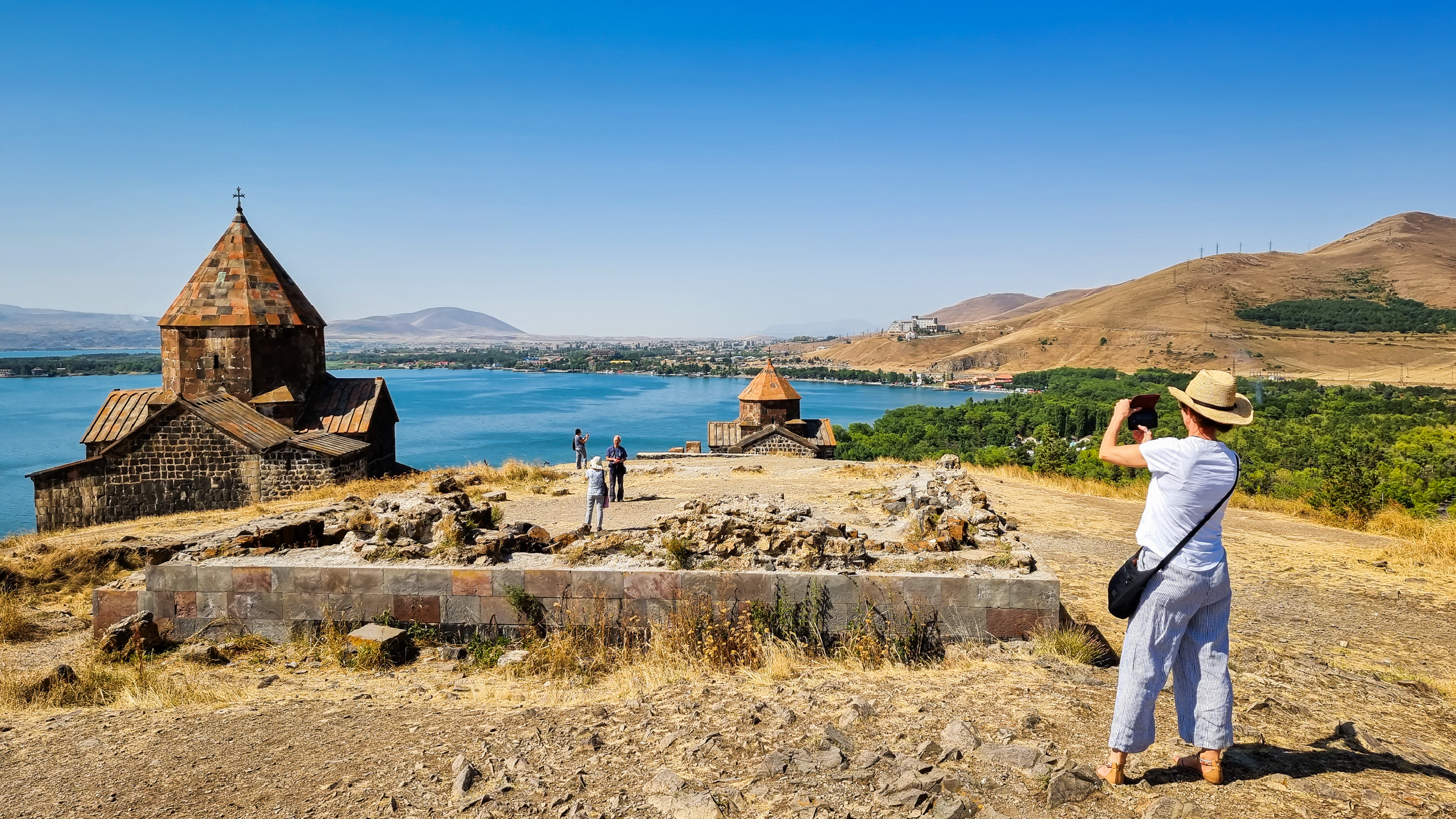
We're in for an exciting day as we make our way to the stunning Tavush Province, beginning with a visit to the town of Dilijan. As we stroll along Sharambeyan Street, adorned with traditional houses crafted from wood and stone, we'll explore some of Dilijan's craft workshops and art studios. Here we will have the opportunity to meet some local artists from the region, observe the process of wood carving and see stalls selling various khachkars, boxes, amulets and other wooden pieces. Next, we’ll explore the large basin of Lake Sevan, one of the highest freshwater lakes in the world. Interestingly, weather influences the lake’s colour, with its shades ranging from deep blue to bright azure, and every hue in-between. The lake’s water is used for hydroelectricity and irrigation purposes, providing the country with low-cost electricity. We also view Sevanavank Monastery, with spectacular vistas over the picturesque lake on the southern shore peninsula, making it one of Armenia’s most visited sights. We then visit a private residence for a fish BBQ masterclass and enjoy the creations for lunch, before returning to Yerevan. Relax this evening before more sightseeing tomorrow or spend some time strolling through the city’s centre.
18
Yerevan
We'll kick off the day with a walking tour of Yerevan, allowing us to explore this fascinating city on foot. We will discover the various layers of the town’s history, walking past medieval shrines, Republic Square, the Cascade Complex, Mother Armenia and the Opera House. Our sightseeing continues as we take a visit to the Matenadaran Museum, home to some of the oldest repositories of Greek, Persian and Arabic manuscripts. After some free time for lunch, we stop at a local Khachkar workshop. A Khachkar, also known as an Armenian cross-stone, is an outdoor memorial stele that is carved in stone by local craftspeople. Khachkars are characteristic of medieval Christian Armenian art and act as a focal point for worship. Their design includes an ornate cross in the centre, and they can reach up to 1.5 metres high. Since 2010, Khachkars have been included on the UNESCO list of Intangible Cultural Heritage. Our last stop for today is the Genocide Memorial. Built in 1967, the memorial features a 44 metre tall stele symbolising the rebirth and unity of the Armenian people. Twelve slabs are positioned in a circle, representing the twelve lost provinces in present-day Turkey. We’ll see powerful photographs, documents, reports and films dedicated to the 1.5 million people who were massacred during the first genocide of the 20th century. Enjoy the afternoon at leisure to explore at your own pace.
19
Yerevan – Khor Virap – Noravank – Areni – Yerevan
This morning we’ll discover Khor Virap, a fortified monastery and the site of the Royal Prison. It was here that Saint Gregory the Illuminator, a religious leader credited with converting Armenia from paganism to Christianity and the first bishop of the Armenian church was held for thirteen years. Guided by the remote majesty of biblical Mount Ararat, we explore the site’s underground chambers and chapels. We then continue to the Areni Cave Complex, located along the Arpa River in southern Armenia, near Areni village. This cluster of caves is where archaeologists famously unearthed the earliest ever known winery, leather shoe, straw skirt and human brain! Later we’ll indulge in a cheese masterclass, accompanied by a homemade wine and vodka tasting in the Vayots Dzor region. Situated in the heart of Armenia, this beautiful province is famous for its assortment of wine which is considered to be some of the finest in the country. On our way back to Yerevan, we’ll stop for a photo opportunity at the 13th century Armenian monastery, Noravank. Surrounded by dramatic red-hued cliffs, the complex was once home to religious leaders and the princes of the royal Orbelian family.
20
Yerevan – Garni & Geghard – Yerevan
After breakfast this morning, we’ll travel to Garni and Geghard via the picturesque Azat Canyon. With dramatic cliffs, gorges and the vast Azat River below, this canyon showcases spectacular views over the surrounding landscape. Here, we see the pagan Temple of Garni which impressively was built in the 1st century and is the only sole surviving Greco-Roman structure in the country. As we travel through the gorge, we also see the 12th century cave monastery of Geghard. Here we enjoy the harmonies of an acapella concert as five local women who form the quintet ‘Luys’ (Armenian for light), serenade us with their melodic voices. Special Experience Master the art of baking your very own Lavash, a traditional Armenian flatbread that has been enjoyed for centuries. Made of simple pantry staples, lavash is a large, thin flatbread. Traditionally baked in a clay oven, this warm, soft and chewy bread is often enjoyed as a wrap or dipped into delicious stews. Learn how to prepare this sumptuous speciality and sample your creation with a side of traditional Armenian cheese and greens, the must-have accompaniments to any Armenian meal! On return to Yerevan enjoy the rest of the day at leisure before our group farewell dinner tonight.
21
Depart Yerevan
After breakfast, we bid farewell to our fellow travellers, and the beauty of Georgia, Armenia and Azerbaijan – with a heart and camera full of unforgettable memories!
22
Arrive Australia
Tour dates
Tour Enquiry
Georgia, Armenia & Azerbaijan
Tour Enquiry
Georgia, Armenia & Azerbaijan
Tour Enquiry
Georgia, Armenia & Azerbaijan
Tour map
Türkiye In-Style
Tour Enquiry
Türkiye In-Style
About the tour
Itinerary
1
Depart Australia
2
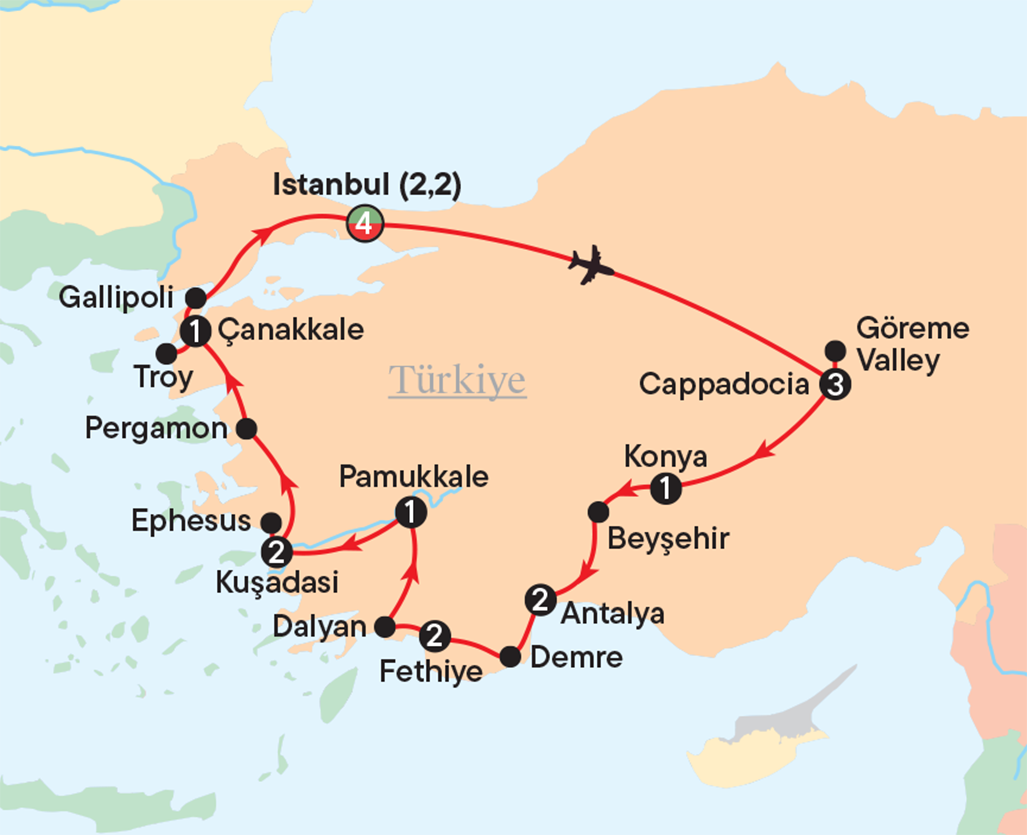
Arrive Istanbul
Welcome to Istanbul, a city unlike any other. Spanning two continents, Istanbul straddles the Bosphorus, with one shore in Europe and the other in Asia, creating a distinctive fusion of diverse cultures. From traditional tea houses to contemporary art galleries, this compelling mix of contrasts is truly captivating. With its extraordinary blend of East and West, Istanbul offers an unforgettable journey through time and culture. We don’t want you to miss out on any aspect of your small group tour. To ensure that you don’t, we recommend you arrive at your starting destination by 5:00 pm. At 6:00pm, meet your fellow travellers and Tour Director before walking to a local restaurant for a drink and a lovely welcome dinner.
3
Istanbul
Get ready to spend a full day immersing in the incredible Istanbul. We begin our day with a visit to the Underground Basilica Cistern, the largest surviving Byzantium Cistern. Built in 532 AD during the reign of Emperor Justinian, this unique spot is truly a sight to behold with its hundreds of columns brightly lit up. We then continue to a local café that’s renowned for their traditional treats since 1864. Yum! Special Experience Treat your senses to Türkiye’s renowned delicacies, featuring baklava, Turkish coffee, and, of course, Turkish delight. Once we’ve satisfied our taste buds, we’ll proceed to explore Istanbul’s most famous architectural wonders. First up, is the impressive domed Basilica of St. Sophia (Hagia Sophia), which has inspired architects, scholars and historians for almost 1,500 years. The first church on this site was constructed in 326 AD by Constantine the Great; the current church dates back to 537 AD and has been a cathedral, a museum, and is now a mosque. Our next destination is the Hippodrome, once the heart of the political and sporting life of the city. It was the scene of games and riots throughout 500 years of Ottoman history. We will then head to the one-of-a-kind Blue Mosque, constructed in 1609 AD under the patronage of Sultan Ahmet. As we step inside, we are consumed by the grandeur of its interior, adorned with over 20,000 exquisite Iznik tiles. These tiles, meticulously crafted with intricate patterns and varying shades of blue, narrate stories of craftsmanship and artistic brilliance that have withstood the test of time. Deluxe Experience Indulge your palate with a delightful high tea experience at the historic and iconic Pera Palace Hotel.
4
Istanbul – Gallipoli – Çanakkale
This morning, we say goodbye to Istanbul as we set our eyes on Gallipoli, our destination for the day. Today is an incredibly moving day. It is a tangible reminder of a not-so-distant past and a significant event in history that shaped Australia's national identity. Special Experience Honour the ANZACs at Gallipoli with a specialist guide, as we explore ANZAC Cove, the Lone Pine, Chunuk Bair Memorials, and Johnston's Jolly. We visit the World War I battlefields, most notable for being held by the ANZACs from 25th April to 20th December 1915, during what is referred to as The Gallipoli Campaign or Battle of Gallipoli. At the end of the war the bodies, still unburied, were cleared by the Allies on returning to the peninsula. Of the 22,000 graves at the 31 war cemeteries, only 9,000 are identified burials with grave markers. The remaining graves are commemorated with a special memorial. We’ll continue onto Çanakkale, our home for the night. Situated on the southern shore of the Dardanelles, Çanakkale is an ancient port city that has housed several civilisations over the past 6,000 years!
5
Çanakkale – Kuşadası
We start our day with a short drive to the legendary ancient city of Troy. Over its 4,000-year existence, Troy has experienced the rise and fall of nine distinct settlements, spanning from the Stone Age to the Roman Empire. If that doesn't give you goosebumps, the sight of the Trojan Horse replica at the city gates certainly will. We'll continue to explore the surroundings, including the famed city central to the Iliad, the Odyssey of Homer, and Virgil's Aeneid. Once thought to be purely mythical, these sites were unveiled as real when archaeologist Heinrich Schliemann unearthed the ruins near the modern city. Our next stop is the Adatepe Olive Oil Museum. Here, we’ll delve into the rich history and traditional techniques of olive pressing and harvesting in Türkiye. We’ll also have the chance to sample some of the local produce. We’ll then continue to Kuşadası, our home for the next two nights.
6
Kuşadası – Ephesus – Şirince – Kuşadası
Our morning begins with a visit to the extraordinary UNESCO World Heritage Site of Ephesus. As the largest and most significant Roman city ever unearthed, stepping into Ephesus is like traveling back in time. Its remarkably preserved ruins span centuries of history, from classical Greece to the Roman Empire, when it served as the Mediterranean's primary commercial centre. Walking along the marble-paved streets of Ephesus offers a glimpse into daily life from those eras. We'll explore ancient gymnasiums and bathhouses, marvel at the Library of Celsus, and see the remains of the Temple of Artemis, one of the Seven Wonders of the Ancient World. We'll also visit a local leather factory, where you'll have the opportunity to watch artisans at work and purchase exquisite, handcrafted Turkish leather products. Next, we'll head to the charming and breathtaking village of Şirince. This scenic town is rich in history and culture, with its beautiful stone houses gracing the hillside, creating a truly picturesque setting. Special Experience Visit Şirince Village and learn to prepare some local culinary specialities in a hands-on cooking class. After a long day, we'll unwind with an evening at leisure upon returning to our hotel in Kuşadası. This lively coastal paradise, blessed with around 300 days of sunshine each year, offers plenty to explore. Or you can simply choose to unwind and watch the world go by at one of the town's many seafront restaurants. Challenging Day Today is a particularly challenging day, where there will be extended periods of walking time, often across uneven ground and in areas of high altitude or heat and humidity.
7
Kuşadası – Bodrum
After a leisurely morning in Kuşadası, we’ll make our way to the Karnas Vineyards, tucked away in the lush rolling hills of the Aegean Valley. Renowned for their award-winning wines produced with traditional and sustainable methods, this family-owned boutique winery is set on endless stretches of sprawling vines. A visit here will make you feel as if you’ve stepped right into a postcard! They’re known for growing several varieties of grapes, including Zinfandel, Syrah (Shiraz), Cabernet Franc and Vermentino. Deluxe Experience Sample local wines and regional snacks at Karnas Vineyards, a family-owned boutique winery, nestled in the verdant Aegean Valley. Our next stop is Bodrum , a coastal city sitting on a rugged peninsula that offers a true Mediterranean experience. This town boasts abundant bays and pristine beaches along its stunning coastline. The sparkling waters of the Aegean Sea are beyond inviting. Beautiful scenery aside, this town is bursting with history and iconic landmarks and has a rich cultural heritage to match. Plus, the cuisine found here is otherworldly – if you are a fan of seafood, prepare to find heaven in Bodrum! Arriving here, we’ll enjoy the remainder of the evening at leisure.
8
Bodrum
We will spend this morning exploring Bodrum Castle, also known as the Castle of St. Peter, a medieval waterfront fortification. Situated on a small rocky peninsula, the castle was built from 1402 AD onwards by the Knights of St. John. While here, we’ll visit the Museum of Underwater Archaeology, housed within the rooms and towers of the Bodrum Castle. This fascinating museum features artifacts from the 16th century, including remains from ancient shipwrecks. The remainder of the day is yours to explore Bodrum at your own pace. Relax at a seaside café or wander through the lively bazaars, where you’ll find everything from handmade goods to beautiful jewellery and unique souvenirs.
9
Bodrum – Cappadocia
Today we travel to the UNESCO World Heritage-listed Cappadocia. The region is renowned for its otherworldly landscapes, characterised by towering rock formations and cone-shaped fairy chimneys that have been shaped by millions of years of volcanic activity and erosion. We’ll transfer to the airport for our midday flight, via Istanbul to Cappadocia. Special Experience Stay in a luxurious cave hotel in the heart of Cappadocia, immersing in the town’s unique and mystical atmosphere. Complimenting Cappadocia’s otherworldly charm is our accommodation for the next two nights. We’ll get the chance to stay in ‘cave rooms’, an unforgettable experience that seamlessly blends together history, culture and comfort – this is a perfect way to immerse yourself in the true Cappadocia! Please note: The cave hotel is located right in the heart of Cappadocia, which dates back thousands of years. This means there are multiple flights of stairs, plenty of steps and uneven cobblestone ground to navigate. Rooms are scattered across multiple levels - they are not inside a singular building. Meeting our mobility and fitness requirements are essential. No two rooms are the same with quirky layouts that can be dimly lit. While these rooms are still comfortable remember you are staying in a cave! These are incredibly unique and a once in a lifetime experience to stay in this unforgettable location.
10
Cappadocia
For those that choose to do hot air ballooning, we have an early start this morning. Optional Excursion Hot Air Balloon Ride – Gently float over the countryside in complete harmony with the deep canyons and lush fertile valleys of Cappadocia. Gentle winds carry you over places that could never be reached except by balloon. 45mins - from Euro 340pp. Cash only. We will have time to rest before commencing with the rest of the days’ sightseeing. Our first stop of the day is the local municipality carpet cooperation where we’ll learn about this intricate and age-old artform of Turkish weaving. We continue on to explore the spectacular landscape of Göreme Valley. Over thousands of years, the rain has eroded this landscape to give rise to unique rock formations known as 'Fairy Chimneys'. Many of these formations now have homes and churches carved into them. Some of the grottoes are even magnificently decorated with colourful frescoes depicting biblical scenes. Later today, we will visit a local family where we’ll get the chance to learn about their lifestyle and the local way of life in Cappadocia. This evening we’ll enjoy dinner in a local family restaurant. Challenging Day Today is a particularly challenging day, where there will be extended periods of walking time, often across uneven ground and in areas of high altitude or heat and humidity.
11
Cappadocia – Istanbul
We begin our day by driving to the charming village of Avanos, a town famous for its centuries long tradition of pottery making and carpet weaving. While here, we’ll enjoy a lecture by locals on ceramic art. Next, we make our way to the incredible underground city of Ozkonak. Featuring a maze of tunnels, chambers and rooms carved into soft volcanic rock over ten levels, this underground city is one of the best preserved in the area. It can hold an incredible 60,000 people and is over 40 metres deep into the Earth. Today, only four of these levels are accessible by the public. It is believed that the origins of Ozkonak dates back to the fourth century BC and was greatly expanded and deepened during the Byzantine era. Later, we transfer to the airport for our flight back to Istanbul.
12
Istanbul
Get set for our final full day exploring the fascinating city of Istanbul! Our first stop of the day is a visit to the magnificent Topkapi Palace. Constructed between 1466 and 1478 AD, the Topkapi Palace served as the residence of the esteemed Sultans and their households and functioned as the primary hub of the Ottoman Empire from the 15th to the 19th centuries. Today, it is filled with treasures and antiquities, including 12000 pieces of fine Chinese porcelain. We continue our journey to the famous Grand Bazaar. Built in 1457 AD, the Grand Bazaar is one of the largest covered markets in the world. It is most famous for its antique shops, jewellery, carpets, hand-painted ceramics, embroideries and spices. We’ll also make our way to the exotic Spice Bazaar, where you’ll have some time to browse through the stalls at your leisure and soak up the scents of hundreds of spices permeating the air. Later this afternoon, we will embark on a leisurely cruise along Istanbul’s most famous waterway, the Bosphorus. Our journey will take us along both European and Asian shores, as we gently cruise past marvellous monuments and districts, including the Maiden’s Tower (Kız Kulesi), Dolmabahçe Palace, Çırağan Palace, Ortaköy, Ahmat Fethi Pasa Mansion, Ortaköy Mosque, Beylerbeyi Palace, Kuleli Military School, Arnavutköy and Bebek. It’s almost time to bid farewell to this mesmerising country, but not before we feast on a lavish spread of Ottoman cuisine at a beautiful local restaurant.
13
Depart Istanbul
Our tour concludes after breakfast this morning. We bid farewell to our amazing new friends and to the spectacular Türkiye. We hope you leave with memories of a lifetime.
14
Arrive Australia
Tour dates
Tour Enquiry
Türkiye In-Style
Tour Enquiry
Türkiye In-Style
Tour Enquiry
Türkiye In-Style
Tour map
Morocco In-Style
Tour Enquiry
Morocco In-Style
About the tour
Itinerary
1
Depart Australia
2
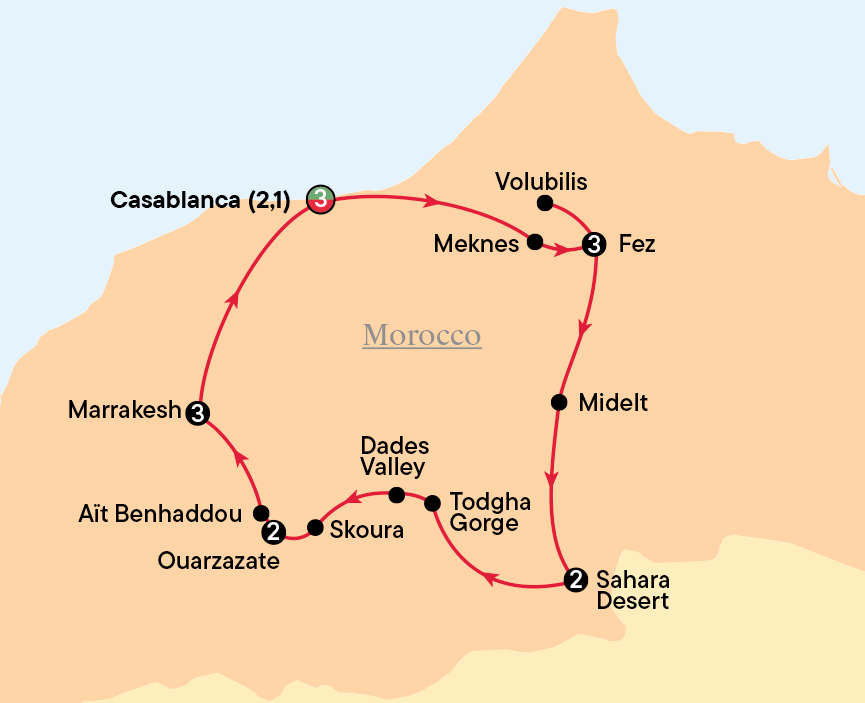
Arrive Casablanca
Welcome to Casablanca, Morocco’s largest and most modern city, made famous by the movie of the same name starring Humphrey Bogart and Ingrid Bergman. Located on the shores of the Atlantic Ocean, Casablanca is a curious mix of ancient Berber influences and modern European hustle and bustle, plus lots of cool places to enjoy the nation’s favourite drink - mint tea, of course. We don’t want you to miss out on any aspect of your small group tour. To ensure that you don’t, we recommend you arrive at your hotel by 4:00pm This evening, meet your fellow travellers and Tour Director for a delicious welcome dinner at a traditional Moroccan restaurant.
3
Casablanca
Our day is dedicated to exploring Morocco’s cosmopolitan hub, Casablanca. Originally settled by Berber tribes, Casablanca has witnessed a series of transformations throughout history, including periods of rule by the Phoenicians, Romans, and Portuguese. However, it was the French invasion in the 18th century that truly reshaped the city, laying the foundation for its modern identity that we’re familiar with today. After gaining independence in 1956, Casablanca continued to thrive, evolving into Morocco’s commercial and economic capital, retaining its diverse cultural heritage. We’ll explore the busy streets of Casablanca and acquaint ourselves with its European-influenced architecture along the Ain Diab Esplanade and in the Central Market. We will also visit the incredible Hassan II Mosque, seen by many as a symbol of Morocco’s rich cultural heritage and Islamic architecture. Completed in 1993, this mosque is the largest in Morocco and the second largest in the world! We’ll visit Rick’s Café, a romantic café inspired by the 1942 film ‘Casablanca’ and have some free time here for lunch, before we continue our tour to uncover Casablanca’s famous Art Deco architecture. Casablanca’s unique style is called ‘architecture mauresque’ or ‘Moorish architecture’ beautifully blending French Art Deco with Islamic flare. Enjoy the remainder of the day at leisure to explore at your own pace.
4
Casablanca – Meknes – Fez
This morning, we say goodbye to beautiful Casablanca as we head east to Morocco’s smallest imperial city, Meknes, located in northern-central Morocco. Founded in the 11th century, Meknes is quieter and smaller than other imperial cities but still has the winding narrow Medina streets and grand buildings. On arrival into Meknes, we’ll enjoy an orientation tour of the old city referred to as the ‘Versailles of Morocco’. We begin at the UNESCO World Heritage-listed old medina, a bustling maze of narrow streets, home to artisanal shops, traditional markets and historic buildings. We’ll see impressive gates, palaces, and gardens built during the reign of Sultan Moulay Ismail in the 17th century including the Bab el Mansour Gate, one of the most beautiful gates in Morocco, perfect for photos and a little marvelling at its ornate beauty. Special Experience Visit a picturesque winery in Meknes delighting in the scenery while tasting locally produced wines with a delicious lunch. The hillside vineyards and the mild temperature make the Meknes region the most ideal wine-growing area. Moroccan wines often incorporate local grape varietals like Carignan, Grenache, and Cinsault. These varieties bring specific characteristics to the wines, such as fruity aromas, balanced tannin structure and great complexity. It's wonderful to experience a different side of Meknes and its surroundings, especially if you appreciate wine and want to explore the emerging wine culture in this region of Morocco.
5
Volubilis
Our adventure today takes us to the ancient archaeological site of Volubilis, one of the best-preserved sites in all of Morocco. Designated as a UNESCO World Heritage-listed site, Volubilis stands as a lasting testament to the civilisations that once thrived in the region. Its origins trace back to the 3rd century BC when it was first established as a Phoenician settlement, evolving over centuries into a thriving Roman city. Volubilis served as a pivotal administrative city for this part of Roman Africa, responsible for grain production and exports to Rome. We’ll dive into the site’s rich history through its partly excavated ruins. We return back to Fez at approximately midday, giving you the perfect opportunity to uncover the city at your own pace. Perhaps you want to take it easy and wander down the endless alleys, or you may wish to relax at the hotel. Whatever you do, the choice is yours!
6
Fez
Our day is dedicated to uncovering Morocco’s cultural and spiritual heart, Fez. Founded in the 9th century, Fez is a beautiful labyrinth of narrow laneways, bustling souks and ancient landmarks. This unique city offers visitors a glimpse into Morocco’s captivating past with its centuries-old traditions and historic atmosphere. We’ll begin the day at a viewpoint overlooking the old city of Fes, a great introduction to the size of the old city and the maze of narrow laneways that make up this fascinating city, before heading to a ceramics workshop. Here we will learn how the beautiful plates, tagines and mosaics are crafted by hand and the work that goes into producing these intricate wares. Next, we’ll head to the famous Medina, which has been a UNESCO World Heritage-listed site since 1981. Here, the narrow lanes and colourful traders make for some fantastic photo opportunities. We see the souks with the myriads of craftsmen, the famous tanneries and carpet stalls. Be sure to keep your guide in sight as with over 70km of labyrinthian alleyways you do not want to get lost! Our sightseeing in the Medina includes the Karaouine Mosque and the fountains of Carpenter's Square. The Mosque is one of the oldest of its kind in the western Muslim world, and while non-Muslims cannot enter, we will get a wonderful view from the top of Medersa Attarine when it is open. We’ll also visit the famous old operation tannery, processing the hides of sheep and goat in stone vessels filled with a range of colourful dyes. The vivid colours and distinctive scents are unforgettable and watching the craftsmen at work is a memory that will stay with you and makes for some amazing photos. We will also make a stop at a textiles workshop to see skilled artisans weaving various colourful materials into beautiful pieces. The rest of the evening is at leisure for you to explore or relax.
7
Fez – Midelt – Merzouga
Our drive to Merzouga today takes us past the town of Midelt, situated on the high plains between the Middle Atlas and the High Atlas Mountain ranges. In this market town, the majority of the buildings are sand-coloured, resulting in a beautiful contrast against the imposing mountains that surround the city. Here we’ll enjoy a delicious lunch, before continuing to Merzouga, where we will transfer to 4WD vehicles for our journey to our desert camp accommodation. The town of Merzouga is often referred to as the ‘Jewel of the Sahara’ and is the gateway to the Erg Chebbi dunes. The dunes are among the largest in Morocco and measure up to 160 metres high! Deluxe Experience Experience the tranquil beauty of the Sahara Desert, staying in a luxury camp surrounded by breathtaking desertscapes. Located strategically in the middle of the big dunes of the Erg Chebi Desert, Merzouga Sandy Tents offers an unparalleled desert experience. We enjoy the night under the stars here, having the opportunity to experience a camel ride at sunset and enjoy sunrise from the top of the golden dunes.
8
Merzouga
Rise early if you would like to experience a beautiful sunrise that will illuminate the golden sands of the Sahara. With your tent surrounded by dunes, you do not need to walk far to have a truly ethereal experience. Make sure you bring your camera with you, as this is an experience you’ll want to remember forever! After breakfast, we’ll depart in 4x4 jeeps deep into the Sahara Desert. Special Experience Travel to Khamlia, a small desert village, enjoying Moroccan tea and Gnaoua music with local nomads. We’ll enjoy a cup of Moroccan mint tea in a traditional home setting with local Gnaoua music as entertainment. Gnaoua music (or Gnawa music as it is also known) is quite a show, being a combination of Berber, Sufi and sub-Saharan African religious songs and rhythms combined with acrobatic dancing. Tonight, we will catch the beautiful sun as it sets over the desertscape surrounding our boutique hotel riad. A totally special and mesmerising sight!
9
Merzouga – Ouarzazate
This morning we’ll say goodbye to the stunning Sahara Desert and drive through the Dades Valley with its majestic sand castles and incredible rock formations that are known as ‘monkey toes’. The route through Dades Valley is often referred to as ‘the Road of One Thousand Kasbahs’, and it’s on this road that we’ll be able to view a vast valley dotted with hundreds of small oases and ancient fortifications. We continue our journey through Toudgha Gorge, a gorgeous canyon on the road to Skoura. In Skoura, we’ll enjoy lunch with a local Berber family, gaining real insight into their fascinating culture. The Berber’s are an indigenous ethnic group native to north Africa, renowned for their distinct culture, language and rich history, and their presence in Morocco dates back thousands of years. They are traditionally nomads, and still today, many Berber tribes maintain their nomadic lifestyle. Lastly, we make our way to Ouarzazate. Often called the ‘Door of the Desert’, this fortified city is nestled amid the Atlas Mountains and its caramel-coloured buildings blend almost seamlessly into the desert’s golden sand. Ouarzazate is also a noted film-making location with films such as Lawrence of Arabia, The Mummy, Gladiator and Kingdom of Heaven shot here. On arrival in Ouarzazate, the rest of the day is ours to spend at leisure.
10
Ouarzazate
Our day is dedicated to exploring Ouarzazate and the beautiful Taourirt Kasbah. Among one of the most captivating Kasbahs in Morocco, the Taourirt Kasbah’s rich history dates all the way back to the French departure in 1953. Here, we’ll immerse ourselves in the cinematic legacies of the Ouarzazate Kasbahs, where the Moroccan film industry thrived in the post-French era. We’ll also discover the allure of the famous Atlas Studios, located just 5-kilometres west of Ouarzazate. This incredible location boasts the title of the world’s largest film studio by acreage! Nestled amid the desert and mountains, this amazing studio has preserved the sets from renowned productions including Gladiator and Game of Thrones, making it a must-visit destination when in the region. We’ll return to Ouarzazate in the early afternoon, where you’ll have the remainder of the day at your leisure to explore this beautiful town some more or simply to relax.
11
Ouarzazate – Marrakesh
Saying goodbye to the beautiful city of Ouarzazate, we’ll make our way to the picturesque, fortified Berber village or ‘ksar’ of Ait Ben Haddou. This traditional mudbrick city (that dates back to the 11th century) is on the UNESCO World Heritage-list and is a striking example of the architecture of southern Morocco. Here, we enjoy a delicious lunch and a visit to the film sets of some famous Hollywood movies including Lawrence of Arabia, The Living Daylights, The Mummy and Gladiator. We’ll continue our journey to the magical ‘Rose City’ of Marrakesh. One of the four Imperial Cities of Morocco, Marrakesh was founded in the 11th century by the Berber dynasty Almoravid. It soon became the capital of the Islamic Empire that stretched as far as Spain and western Africa. During the rule of Yousef Ben Tachfine, Marrakesh was blessed with fine gardens, palaces, mosques and legendary walls, and was influenced by the Almoravid conquest of southern Spain. Morocco was colonised by the French in the 20th century and the strong influences from these countries can be felt today.
12
Marrakesh
The red royal city of Marrakesh is the real heartbeat of Morocco, set within sight of the snowy peaks of the High Atlas Mountains. Our entire day is dedicated to sightseeing here! First, we’ll visit the 16th century monument site of the Saadian Tombs which remained sealed until 1917 when they were rediscovered. The tombs are brilliantly decorated with intricate carvings, colourful tiles and Arabic scripts. We then continue on to the aristocratic Bahia Palace which functions as a Royal residence and see the Koutoubia Mosque, considered a masterpiece of Islamic architecture. We then head to Marrakesh’s main square, Jemaa el-Fnaa. Considered one of the most famous squares in Africa, this UNESCO World Heritage-listed site serves as the epicentre of the city where locals and visitors alike come to experience its lively atmosphere. We’ll also uncover Melah, the city’s old Jewish Quarter. Special Experience We’ll join a cooking class to discover the art of traditional Moroccan cuisine, followed by lunch featuring the dishes we’ve prepared. Our last sightseeing stop is a visit to the enchanting Jardin Marjorelle, gifted to the city by famous French fashion designer, Yves Saint Laurent. We’ll return to our hotel for some time at leisure, and to freshen up before our wonderful dinner experience. Deluxe Experience Delight in a private chef’s table experience at the renowned Azalai Uran Souk restaurant. At Chef FZ ’s Private Table, dining is an intimate affair, best shared among a select few. Enter an exclusive world, where the chef’s creativity and passion for cooking awaits. Nestled in an authentic setting, you’ll experience the magic up close as FZ creates a culinary symphony before your eyes. Prepare to be captivated by the chef’s menu, a savory feast that rivals Michelin-starred experiences. Each meticulously crafted dish tells a story, tantalizing both the palate and the imagination. From delicate appetizers to beautifully presented dishes, every step is a testament to Chef FZ 's mastery and passion for culinary perfection.
13
Marrakesh
Our day is at leisure to enjoy the beautiful Kasbah and its facilities – this is a great chance for you to kick back and relax after our journey so far! Later this afternoon, we’ll come together to indulge in a grand high tea experience. Deluxe Experience Delight your taste buds in a decadent high tea at the enchanting Royal Mansour Marrakesh. Step into the charming sanctuary of Royal Mansour Marrakesh, where the world is put on hold for a moment. We’ll enjoy a relaxing afternoon tea in the beautiful La Grande Brasserie restaurant, where we will delight in delicious sweet and savoury snacks, freshly squeezed juices and tea and coffee. A blissful afternoon awaits us! Optional Excursion Hot Air Balloon Ride. Embark on an unforgettable early morning journey, drifting above the enchanting landscapes of Morocco as the sun stretches its first rays over the endless ochre dunes and the Atlas Mountains unfold beneath you. Includes return transfers, a flight of approx. 60 minutes, and a Berber breakfast. From Euro 230pp (minimum 2 people)
14
Marrakesh – Casablanca
Today we depart the idyllic Marrakesh and make our way back to the beautiful Casablanca. We’ll have the afternoon at leisure for you to wander the city at your own pace, before enjoying a lovely group farewell dinner at a local restaurant.
15
Depart Casablanca
Our tour concludes after breakfast this morning. We bid farewell to our new friends and to mesmerising Morocco. We hope you leave with the memories of a lifetime.
16
Arrive Australia
Tour dates
Tour Enquiry
Morocco In-Style
Tour map
Moroccan Discovery
Tour Enquiry
Moroccan Discovery
About the tour
Itinerary
1
Depart Australia
2
Arrive Casablanca
We say a huge ‘ahlan wa sahlan’ to Casablanca, Morocco’s largest and most modern city. Casablanca’s name, translating easily to ‘White House’ in Spanish was inspired by the sparking white-washed buildings of the Old Medina and is the perfect starting point for our adventure through the sights and sounds of this lively country. Hugging the coastline of the Atlantic Ocean, the port city of Casablanca acts as the commercial hub of western Morocco. Despite its growing modernity, Casablanca has thankfully managed to retain much of its traditional flare. The city’s French colonial legacy is evident throughout, with areas of the town featuring Mauresque architecture, Moorish design elements and European art deco themes — a truly fascinating mix awaits us. We don’t want you to miss out on any aspect of your small group tour. To ensure that you don’t, we recommend you arrive at your hotel by 4:00pm. This evening we’ll meet our fellow travellers and Tour Director for a welcome drink.
3
Casablanca
A full day exploring the busy streets of Casablanca awaits us today. We begin our sightseeing by acquainting ourselves with the city’s European-influenced architecture along the Ain Diab Esplanade. Lined with tall palm trees and bursting with vibrancy, this beach front promenade is popular with both local residents and tourists alike. We’ll then head to the Central Market, one of the most famed urban markets in Morocco. Highly regarded as one of Casablanca’s hidden gems, here we’ll take a peep into local life as vendors and buyers go about their day. Get ready to get lost in the strong aromas, chaotic sounds and local goods on offer here. Up next on our agenda is the iconic Hassan II Mosque, an opulent mosque that is set on an outcrop jutting out over the ocean. This 210 metre tall minaret is a major landmark for the city, and once you visit, it’s easy to understand why. It’s the largest mosque in Africa, and the second largest in the world, and interestingly, it’s one of only two mosques in Morocco that is open to non-Muslim spectators. Make sure to pay attention to the fine Moroccan artisanship on display, seen through the hand-carved stone, intricate marble floor and exquisite ceilings. After some free time for lunch, we’ll make our way to the Quartier Habous. Also known as Nouvelle Medina (New Medina), it was built in the 1930s by the French with the aim to solve a housing crisis in the city. What we’re left with today is a bustling medina that features a picturesque mix of Moroccan and European architectural styles. Tonight, we’ll enjoy a group welcome dinner at a typical Moroccan restaurant. Bring your appetite!
4
Casablanca – Essaouira
This morning we depart for Essaouira, a charming town nestled on Morocco’s Atlantic coast that was once the old Portuguese city of Mogador. The city was strengthened by a French architect who was a follower of Vauban. Combine these influences and the result is the very attractive and picturesque town it is today. Over time more and more artists have flocked to Essaouira, making it a fascinating place to visit. On arrival, the rest of the afternoon is ours to enjoy at leisure and begin acquainting ourselves with the city.
5
Essaouira
We’ll begin our day of sightseeing at the city’s port to experience the lively atmosphere as the boats come in and fish are sold. It’s one of the most animated spots in town and a spectacle not to be missed! We’ll then discover the ‘Door of the Navy’, built in year 1184 of the Hegira (Hegira is the journey of Islamic prophet Mohammed from Mecca to Yathrib/Medina which is believed to have happened in AD 622) to connect the city with the port. Place Moulay el-Hassan, and a stroll through the town’s colourful Kasbah are also on the agenda for today.
6
Essaouira – Marrakesh
Travelling inland, we make our way to the magical ‘Rose City’ of Marrakesh. Marrakesh is one of the four Imperial Cities of Morocco and was founded in the 11th century by the Berber dynasty, Almoravid. It soon became the capital of the Islamic Empire that stretched as far as Spain and western Africa. During the rule of Yousef Ben Tachfine, Marrakesh was blessed with fine gardens, palaces, mosques and legendary walls, and was influenced by the Almoravid conquest of southern Spain. Morocco was colonised by the French in the 20th century and the strong influences from these countries can be felt today. Upon our arrival into Marrakesh, we’ll enjoy an orientation tour before having some free time for lunch. Special Experience Experience the atmosphere of Marrakesh’s main square, Jemaa el-Fnaa. Pass through a wondrous mix of food, music and entertainment, getting a taste of this lively city. We’ll have the chance to enjoy a real taste of Morocco at dinner, complete with dancers and musicians in a local restaurant.
7
Marrakesh
The red royal city of Marrakesh is the real heartbeat of Morocco, set within sight of the snowy peaks of the High Atlas Mountains. Our entire day is dedicated to sightseeing here. First, we visit the 16th century monument site of the Saadian Tombs which remained sealed until 1917 when they were rediscovered. The tombs are brilliantly decorated with intricate carvings, colourful tiles and Arabic scripts. We’ll then continue to the aristocratic Bahia Palace which functions as a Royal residence and see the Koutoubia Mosque, considered a masterpiece of Islamic architecture. Its minaret is even a reference point for international architecture – the 12th century 70-metre-high tower is the prototype for Seville’s La Giralda and Rabat’s Le Tour Hassan. Our last stop is a visit to the enchanting Jardin Marjorelle, gifted to the city by famous French fashion designer, Yves Saint Laurent.
8
Marrakesh
Enjoy a late start to the morning before departing for our wonderful culinary experience today. Special Experience We’ll join a cooking class to discover the art of traditional Moroccan cuisine, followed by lunch featuring the dishes we’ve prepared. Moroccan cuisine is a fusion of many influences that reflects the country’s history and diverse culture. It usually incorporates fruits such as apricots, dates, and raisins, and nuts along with aromatic and distinctive spices, such as cumin, coriander, saffron, cinnamon, ginger, paprika, and turmeric. The afternoon is at leisure to further explore at your own pace. Why not shop for carpets and crafts in the city’s labyrinth of souks? Optional Excursion Hot Air Balloon Ride. Embark on an unforgettable early morning journey, drifting above the enchanting landscapes of Morocco as the sun stretches its first rays over the endless ochre dunes and the Atlas Mountains unfold beneath you. Includes return transfers, a flight of approx. 60 minutes, and a Berber breakfast. From Euro 230pp (minimum 2 people)
9
Marrakesh – Skoura
This morning, we make our way through the scenic Atlas Mountains and the twisting Tizi n’Tichka pass to the picturesque, fortified Berber village or ‘ksar’ of Ait Ben Haddou. A traditional Mud Brick city, and a striking example of southern Moroccan architecture, the town is on the UNESCO World Heritage List. We continue our travels to Ouarzazate, which is also a noted film-making location with films such as Lawrence of Arabia, The Mummy, Gladiator and Kingdom of Heaven shot here. On arrival we visit the majestic structure of the Taourirt Kasbah, a giant sandcastle that decided to get fancy. Rising from the desert in all its sunbaked glory, the cinnamon coloured walls of this ancient Berber stronghold whisper stories of ancient sultans, and once inside, the intricate carvings and colourful tiles contrast with the fortress’ rugged exterior, like a warrior with a soft side. It’s no wonder this Kasbah is considered to be among the most beautiful in Morocco! After our explorations, we continue to our guesthouse in Skoura.
10
Skoura
Skoura has long been an important stop along old caravan routes and life here still revolves around its remarkable palm groves. We will stroll beneath what locals proudly call the “thousand palms,” though there are in fact many more. These date palms are nourished by a traditional irrigation system known as khettara, an ingenious network of underground channels that has carried water to the oasis for centuries. Next, we will visit the beautiful 17th century Amridil Kasbah, one of the best preserved in Morocco. So iconic, that this kasbah appears on the country’s 50 dirham bank note. Its wonderfully authentic earthen architecture has also attracted filmmakers, including the classic film The Man Who Would Be King. As we explore its towers and passageways, it will feel like stepping into another era. After some free time for lunch, we’ll take part in a traditional calligraphy workshop with a local artisan using a typical reed pen, the traditional qalam. Here, our teacher will guide us through the mesmerizing curves of Arabic script and we have the chance to create our own ink masterpiece.
11
Skoura – Merzouga
We depart Skoura through the Dades Valley, continuing past Erfoud, on the edge of the majestic Sahara Desert. This valley is carved by the Dades River and is sprinkled with ancient kasbahs, lush palm groves and dramatic rock formations. We then make our way into the vast Erg Chebbi dunes before arriving in Merzouga. And just when we think Morocco couldn’t get any more magical, we arrive in the town of Merzouga, which is often referred to as the ‘Jewel of the Sahara’ and is the gateway to the Erg Chebbi dunes. The dunes are among the largest in Morocco and measure up to 160 metres high . Here, we’ll change vehicles to 4WD’s for the last leg of our journey to the deluxe campsite. Special Experience Immerse yourself in the serenity of desert life, spending a night in a deluxe camp nestled in the dunes of the Sahara Desert. Whilst staying overnight in the desert camp, we will be able to take in spectacular views of the natural landscape as the sun sets over the golden slopes.
12
Merzouga
Rise early if you would like to witness the breathtaking sunrise over the sweeping sands of the Sahara Desert. With your tent surrounded by dunes, you do not need to walk far to have a truly ethereal experience. Marvel at the changing colours of the morning as the sun rises over the dunes, before returning for breakfast. After breakfast we depart in a 4WD for Khamlia, a small desert village, where we’ll enjoy a cup of Moroccan tea in a traditional home setting with local Gnaoua music as entertainment. Gnaoua music (or Gnawa music, as it is also known) is quite a show, being a combination of Berber, Sufi and sub-Saharan African religious songs and rhythms with acrobatic dancing. We’ll also visit the mines in Memphis before continuing onto the traditional artists’ village of Tissirdmine for lunch amongst the palms. The remainder of the day is at leisure for you to relax and enjoy the Kasbah.
13
Merzouga – Fez
This morning, we cross the desert again and make our way to the small village of Midelt, driving through the spectacular wooded Middle Atlas Mountains. Midelt is a market town and former French administrative post and is also one of Morocco's principal cities for the mining of several minerals. Here, we’ll stop and enjoy lunch at a local restaurant. After lunch, sit back and enjoy the mountainous scenery this afternoon as we continue to Fez, one of the oldest Imperial Cities. Fez is also a great place to purchase beautifully decorated ceramics, make sure you barter though! Fez is arguably the symbolic heart of Morocco, set in the gentle rolling countryside of the mid Atlas Mountains. The World Heritage-listed medina of Fez el-Bali (old Fez) is one of the largest living medieval cities in the world, and its gates and walls are magnificent.
14
Fez
Our day is dedicated to uncovering Morocco’s cultural and spiritual heart, Fez. Founded in the 9th century, Fez is a beautiful labyrinth of narrow laneways, bustling souks and ancient landmarks. This unique city offers visitors a glimpse into Morocco’s captivating past with its centuries-old traditions and historic atmosphere. We’ll begin the day at a viewpoint overlooking the old city of Fez, a great introduction to the size of the old city and the maze of narrow laneways that make up this fascinating city, before heading to a ceramics workshop. Here we will learn how the beautiful plates, tagines and mosaics are crafted by hand and the work that goes into producing these intricate wares. Next, we’ll head to the famous Medina, which has been a UNESCO World Heritage-listed site since 1981. Here, the narrow lanes and colourful traders make for some fantastic photo opportunities. We see the souks with the myriads of craftsmen, the famous tanneries and carpet stalls. Be sure to keep your guide in sight as with over 70km of labyrinthian alleyways you do not want to get lost! Our sightseeing in the Medina includes the Karaouine Mosque and the fountains of Carpenter's Square. The Mosque is one of the oldest of its kind in the western Muslim world, and while non-Muslims cannot enter, we will get a wonderful view from the top of Medersa Attarine when it is open. We’ll also visit the famous old operation tannery, processing the hides of sheep and goat in stone vessels filled with a range of colourful dyes. The vivid colours and distinctive scents are unforgettable and watching the craftsmen at work is a memory that will stay with you and makes for some amazing photos. We will also make a stop at a textiles workshop to see skilled artisans weaving various colourful materials into beautiful pieces. The rest of the evening is at leisure for you to explore or relax.
15
Fez – Meknes – Volubilis – Fez
From Fez we head north to Morocco’s smallest imperial city, Meknes, founded in the 11th century. Quieter and smaller than Fez, it’s also more laid-back but still has the winding narrow Medina streets and grand buildings of an imperial city. Here, we’ll enjoy an orientation tour of the old city known as the ‘Versailles of Morocco’ and see the old medina and the Bab el Mansour Gate. Next, we continue to the ancient archaeological site of Volubilis. UNESCO World Heritage-listed Volubilis is a partly excavated Roman city, developed from the 3rd century BC as a Phoenician settlement. Volubilis was a central administrative city for this part of Roman Africa, responsible for grain production and exports to Rome. Volubilis is in stark contrast to the hustle and bustle of Marrakesh’s Jemaa el-Fnaa Square. Here it is quiet and free from the hordes of locals and tourists, providing the perfect opportunity to stop and reflect whilst soaking up the impressive Roman ruins and preserved mosaics. After a guided tour, we return to Fez. Challenging Day Today is a particularly challenging day, where there will be extended periods of walking time, often across uneven ground and in areas of high altitude or heat and humidity.
16
Fez – Chefchaouen
After a morning at leisure we travel to Chefchaouen, undoubtedly one of the prettiest gems in all of Morocco. Tucked away in the Rif Mountains, Chefchaouen looks like it’s been washed in every shade of blue imaginable and wandering the streets here is like stepping into a real-life watercolour painting where every alley is a new shade of sapphire, cobalt or periwinkle. Founded in the 15th century by Moulay Ali Ben Rachid, the original settlement began as a small fortress to protect the area from attacks by Portuguese invaders. The Medina and its fountains, the Kasbah, the Great Mosque and Ras al-Ma’, the traditional water source for the town are all fascinating examples of Chefchaouen’s varied history. Upon arrival at our hotel, we’ll have some free time to relax and unwind before enjoying dinner here.
17
Chefchaouen
Today we’ll explore the town’s picturesque streets on foot. Wandering through the winding lanes and alleyways is a true photographers delight – the variety of colours from different wares and shops contrast with the vivid blue buildings. This town is also the perfect place to shop for souvenirs such as woven blankets and wool that are not commonly available elsewhere in Morocco. The rest of the day is at leisure for you to experience the delights of this stunning town at your own pace. There is an option to walk with your Tour Director towards a stunning lookout point over the town and surrounding mountains. Challenging Day Today is a particularly challenging day, where there will be extended periods of walking time, often across uneven ground and in areas of high altitude or heat and humidity.
18
Chefchaouen – Rabat
We continue to Rabat today, the capital of Morocco. While smaller than many of the other cities we’ve visited, it certainly has plenty of charm. From palm-lined boulevards in the ville nouvelle to an ancient walled medina, you’ll find less tourists but the same vibrant culture. We enjoy a city tour here, first visiting the Kasbah of the Oudayas which illustrates the Islamic and French colonial heritage of the city. We’ll also see the medina, Mohamed V Mausoleum and the iconic Hassan Tower, a 12th century minaret that overlooks the remains of a mosque. Enjoy the rest of the afternoon at leisure before our group farewell dinner at a local restaurant tonight.
19
Rabat – Depart Casablanca
Our tour concludes after breakfast this morning. We bid farewell to our new friends and to mesmerising Morocco. We hope you leave with the memories of a lifetime.
20
Arrive Australia
Tour dates
Tour Enquiry
Moroccan Discovery
Tour Enquiry
Moroccan Discovery
Tour Enquiry
Moroccan Discovery
Tour Enquiry
Moroccan Discovery
Tour map
Austria, Slovenia & Croatia Christmas Markets
Tour Enquiry
Austria, Slovenia & Croatia Christmas Markets
About the tour
Itinerary
1
Begin Vienna
Welcome to Vienna! The Austrian capital is an elegant European city that effortlessly blends imperial grandeur with modern vibrancy, captivating visitors at every turn. Vienna’s rich cultural heritage, shaped by centuries of royalty and artistry, is reflected in its stunning architecture, which tells a fascinating story at every corner. Often ranked as one of the most liveable cities in the world, Vienna’s unique atmosphere and cultural charm are sure to leave an impression. As the home of legendary composers like Mozart, Beethoven and Strauss, their influence still echoes throughout Vienna’s world-renowned concert halls and opera houses. We don’t want you to miss out on any aspect of your small group tour. To ensure that you don’t, we recommend you arrive at your starting destination by 5.00pm. At approximately 6.00pm, join your fellow travellers and tour director for brief introductions and an orientation walk before our welcome dinner at a local restaurant.
2
Vienna
The best of Vienna is at our fingertips today as we embark on a guided walking tour. We’ll make our way through this magnificent city, admiring its Baroque architecture and visit St Stephen’s Cathedral. Here, we’ll step inside the Romanesque and Gothic cathedral known as the mother church of the Roman Catholic Archdiocese and learn more about its significant history. Our walking tour will conclude near the Schwedenplatz or “Sweden Square” where we will have free time for snacks and coffee. Make sure to try the Sachertorte, a dense chocolate sponge cake with a layer of apricot jam – it’s a proud symbol of the Austrian capital! Next, we’ll head to the Schönbrunn Palace Grounds, where we’ll experience our first Christmas market. Set against the backdrop of the palace, the market sparkles with lights, handcrafted goods and mulled wine — everything you need to get into the holiday spirit. Later, we’ll take a ride on the iconic Wiener Riesenrad, the Giant Ferris Wheel, which offers breathtaking panoramic views of the city. We’ll wrap up the day with another charming Christmas market. Take in the enchanting sights of the market – from the lights, the decorations, the stalls and of course, the Christmas tree!
3
Vienna – Maribor – Ljubljana
We cross the border into Slovenia today. It may be small, but this enchanted country is packed full of charming cities, stunning architecture and unique experiences, making a visit here truly memorable. Our first stop is the town of Maribor, where we’ll enjoy a delightful walking tour through the city’s historic heart. Next, we’ll visit the Old Vine House (Hiša Stare Trte), home to the world’s oldest fruit-bearing vine. This vine has been thriving in Maribor for over 450 years. Here, we’ll sample local wines while enjoying a selection of local produce, all amidst the rich history of this remarkable place. In the afternoon, we’ll continue our journey to Ljubljana, Slovenia’s idyllic capital city. Known for its elegant buildings, tree-lined boulevards and friendly locals, Ljubljana is truly a hidden gem. In the evening, we’ll explore another festive Christmas market. Saunter through the bright decorations and the bustling stalls as we sip on mulled wine, before some free time for dinner.
4
Ljubljana – Lake Bled – Ljubljana
Ljubljana, an increasingly popular destination for travellers to Europe, is ours to explore today. We’ll start with a walking tour, taking in some of the city’s best spots, including the Central Market, where locals sell fresh produce and unique artisanal goods. We’ll then hop on the funicular from Krek Square to Ljubljana Castle, where we’ll enjoy sweeping views of the city’s colourful rooftops and the surrounding hills. Next, we’ll head to the serene and beautiful Lake Bled. Surrounded by snow-covered forests and the iconic Bled Island with its picturesque church, the lake offers a tranquil escape. Enroute we stop to visit a Slovenian chocolate shop where we’ll sip drinks from a chocolate glass, taste raw cacao beans and watch a demonstration from a talented chocolatier. Then on arrival we take a leisurely walk around Lake Bled, breathing in the fresh alpine air and make our way up to Bled Castle, perched high on a cliff with panoramic views over the lake. We’ll also visit the local Christmas markets, brimming with festive treats, crafts and seasonal delights. We’ll return to Ljubljana for an evening at leisure. Why not further explore the Christmas markets or find a cosy restaurant to enjoy dinner.
5
Ljubljana – Postojna – Opatija
Today, we’ll bid farewell to Ljubljana and head to Postojna, a charming town that takes its name from the white-tailed eagle, a majestic bird of prey that once nested above the town. Here, we’ll explore the remarkable Postojna Cave, a vast underground wonder that’s nearly 12 million years old. As we take a train ride through its impressive chambers and galleries, you’ll be amazed by the intricate calcite formations. Afterwards, we’ll cross the border into Croatia, one of Mediterranean’s most captivating gems. Known for its crystal-clear Adriatic waters, beautiful ancient towns, rich heritage and delectable cuisine, Croatia offers a unique charm. Our first stop will be Opatija, a picturesque coastal town once frequented by the Austro-Hungarian elite. Today, Opatija is a perfect blend of history and beauty, with elegant villas, serene parks and charming churches. Upon arrival in Opatija, we’ll take an early evening walking tour of this quaint seaside town, while enjoying the local festive atmosphere. Challenging Day Today is a particularly challenging day, where there will be extended periods of walking time, often across uneven ground and in areas of high altitude or heat and humidity.
6
Opatija – Zadar – Split
We’ll depart Opatija this morning and begin our journey along Croatia's stunning Adriatic coast. The drive offers breathtaking views of the sea, snow-dusted hills of the Istrian Peninsula and picturesque islands. As we pass through charming coastal villages, the majestic mountain ranges provide a striking contrast to the coastal beauty. Our first stop will be Zadar, a city where ancient Roman ruins, medieval churches and vibrant modern attractions coexist. We’ll have some free time for lunch before we embark on a guided sightseeing tour to uncover the city’s rich history. Afterward, we’ll continue our journey to Split, Croatia's second-largest coastal city. Split is lively with a dynamic cultural scene, beautiful beaches and the impressive Diocletian’s Palace, a sprawling Roman fortress now home to bustling markets, cafes and narrow stone streets. It’s the perfect blend of ancient tradition and modern energy. We’ll arrive Split this evening with time to ourselves to get acquainted with the city.
7
Split
Witness the influence of the Roman Empire as we tour Split today. We’ll visit one of the world’s most impressive Roman monuments, Diocletian’s Palace. The UNESCO World Cultural Heritage-listed site was built by Emperor Diocletian in 305 AD as a residence, fortified town and military fortress – all of which make up Split’s Old Town today. As we explore the palace’s remarkable cellars, we’ll uncover the hidden stories of centuries past, tucked away beneath its ancient stone walls. We’ll also pass by Jupiter’s Temple, marvel at the grand Peristyle courtyard and stand in awe of the majestic St. Domnius Cathedral — each offering a glimpse into the ancient grandeur of the city. After the tour, we’ll have some free time to explore Split at leisure, before making our way to a very special lunch. Special Experience Travel to Stella Croatica, an ethno village celebrating Dalmatian culture, tradition and nature, and enjoy a delicious three-course lunch of traditional Christmas dishes. Enjoy the rest of the day at leisure once we return to Split. Wander through its charming narrow streets lined with local shops and cafes, or simply relax along the stunning waterfront, soaking in the vibrant atmosphere of this beautiful old town.
8
Split – Plitvice Lakes – Zagreb
This morning, we’ll leave the coastal beauty of Split behind and journey through Croatia’s captivating countryside towards the breathtaking Plitvice Lakes. As we approach this UNESCO World Heritage-listed site, you'll be awestruck by its stunning waterfalls and crystal-clear lakes. During the winter months, the freezing temperatures transform the lakes into a magical winter wonderland, with the cascading waterfalls frozen into ice formations. Depending on the weather, we’ll enjoy a peaceful walk through the lakes, taking in the serene and frosty beauty before sitting down for a delicious lunch at a local restaurant. In the afternoon, we’ll continue our journey to Zagreb, Croatia’s vibrant capital city. Nestled between the slopes of the Medvednica Mountains and the northern bank of the Sava River, Zagreb offers a unique blend of medieval charm and modern elegance. You’ll be amazed by the city’s cobblestone streets, beautiful parks and historic architecture. We arrive in Zagreb in the evening where the remainder of the day is free for you to explore the surrounds.
9
Zagreb
Walking is one of the best ways to explore Zagreb, and we’ll do just that this morning. Our guided tour includes views of some of the city’s most iconic landmarks. The famous St. Mark’s church which is known for its striking colourful roof that represents the medieval coats of arms of Croatia, Zagreb and Dalmatia. We’ll also pass by St. Catherine’s church, a stunning example of Baroque architecture and the impressive Zagreb cathedral, whose twin Gothic spires stand out against the city skyline. As we stroll through the city, we’ll also see the Parliament and Government Palace, two key buildings in Croatia’s political landscape. Each offering insight into the country’s history and governance. Special Experience Discover the craft of Croatian gingerbread making and decorate your own love heart shaped gingerbread in the centre of Zagreb. Inscribed in 2010 on the Representative List of the UNESCO Intangible Cultural Heritage of Humanity, Croatia’s gingerbread craft is steeped in tradition. After learning about the age-old methods, we’ll have some free time to explore more of Zagreb, including the city’s charming Christmas markets. This evening we’ll meet back up with our group and enjoy a farewell dinner together.
10
Finish Zagreb
Our tour concludes after breakfast this morning. We bid farewell to our new friends and to the charming wonders of Austria, Slovenia and Croatia.
Tour dates
Tour Enquiry
Austria, Slovenia & Croatia Christmas Markets
Tour map
Alpine Discovery
Tour Enquiry
Alpine Discovery
About the tour
Itinerary
1
Depart Australia
2
Arrive Munich
Welcome to Munich as we touch down in Germany’s third largest city and the capital of Bavaria. A city with a big heart, this picturesque destination is famous for its boisterous beer halls, iconic lederhosen and centuries-old buildings. We don’t want you to miss out on any aspect of your small group tour. To ensure that you don’t, we recommend you arrive at your starting destination by 5:00pm. This evening, say guten tag to your fellow travellers and Tour Director as we meet for a welcome drink at the hotel, and clink a glass to our adventure ahead.
3
Munich
The city of Munich was founded in the 8th century, evolving impressively from its humble roots as a small monastery. The local monasteries have played an important role in the city’s history, not least by starting the beer brewing traditions that has brought Munich international fame. This morning we’ll set out on foot to explore some of Munich’s iconic landmarks including the Frauenkirche (the Munich cathedral) and its world-famous main square, Marienplatz. We’ll also visit the famous Viktualienmarkt, an original open-air farmers market which has developed into a gourmet and culinary paradise. At the city’s heart, we’ll spend time wandering the leafy surrounds of Englischer Garten (the English Garden), which rivals even Central Park in New York and Hyde Park in London in size. The afternoon is at leisure for you to explore at your own pace. During your free time, why not tuck into some local dishes? Munich is known for its unbeatable bread, so perhaps try a salty pretzel or a buttery yeast bun bursting with raisins from one of the many bakeries surrounding the city. Tonight, we’ll toast to new memories like a local, enjoying a traditional Bavarian welcome dinner.
4
Munich
A scenic day lies ahead of us as we take a day trip into the forested hills of Bavaria to Neuschwanstein Castle. Here, we will be whisked into the pages of a fairy tale as we admire the architectural marvel that was Walt Disney’s inspiration for Cinderella Castle at the Magic Kingdom. The cliffside castle perches high above the quaint village of Schwangau and was built in the late 19th century as a retreat for King Ludwig II. The eccentric Bavarian King had a particular interest in the romance of the Middle Ages and the operatic works of Richard Wagner, which is evident in the castle’s Romanesque architecture. Listen in to tales of the castle’s history on a guided tour before enjoying a scenic descent by horse-drawn carriage as we return to the coach to continue to the picturesque town of Oberammergau. Here in the early 17th century, the villagers began performing a ‘Passion Play’ to keep a vow they made after begging to be spared from the ravages of the bubonic plague. The play involves over 2,000 people in its production and is performed every 10 years. Enjoy some free time for lunch and a delightful stroll through the village’s elaborately painted buildings. In the afternoon we’ll visit Schloss Linderhof, King Ludwig’s smallest and said to be his favourite palace of the three he commissioned to build. We’ll enjoy a guided tour before returning to Munich to spend the evening at leisure.
5
Munich – Salzburg
Settle into the coach this morning as we wind through beautiful alpine scenery on our way to the infamous Eagle’s Nest, or the Kehlsteinhaus as it is locally known, a building from the Third Reich era. A unique engineering feat, the structure was built as a teahouse for Adolf Hitler and sits high atop a rocky outcrop. Its architecture reflects the monumentalism favoured at the time. To gain access we head into a 100-metre-long tunnel that leads straight into the belly of the mountain. Here an elevator takes us up through to the summit of Kehlstein and into the building itself. In the afternoon, we arrive in Salzburg, Austria’s fourth largest city. Famous for being the former home of Mozart and the shooting location for ‘The Sound of Music’, the city offers a vibrant arts scene and delectable cuisine within a breathtaking setting of fairytale-like buildings, meticulously landscaped parks and quaint side streets. Trace the steps of Hollywood’s Julie Andrews as we embark on a Sound of Music tour, discovering the famous sights associated with the iconic movie. We visit the Mirabell Gardens and Pegasus Fountain where Maria and the children sing Do-Re-Mi, Hellbrunn Palace gardens, and St Michael’s Church in Mondsee. We will also see the Benedictine Nonnberg Abbey, St. Gilgen, and the Wolfgangsee where the breathtaking opening scenes were shot.
6
Salzburg
After breakfast this morning, we travel to the nearby town of Hallein to visit one of the oldest salt mines in the world. Located in the mountainside in the Dürrnberg Plateau, the Hallein Salt Mine is an underground mine which has been used for centuries, bringing enormous wealth to the surrounding communities. In fact, the salt mined from this region was befittingly referred to as ‘white gold’. Here we travel deep into the mountain where the tunnels and tracks whisper the secrets of the men who worked to extract the salt from bare rock by hand. Following a fascinating tour below ground, we’ll return to Salzburg where the afternoon is free for you to explore more of this delightful city at your own pace. Wander through the city’s walkable streets in search of the 11th-century Hohensalzburg Fortress, or the house where Mozart was born which has been transformed into a museum of the beloved composers’ life. And if your tastebuds are craving some culture, stroll through Salzburg’s vibrant street stands or duck into a local eatery for a flaky apple strudel.
7
Salzburg – Lake Bled
Today we continue to the one of the most photographed spots in northwestern Slovenia, the picturesque town of Bled which is nestled in the heart of the Julian Alps. The region around Bled is breathtaking, set amongst lofty mountain peaks and brimming with forests and greenery, waterfalls and streams. Sink back and relax into the winding curves of the scenic Grossglockner High Alpine Road. This impressive road that snakes through Austria’s highest peaks will provide us with panoramic views over the surrounding alps. We’ll see vibrant green pastures, colourful meadows and snow-capped mountains. On arrival in Lake Bled, we check into our hotel before making our way to a café. Here we try a local Slovenian dish, known as the Bled Cream Cake or ‘kremna rezina’. Following a traditional recipe dating back to 1953, this delicious cake is made with layers of puff pastry, custard and whipped cream. Once we have indulged in our sweet treat, you’ll have the rest of the evening to explore the town at your leisure. Meander through the lake’s surrounding paths and bridges, and you’ll find yourself upon a variety of lookouts and restaurants with incredible views over the turquoise water.
8
Lake Bled
This morning we'll travel to the lake valley of Bohinj, beautifully set amidst dense woods and spectacular mountains. The journey will take us through some very old, typical Slovenian villages with gorgeous landscapes. Special Experience Visit the Alpine Dairy Farming Museum, learning about the life of herdsmen in an authentic environment and tasting the locally produced cheeses. Steeped in the history and customs of Bohinj Shepharding, savour a delicious spread of homemade bread, a selection of local cheese, dried fruits and aperitif in an authentic mountain farming setting. Located in the quaint surrounds of Stara Fuzina, see the original cheese-making workshop and various artefacts for a glimpse into life on the Alpine pastures. Next, we’ll ride a cable car to the top of Mt. Vogel where we admire the breathtaking views over Lake Bohinj and the surrounding southern Julian Alps. Enjoy some free time for lunch here amongst this Alpine wonderland. After making our way back to Bled we'll embark on a sightseeing tour to explore the charming town, including the scenic lakeshore and inside the magnificent Bled Castle, which is perched atop a cliff overlooking the lake. Bled Castle was first mentioned in 1011 when the German emperor Henrik II gave it to the Bishops of Brixen. The castle is now a museum and exhibition space. The rest of the day is at leisure to enjoy this picture-perfect location.
9
Lake Bled – Dolomites
Farewelling the verdant greenery of Bled this morning, we make our way to the heart of the upper Tagliamento river valley, considered one of the last naturally preserved rivers flowing through the Alps. Here we will stop for lunch before setting our sights on the breathtaking Italian Dolomites. The Dolomite mountains developed into the staggering summits they are today thanks to geological activity from over 230 million years ago. The foothills of this famous region are beautifully striking with green pastures, the occasional shepherd’s house, and forests stretching into the distance. The houses in this town resemble adorable Swiss style chalets, low with gentle sloping roofs and window boxes adorned with colourful flowers. Special Experience Explore the open-air Museum of the 5 Torri, dedicated to preserving the history and artifacts of WWI battles fought between the Italians and Austro-Hungarians. This poignant museum is situated on the site of the 5 Torri Mountain peaks, which were heavily fortified during the First World War and saw intense fighting between the two armies. Today, visitors can explore the ruins of the old fortifications, including the remains of trenches and bunkers, and view exhibits of weapons, uniforms, and other artifacts that offer a glimpse into the events of the Great War.
10
Dolomites
Enjoy a slow morning as you rise with the Dolomites in view and a full day to explore at your leisure. Made up of 18 peaks, the Dolomite Mountain range is considered one of the most beautiful mountain landscapes on earth. Inscribed as a UNESCO World Heritage-listed site in 2009, the slopes offer a range of trails through the surrounding forests and picturesque lakes. Today offers the perfect opportunity to take in the sights and scenery of the region at your pace. Meander through open fields of wildflowers with the limestone peaks in view, learn more about the local history on a pit stop for lunch or savour a peaceful moment by one of the crystal-clear lakes. Why not discover Lake Misurina on a walking tour with your guide and enjoy the healing properties of the mountain air? A popular spot for nature lovers and photographers, Lake Misurina is located at an altitude of 1754 metres above sea level. Set against the backdrop of the Dolomite mountains, the lake’s jade-green waters beautifully reflect the surrounding forests of dense pine trees. Bring your camera – this surreal setting makes for a spectacular photo!
11
Dolomites – St Moritz
After breakfast this morning, we wave goodbye to the Dolomites and set off for the famous spa town of Merano in northern Italy. Upon arriving we will take a short pause for lunch. Why not indulge in a rich espresso from a local café as you relax amidst the natural alpine scenery? Merano’s main hub is also home to a number of boutiques filled with chic fashion and beautiful items of local craftsmanship, which we’ll have the opportunity to explore. Later in the day we cross the border into Switzerland and make our way to the paradise of Engadin Valley for a photo opportunity at Morteratsch Glacier. Situated just on the outskirts of St Moritz, the glacier is one of the biggest in the Eastern Alps and offers incredible views of the surrounding mountains form the Bernina Range including the Piz Bernina and Piz Palü. Early this evening we arrive to the world-renowned luxury alpine town of St Moritz where the Olympic Winter Games were famously held in 1928.
12
St Moritz
Nestled high in the Swiss Alps, St Moritz plays host to international jetsetters and is one of the most exclusive ski resorts in the world. The stunning town boasts a beautiful lakeside setting and has a long history as a winter sports destination. Our morning is dedicated to discovering some of the town’s unique attractions. Among the highlights is the town’s very own leaning tower, dating back to the 12th century. This 33-metre-high tower has a tilt even greater than the Leaning Tower of Pisa, at 5.5 degrees. Next, we will visit the town’s original spring of thermal water, famous for its mineral-rich waters which according to local legend, are said to contain healing properties. We’ll also visit Heidi’s Hut, used during the filming of the famous Swiss children’s stories, before some free time for lunch. After lunch, we resume our sightseeing by cable car, riding up to Corviglia summit on the eastern slopes of Piz Nair, at an elevation of 2,486 metres. Here at the highest point, we’ll be treated to spectacular sweeping views over St Moritz and the surrounding region. Enjoy the rest of the day at leisure to explore or relax in the alpine ambience.
13
St Moritz – Zermatt
After a sumptuous breakfast, we will depart the sun-drenched resort town to step aboard the ‘window to the alps’ – the Glacier Express – for a spectacular train journey through the Swiss mountainside. Special Experience Board the famous Glacier Express to Andermatt, winding its way around mountain landscapes, across deep gorges, through beautiful valleys and tunnels and over hundreds of bridges. Relax into your seat as we take in unobstructed views of the surrounding landscapes thanks to the train’s panoramic windows. Spiralling up through the Albula Valley, we’ll cross the emblematic Landwasser Viaduct, the Oberalp Pass (at the summit of the trip reaching as high as 2,033 metres) and continue down to disembark the train in Andermatt. We’ll enjoy some free time for lunch in Andermatt, a charming village that lies in the heart of this rugged region. Our coach will meet us here to travel to our next stop, driving deeper into the Alps to the town of Täsch. Here we’ll board another train to take us to the beautiful town of Zermatt, lying beneath the peak of the famous Matterhorn Mountain.
14
Zermatt
Today we’ll wake up in the idyllic alpine town of Zermatt, set against a stunning backdrop of snowy peaks. From the towering mountains to the twinkling lights of the village nestled in its slopes, every inch of this fairytale-like town will enchant your senses. Zermatt is car-free, which offers a rare and remote feeling of tranquillity that’s hard to find anywhere else. Surrounded by mountains on almost all sides, the most famous of its peaks is undoubtedly Switzerland’s mighty Matterhorn. Make sure to pack your camera for today’s spectacular agenda as we travel to the mountain’s highest peak. Special Experience Ride a cable car up the slopes of the imposing Matterhorn to Glacier Paradise, the highest cable car station in Europe, for breathtaking views over the Italian, French and Swiss Alps. At 3,883 metres above sea level, Glacier Paradise boasts views as far as Italy’s Gran Paradiso and Mont Blanc, the highest peak in the Alps. The summit features an observation platform, restaurant, shop, and cinema lounge, and we’ll have some free time here to explore and bask in the incredible views.
15
Zermatt – Bönigen
First up today we’ll travel to Martigny and visit some of the mountain’s most famous inhabitants – the St Bernard dogs. These magnificent canines were bred here by the monks and trained to both carry loads and work as rescue dogs finding the victims of avalanches. We continue through central Switzerland and the Gruyere Pays-d'Enhaut National Park to Maison de l’Etivaz, where we’ll stop to try some classic Alpine cheese. This region is famous for its l’Etivaz cheese, characterised by a smooth, creamy texture and strong taste with hints of fruit and hazelnut. This afternoon we’ll also stop in the traditional Swiss village of Rougemont to admire the traditional timber architecture. We then arrive at our final destination where we will spend the next three evenings. Bönigen, a quaint village on the outskirts of the majestic town of Interlaken, is located on the shores of the Brienz and Thun Lakes. The beauty of this region is astounding – from the imposing mountains and the lush green meadows to the turquoise waters of its dazzling lakes. The evening is free for you to explore Bönigen at your own pace.
16
Bönigen
Now in the spectacular Jungfrau region of central Switzerland, our destination today is the famous Jungfraujoch in the Bernese Oberland Alps. We board the train in Grindelwald and enjoy the journey through the spectacular countryside, winding our way through stunning valleys and picture-perfect villages to Jungfraujoch. At 3,466 metres high and nestled between the famed mountains of Mönch and Jungfrau, it’s no surprise the Jungfraujoch is often described as the ‘Top of Europe’. Special Experience At the top of Jungfraujoch, admire 360-degree views, visit Lindt's Swiss Chocolate Heaven, and see the unique ice palace that was hand-carved into the glacier ice. Travel to the summit of the UNESCO World Heritage-listed Jungfraujoch for views that will take your breath away from every angle. The adventure continues for your taste buds as we visit the only Lindt Chocolate shop of its kind, built high up in the clouds of the mountain. Explore the decadent range or pick up a souvenir before marvelling at the frosty halls of the Ice Palace where sculptures are carved into the nooks of the glacier.
17
Bönigen
Relax into the mountain scenery this morning as we enjoy a scenic cruise along Lake Brienz. Fed by the Aare and Lütschine Rivers, the lake impresses with its brilliant turquoise hue due to tiny glacial particles that flow into its waters. We’ll travel from Bönigen to the quaint village of Brienz on the northeastern shore. Known for its woodcarving, enjoy some free time to discover the village and to admire the 18th century wooden chalets and sculptures before making the return trip. It’s the perfect way to experience the region’s beautiful scenery. The remainder of the day is free for you to explore at leisure, or to simply kick back and relax. The choice is yours!
18
Bönigen – Zurich
Today we journey to the picturesque town of Lucerne, where we’ll enjoy some free time to wander. Lucerne is famous for two iconic landmarks: the 14th century wooden bridge known as the Chapel Bridge or Kapellbrücke; and the Lion Monument, sculpted in honour of the hundreds of Swiss guards massacred during the French Revolution. Make sure to keep an eye out for the gracious swans gliding along the riverfront – they make for a great photo! We’ll continue to Zürich in the afternoon where we will take a short orientation tour. Recognised as one of the world’s most liveable cities, this vibrant destination is so much more than a business centre. Balanced on the northern tip of Lake Zürich, it’s the financial hub of Switzerland. The Old Town, where the river Limmat flows out of the lake, lures you in with its beautiful old churches, cobblestone streets and museums. The rest of the afternoon is free before our group farewell dinner at a local restaurant.
19
Depart Zurich
Our tour concludes after breakfast this morning and marks the completion of our amazing Alpine adventure. We hope you leave with fantastic memories!
20
Arrive Australia
Tour dates
Tour Enquiry
Alpine Discovery
Tour Enquiry
Alpine Discovery
Tour Enquiry
Alpine Discovery
Tour map
Sri Lanka In-Style
Tour Enquiry
Sri Lanka In-Style
About the tour
Itinerary
1
Depart Australia – Arrive Negombo
Ayubowan and welcome to Sri Lanka! Affectionately known as the Pearl of the Indian Ocean, Sri Lanka is a total feast for the senses and we can’t wait to dive in headfirst. Separated from India by the Palk Strait, Sri Lanka boasts a rich history that spans centuries. Historically referred to as ‘Ceylon’, this beautiful tear-drop shaped island was officially named ‘Sri Lanka’ in 1972. Home to a rich blend of traditions and cultures, Sri Lanka has been carved by the diverse religions and ethnic groups that have thrived there for centuries. The best bit? These unique customs shift and change depending on where you are! So no matter where you go, there’s always something fascinating to discover. We’re in for a real treat! We’ll arrive in Sri Lanka’s capital city of Colombo this evening, and transfer to our gorgeous hotel nestled by the beaches of Negombo.
2
Negombo
Wake up and bask in the coastal-town-vibes of Negombo. Set alongside a picturesque lagoon and home to an impressive network of canals built in Dutch colonial times, Negombo was an important strategic outpost for the trade of cinnamon in colonial times and has been ruled at varying times by the Dutch, Portuguese and British empires. We’ll enjoy the day at leisure today to rest up and refresh from our flight before our sightseeing commences in the early evening. Special Experience Take a scenic cruise along the jungle-fringed Negombo Lagoon at sunset, before enjoying a delicious BBQ dinner. As the sun sets, keep an eye out for various colourful birds and water monitors while our boat navigates the mangrove islands. To welcome us to Sri Lanka, we’ll be treated to a scrumptious dinner of traditional and local dishes, while we enjoy the opportunity to get to know our fellow travellers!
3
Negombo – Dambulla – Sigiriya
Negombo’s fish markets are full of life and colour each morning when the fresh catch is brought in and vendors voice their prices at the top of their lungs. Buyers bargain for the best deals in what is a daily practice for the locals of this coastal town. We’ll visit the fish markets during a morning tour of Negombo; don’t wear your best shoes and have a handkerchief on hand just in case of a strong aroma (it tends to smell rather fishy)! Next, we’ll make our way to the Dambulla Caves, home to the best-preserved cave temple complex of Sri Lanka. The cave temples were built in the 1st century and the gigantic granite outcrop towers more than 160 metres above its surrounds. We explore the caves covered by ancient frescoes and their interior where over a hundred statues of Buddha (157 to be exact) are housed, some carved from the rock itself. Sri Lanka is home to no less than eight UNESCO World Heritage-listed sites, five of which are situated in what is known as the ‘cultural triangle’ that is located in the centre of the island. Neighbouring some of Sri Lanka’s most important sites and landmarks, Sigiriya is the gateway to the iconic cultural triangle and national parks. We make our way to Sigiriya and enjoy the remainder of our afternoon at leisure. Our accommodation for the next few nights is nothing short of breathtaking. This unique property features chic villas separated by beautifully designed waterways, streams and lush green meadows, perfectly blending elegance with nature. Be sure to take in the stunning views of Lion Rock from the grounds of our hotel!
4
Sigiriya
Set deep in the jungle around a large hill formed by huge sculptural granite monoliths, lies the ancient and now abandoned hermitage of Ritigala. Today the visible remains are those of a Buddhist monastic congregation that used to practice meditation in total austerity. Rarely visited by tourists, this mystical place is incredibly beautiful and unspoilt with shady forests filled with streams, pools and granite boulders leading to ruins with various meditation platforms. Lucky us – we get to spend our morning exploring this enchanting location! Our destination this afternoon is Minneriya National Park, where vast expanses of evergreen forest and scrub areas serve as the roaming grounds for elephants and sambar deer. The central feature of the park is the ancient Minneriya Tank, built in the 3rd century by King Mahasena. During the dry season from June to September, this tank is an incredible place to observe the elephants who come to bathe and graze, as well as the huge flocks of birds such as cormorants and painted storks that come to fish in the shallow waters. Here, we’ll enjoy a game drive by jeep; make sure your camera is recharged. Challenging Day Today is a particularly challenging day, where there will be extended periods of walking time, often across uneven ground and in areas of high altitude or heat and humidity.
5
Sigiriya
This morning our eyes are set on Polonnaruwa, which lies at the cultural triangle’s easternmost point and became Sri Lanka’s second capital in the 11th century after the destruction of Anuradhapura. We’ll spend our morning discovering this ancient city that was built alongside a large artificial lake and is home to well-preserved ruins of palaces, bathing pools, stupas and exquisite rock sculptures of Buddha at the Gal Vihara. We’ll also get a chance to see the ‘Quadrangle’, a fascinating group of raised-ruins that are bounded by a wall—a total archaeologist’s dream! After lunch in Polonnaruwa, we’ll return to our hotel to freshen up and take some time to relax before dinner this evening.
6
Sigiriya
Regarded as one of Sri Lanka’s most impressive sites, a visit to the famous rock fortress of Sigiriya is a must. The remains of a 5th-century fortress lie perched high atop a rock plateau, offering panoramic views over a vast plain and dense jungles. Built by King Kasyapa, an impressive 5-acre fort sat astride the rock and a city nestled at its base, but now the city is gone and the fortress is in ruins. We depart our hotel early this morning to visit Sigiriya. Braving the spiral staircase, we’ll see the 21 frescoes of female nature spirits, known as Apsaras, painted beneath an overhang about 90 metres up the rock. These frescoes are beautiful – still boasting vibrant colours even after 1,500 years. Just above them, a wall adorned with 1,000-year-old graffiti and poetry serves as a testament to visitors who recorded their impressions of the painted women. Reaching the summit after climbing 1,200 stairs, we are rewarded with breathtaking views over the Sri Lankan jungle below and intriguing remnants of a once-thriving kingdom. Special Experience Be welcomed into a quaint village near Sigiriya, exploring the community and enjoying a traditional lunch with a local family. We get acquainted with the traditions of the local family as we watch how they prepare their meals, learn some traditional cooking techniques and enjoy a delicious meal together. Before we leave, we’ll meet staff and children from the local school and learn about the Bunnik Family’s connection to the community. We’ll enjoy the remainder of our afternoon at leisure, our luxurious hotel features a large outdoor pool, ideal for relaxing after a day of sightseeing. Challenging Day Today is a particularly challenging day, where there will be extended periods of walking time, often across uneven ground and in areas of high altitude or heat and humidity.
7
Sigiriya – Matale – Kandy
This morning we farewell Sigiriya with our sights set on Kandy! En route, we’ll discover the impressive Coconut House, which is a wonderful opportunity to see how a local family utilises every element of a coconut tree, from extracting coconut oil to creating rope. We will also stop in Matale and visit some of the best spice plantations on the island. A large variety of spices such as cinnamon, pepper, nutmeg and precious cardamom (a relative of ginger) are grown here. We’ll be shown how some of these spices are grown and processed and will be able to purchase favourites to take home. Kandy is a truly charming town that is set around an artificial lake and nestled amidst rolling hills covered by forests and tea plantations. It’s known for housing the most important Buddhist temple in the country, the former capital of Ceylon and the last seat of the Sinhalese Kingdom is Sri Lanka’s cultural capital. Kandy’s beautiful city has a distinctive style due to the impressive colonial architecture that still survives today! On arrival, we’ll visit the Temple of the Sacred Tooth Relic. Ever since it was founded in the 16th century, it has housed one of the most sacred relics of Buddhism—a tooth of Buddha collected from his funeral pyre, which is now protected within the gold-roofed Temple of the Tooth.
8
Kandy
The stunning Royal Botanical Gardens of Peradeniya is our destination this morning. Initially a Royal Park, it became a Botanical Garden in 1821 under British rule. Here exotic crops such as coffee, tea, nutmeg, rubber and cinchona (quinine)—all of which are important to the country's economy—were first tested. The Botanical Gardens include a beautiful orchid house and a wide variety of plant species from all over the world. We’ll discover the city of Kandy on a guided tour, starting at the Queen’s Hotel, one of the oldest hotels in the country and the first to be officially established in Sri Lanka. We will also make our way to Kandy Lake, a scenic spot in the heart of the city, before making our way to the Kandy Market passing local streets en route. To finish off the day, we’re treated to a mesmerising cultural show and traditional dance performance. We’ll witness the fascinating Kandyan dance, a vibrant art form unique to Sri Lanka that involves elements of fire dancing, drumming and acrobatics. The performance has deep cultural ties, traditionally being performed only during royal ceremonies, festivals and religious events.
9
Kandy – Nuwara Eliya
The country’s main hill resort, Nuwara Eliya is the heart of Sri Lanka’s lush tea-growing region. Founded by the British explorer Samuel Baker in 1846, Nuwara Eliya was a sanctuary to the colonialists keen to escape the humidity and heat of Sri Lanka. The town was originally built with mock-Tudor houses featuring inglenook fireplaces and billiard tables, a golf course, racetrack, gentlemen's clubs and botanical gardens. Now a bustling town and the vegetable garden of Sri Lanka, it still provides a glimpse of life during the colonial heyday. The region’s temperate climate makes this the coolest area in the country. Deluxe Experience Enjoy an exclusive visit to a tea plantation, learning the tea-making process and sampling the local produce while overlooking lush tea gardens. Today we’ll visit one of the most prestigious tea plantations not only in Nuwara Eliya, but in Sri Lanka as a whole! Here we’re immersed in the entire tea making process, from handpicking the tea leaves to the different techniques that help contribute to the delicious final product. Of course, no visit would be complete without enjoying some of the produce – we’ll enjoy an exclusive tasting session overlooking the incredible vistas of the rolling tea gardens. Meandering through some of the country’s most beautiful scenery, there will be plenty of photo worthy moments during our journey. We’ll arrive at our hotel in the afternoon—an elegant colonial property that dates back to 1891—and have time to relax at the hotel before a delectable dinner this evening.
10
Nuwara Eliya
We have a full day dedicated to discovering Nuwara Eliya and its beautiful surrounds. This morning we’ll board the local train for a scenic ride to Thalawakale station, passing magnificent landscapes with every twist and turn. We stop in the main town of Nuwara Eliya and enjoy a guided tour to acquaint ourselves with historically rich city. Here we’ll discover the idyllic Gregory Lake and the busy Central Market and Bazaar, full of vendors and locals going about their day. Known as Little England, Nuwara Eliya features beautiful colonial-era architecture which we’ll have the opportunity to see on our tour – this includes the renowned Nuwara Eliya Post Office! Our journey takes us out of town, venturing further to see the spectacular St. Clair and Devon Falls that cascade down the lush green mountains of the region. Known as Little Niagara of Sri Lanka, St. Clair Falls is one of the widest falls in the country. The nearby Devon Falls was named after an English coffee planter by the name of Devon, whose plantation is situated close by. Back at our stunning accommodation, we’ll indulge in a high tea iconic to the Grand Hotel, delighting in a range of locally sourced teas and delicious finger food. The evening at leisure for you to enjoy.
11
Nuwara Eliya – Udawalawe – Yala
We make our way to Yala this morning, stopping to witness the gushing water of the incredible waterfalls at Ella before continuing to Udawalawe en route. Special Experience Visit the incredible Elephant Transit Home in Udawalawe and learn about its extensive rehabilitation program. Established in 1995, the Elephant Transit Home rehabilitates orphaned elephant calves until they’re strong enough for release back into the wild. This special place is situated on the western border of Udawalawe National Park, where the elephants get the opportunity to roam free. Best job ever? Very well could be! Although we can’t get up close and personal with the elephants, we’ll be able to see plenty of adorable calves being fed during feeding time. Waving goodbye to our new elephant friends, we make our way to one of Sri Lanka’s most premier eco-tourism destinations, Yala National Park—the gateway to some of the island’s incredible wildlife. Established in 1938, Yala National Park boasts a diverse range of habitats, including scrub jungle, brackish lagoons, lakes, and rivers, that leopards, elephants, wild buffalo and more call home.
12
Yala National Park
This morning we’ll enjoy time at leisure to relax and enjoy our hotel’s facilities. Grab your cameras, we’re heading out on an incredible safari this afternoon through Yala National Park! Among the oldest and best known of Sri Lanka’s national parks, our safari will take us through the park’s stunning scenery and past a number of important cultural ruins. Think vast grassland terrain mixed with beautiful, open lagoons and water holes that are popular among the diverse species found here. Keep your eyes peeled and get your lens ready to capture the numerous different species that call this park home. From the unique Sri Lankan sloth bear and wild water buffalo to the majestic Sri Lankan elephants that roam the area, there is magic to be found with every twist and turn. Here, you’ll also get the opportunity to spot the elusive Sri Lankan leopard. Affectionately known as the Lords of the Jungle, Yala National Park has a leopard density that’s higher than anywhere else on the planet. Fingers crossed we can spot one!
13
Yala – Weligama – Galle
Farewelling the lush greenery of Yala this morning, we make our way to the coastal walled city of Galle, the capital of the South Province. Built by the Portuguese in the late 16th century, this old trading port was further fortified by the Dutch and British colonialists. The narrow streets of shuttered mansions and churches protected by the stone walls, bastions and ramparts, are a delight to stroll through. Deluxe Experience Spend two days staying a short walk from the historic walled city of Galle, wandering the narrow streets and the UNESCO World Heritage-listed Galle Fort. On arrival in Galle, we’ll enjoy a guided tour of the city on foot, learning about the town’s history and immersing in its stunning colonial architecture. We will discover the UNESCO World Heritage-listed Galle Fort, a fantastically preserved colonial sea fortress and Galle’s best-known site. Early this afternoon, we make our way to the seaside village of Habaraduwa to visit a special turtle hatchery. Set up to conserve Sri Lanka’s turtle population, we’ll get the chance to see baby turtles before they’re released into the wild. We then make our way to the stunning town of Weligama, where we’ll witness the unique stilt fishermen of Weligama go about their trade—bring your camera, this makes for a cool photo opportunity!
14
Galle
This morning we enjoy a scenic cruise along the Madu River, meandering through islets forested with mangroves. Look out for the 46 different species of birds that reside in the area, including 14 aquatic varieties, as well as huge water lilies and colourful butterflies. We’ll then visit the Moonstone Mine in Meetiyagoda. This mine is one of the few places where the semi-precious stone is found in high concentrations, hence the villagers believe this area is blessed by the moon. At Meetiyagoda you can see, or even go down into the deep, narrow shafts where the stones are mined. On our way back to the hotel, we will make a stop at the moving Tsunami Photograph Museum which remembers the devastating 2004 Boxing Day Tsunami that inflicted widespread damage to the coast of Sri Lanka. The rest of the afternoon is ours to enjoy at leisure. You may like to make the most of the luxurious hotel amenities, explore the Galle fort further on your own or take part in an optional cycling tour of Galle’s countryside—the choice is yours! Optional Excursion Cycle in the Galle Countryside - Enjoy a relaxed cycle through paddy fields and small villages stopping to meet some of the locals along the way. The tour will also include a visit to a local tea and cinnamon factory, where of course you’ll enjoy a tasting! 3 hours/30km – from US $60pp
15
Galle – Colombo
Sri Lanka’s capital Colombo, the ‘Garden City of the East’, faces the Indian Ocean and stretches along more than 14 kilometres of the island’s western shores. A bustling city crowded with buses and minivans has overtaken the once quiet roads laden with bullock carts. Tree-lined boulevards, colonial buildings, open air markets, temples, lakes, and churches add great character to this city. Upon arrival in Colombo, we’ll enjoy a guided city tour, including a visit to the Gangarama Temple and the famous Cricket Club Café, a prominent establishment in town owned by two Australians. Special Experience Navigate the hustle and bustle of Colombo’s streets during a tour of the city in open-top Jeeps. One of the most immersive tours you can take of Colombo awaits us this evening. Feel the breeze in your hair as open-top jeeps whiz us around the energetic city, discovering the lively ocean-front promenade ‘Galle Face Green’ before heading to Colombo Fort and Pettah, a busy market area that seamlessly combines colonial and local influences. We’ll visit Beira Lake, a beautiful manmade lake in the city’s centre, and uncover some of Colombo’s iconic modern landmarks, including the Old Parliament, Lotus Tower and Galbokka Lighthouse. We’ll enjoy a farewell dinner this evening at Colombo’s Gallery Café. Housed in the former offices of world-renowned Sri Lankan architect, the late Geoffrey Bawa, the internationally acclaimed restaurant is the perfect place to enjoy our last group meal together.
16
Depart Colombo
Today marks the completion of our adventure across amazing Sri Lanka. We’ll enjoy the day at leisure to explore Colombo further or simply relax and enjoy our hotel amenities. We hope you leave with fantastic memories! Optional Excursion Visit the Bunnik Tours office – Enjoy a behind the scenes tour of the Bunnik Tour’s Colombo office to see how our tours are created and meet the Sri Lankan team. Be taken on a tour of the building before enjoying a local homemade meal with the staff over lunch. 2.5 hours – complimentary
17
Arrive Australia
Tour dates
Tour Enquiry
Sri Lanka In-Style
Tour Enquiry
Sri Lanka In-Style
Tour Enquiry
Sri Lanka In-Style
Tour Enquiry
Sri Lanka In-Style
Tour Enquiry
Sri Lanka In-Style
Tour Enquiry
Sri Lanka In-Style
Tour Enquiry
Sri Lanka In-Style
Tour Enquiry
Sri Lanka In-Style
Tour Enquiry
Sri Lanka In-Style
Tour Enquiry
Sri Lanka In-Style
Tour Enquiry
Sri Lanka In-Style
Tour Enquiry
Sri Lanka In-Style
Tour map
Sri Lankan Discovery – Kandy Festival 2026
Tour Enquiry
Sri Lankan Discovery – Kandy Festival 2026
About the tour
Itinerary
1
Depart Australia – Arrive Negombo
Ayubowan and welcome to Sri Lanka! Affectionately known as the Pearl of the Indian Ocean, Sri Lanka is a total feast for the senses and we can’t wait to dive in headfirst. Separated from India by the Palk Strait, Sri Lanka boasts a rich history that spans centuries. Historically referred to as ‘Ceylon’, this beautiful tear-drop shaped island was officially named ‘Sri Lanka’ in 1972. Home to a rich blend of traditions and cultures, Sri Lanka has been carved by the diverse religions and ethnic groups that have thrived there for centuries. The best bit? These unique customs shift and change depending on where you are! So no matter where you go, there’s always something fascinating to discover. We’re in for a real treat! We’ll arrive in Sri Lanka’s capital city of Colombo this evening, and transfer to our gorgeous hotel nestled by the beaches of Negombo.
2
Negombo
Wake up and bask in the coastal-town-vibes of Negombo. Set alongside a picturesque lagoon and home to an impressive network of canals built in Dutch colonial times, Negombo was an important strategic outpost for the trade of cinnamon in colonial times and has been ruled at varying times by the Dutch, Portuguese and British empires. We’ll enjoy the day at leisure today to rest up and refresh from our flight before our sightseeing commences in the early evening. Special Experience Take a scenic cruise along the jungle-fringed Negombo Lagoon at sunset, before enjoying a delicious BBQ dinner. As the sun sets, keep an eye out for various colourful birds and water monitors while our boat navigates the mangrove islands. To welcome us to Sri Lanka, we’ll be treated to a scrumptious dinner of traditional and local dishes, while we enjoy the opportunity to get to know our fellow travellers!
3
Negombo – Dambulla – Habarana
Negombo’s fish markets are full of life and colour each morning when the fresh catch is brought in and vendors voice their prices at the top of their lungs. Buyers bargain for the best deals in what is a daily practice for the locals of this coastal town. We’ll visit the fish markets during a morning tour of Negombo; don’t wear your best shoes and have a handkerchief on hand just in case of a strong aroma (it tends to smell rather fishy)! Next, we’ll make our way to the Dambulla Caves, home to the best-preserved cave temple complex of Sri Lanka. The cave temples were built in the 1st century and the gigantic granite outcrop towers more than 160 metres above its surrounds. We explore the caves covered by ancient frescoes and their interior where over a hundred statues of Buddha (157 to be exact) are housed, some carved from the rock itself. Sri Lanka is home to no less than eight UNESCO World Heritage-listed sites, five of which are situated in what is known as the ‘cultural triangle’ that is located in the centre of the island. Neighbouring some of Sri Lanka’s most important sites and landmarks, Habarana is one of the main gateways to the iconic cultural triangle and national parks. We make our way to Habarana and enjoy the remainder of our afternoon at leisure. Our hotel features a large outdoor pool, ideal for relaxing after a day of sightseeing.
4
Habarana
Anuradhapura is one of the ancient capitals of Sri Lanka and the capital of the North Province. This UNESCO World Heritage-listed city is known for its many ruins of temples, ancient pools and dagobas. We’ll spend the morning exploring Sri Lanka’s largest and oldest ancient city, seeing its famous white dagobas – large bell-like structures that reach some 60 metres in height which house Buddhist relics. We’ll travel back to Habarana via the Ritigala Medicinal Forest. Set deep in the jungle around a large hill formed by huge sculptural granite monoliths, lies the ancient and now abandoned hermitage of Ritigala. Today the visible remains are those of a Buddhist monastic congregation that used to practice meditation in total austerity. Rarely visited by tourists, this mystical place is incredibly beautiful and unspoilt with shady forests filled with streams, pools and granite boulders leading to ruins with various meditation platforms. Challenging Day Today is a particularly challenging day, where there will be extended periods of walking time, often across uneven ground and in areas of high altitude or heat and humidity.
5
Habarana
This morning our eyes are set on Polonnaruwa, which lies at the cultural triangle’s easternmost point and became Sri Lanka’s second capital in the 11th century after the destruction of Anuradhapura. We’ll spend our morning discovering this ancient city that was built alongside a large artificial lake and is home to well-preserved ruins of palaces, bathing pools, stupas and exquisite rock sculptures of Buddha at the Gal Vihara. We’ll also get a chance to see the ‘Quadrangle’, a fascinating group of raised-ruins that are bounded by a wall—a total archaeologist’s dream! While in Polonnaruwa, we’re treated to a delicious, traditional lunch. Bursting with regional spices and flavours, we’ll eat with a friendly local family in their very own backyard – lucky us! Our destination this afternoon is Minneriya National Park, where vast expanses of evergreen forest and scrub areas serve as the roaming grounds for elephants and sambar deer. The central feature of the park is the ancient Minneriya Tank, built in the 3rd century by King Mahasena. During the dry season from June to September, this tank is an incredible place to observe the elephants who come to bathe and graze, as well as the huge flocks of birds such as cormorants and painted storks that come to fish in the shallow waters. Here, we’ll enjoy a game drive by jeep; make sure your camera is recharged.
6
Habarana
Regarded as one of Sri Lanka’s most impressive sites, a visit to the famous rock fortress of Sigiriya is a must. The remains of a 5th-century fortress lie perched high atop a rock plateau, offering panoramic views over a vast plain and dense jungles. Built by King Kasyapa, an impressive 5-acre fort sat astride the rock and a city nestled at its base, but now the city is gone and the fortress is in ruins. We depart our hotel early this morning to visit Sigiriya. Braving the spiral staircase, we’ll see the 21 frescoes of female nature spirits, known as Apsaras, painted beneath an overhang about 90 metres up the rock. These frescoes are beautiful – still boasting vibrant colours even after 1,500 years. Just above them, a wall adorned with 1,000-year-old graffiti and poetry serves as a testament to visitors who recorded their impressions of the painted women. Reaching the summit after climbing 1,200 stairs, we are rewarded with breathtaking views over the Sri Lankan jungle below and intriguing remnants of a once-thriving kingdom. Special Experience Be welcomed into a quaint village near Sigiriya, exploring the community and enjoying a traditional lunch with a local family. We get acquainted with the traditions of the local family as we watch how they prepare their meals, learn some traditional cooking techniques and enjoy a delicious meal together. Before we leave, we’ll meet staff and children from the local school and learn about the Bunnik Family’s connection to the community. Challenging Day Today is a particularly challenging day, where there will be extended periods of walking time, often across uneven ground and in areas of high altitude or heat and humidity.
7
Habarana – Matale – Kandy
This morning we farewell Sigiriya with our sights set on Kandy! En route, we’ll discover the impressive Coconut House, which is a wonderful opportunity to see how a local family utilises every element of a coconut tree, from extracting coconut oil to creating rope. We will also stop in Matale and visit some of the best spice plantations on the island. A large variety of spices such as cinnamon, pepper, nutmeg and precious cardamom (a relative of ginger) are grown here. We’ll be shown how some of these spices are grown and processed and will be able to purchase favourites to take home. Kandy is a truly charming town that is set around an artificial lake and nestled amidst rolling hills covered by forests and tea plantations. It’s known for housing the most important Buddhist temple in the country, the former capital of Ceylon and the last seat of the Sinhalese Kingdom is Sri Lanka’s cultural capital. Kandy’s beautiful city has a distinctive style due to the impressive colonial architecture that still survives today! On arrival, we’ll visit the Temple of the Sacred Tooth Relic. Ever since it was founded in the 16th century, it has housed one of the most sacred relics of Buddhism—a tooth of Buddha collected from his funeral pyre, which is now protected within the gold-roofed Temple of the Tooth. This evening we’re in for a once-in-a-lifetime experience, attending the incredible Kandy Festival! Watch in awe as thousands of dancers, drummers, torchbearers and whip-crackers dressed in traditional costumes weave their way through cheering crowds. This is Sri Lanka’s biggest and most spectacular festival. We have seats within a special viewing gallery to watch the pageant and enjoy the festivities.
8
Kandy
The stunning Royal Botanical Gardens of Peradeniya is our destination this morning. Initially a Royal Park, it became a Botanical Garden in 1821 under British rule. Here exotic crops such as coffee, tea, nutmeg, rubber and cinchona (quinine)—all of which are important to the country's economy—were first tested. The Botanical Gardens include a beautiful orchid house and a wide variety of plant species from all over the world. We’ll discover the city of Kandy on a guided tour, starting at the Queen’s Hotel, one of the oldest hotels in the country and the first to be officially established in Sri Lanka. We will also make our way to Kandy Lake, a scenic spot in the heart of the city, before making our way to the Kandy Market passing local streets en route. We’ll enjoy the rest of the day at leisure.
9
Kandy – Nuwara Eliya
The country’s main hill resort, Nuwara Eliya is the heart of Sri Lanka’s lush tea-growing region. Founded by the British explorer Samuel Baker in 1846, Nuwara Eliya was a sanctuary to the colonialists keen to escape the humidity and heat of Sri Lanka. The town was originally built with mock-Tudor houses featuring inglenook fireplaces and billiard tables, a golf course, racetrack, gentlemen's clubs and botanical gardens. Now a bustling town and the vegetable garden of Sri Lanka, it still provides a glimpse of life during the colonial heyday. The region’s temperate climate makes this the coolest area in the country. We’ll visit a tea plantation and factory where we discover how Sri Lankan tea is produced, from picking the leaves to selling the tea! And of course, no visit would be complete without enjoying a few samples of the delicious product.
10
Nuwara Eliya
We have a full day dedicated to discovering Nuwara Eliya and its beautiful surrounds. This morning we’ll board the local train for a scenic ride to Thalawakale station, passing magnificent landscapes with every twist and turn. We stop in the main town of Nuwara Eliya and enjoy a guided tour to acquaint ourselves with historically rich city. Here we’ll discover the idyllic Gregory Lake and the busy Central Market and Bazaar, full of vendors and locals going about their day. Known as Little England, Nuwara Eliya features beautiful colonial-era architecture which we’ll have the opportunity to see on our tour – this includes the renowned Nuwara Eliya Post Office! Our journey takes us out of town, venturing further to see the spectacular St. Clair and Devon Falls that cascade down the lush green mountains of the region. Known as Little Niagara of Sri Lanka, St. Clair Falls is one of the widest falls in the country. The nearby Devon Falls was named after an English coffee planter by the name of Devon, whose plantation is situated close by. Back at our stunning accommodation, we’ll unwind at a lovely high tea, delighting in a range of locally sourced teas and delicious finger food. The evening at leisure for you to enjoy. Optional Excursion Horton Plains – Departing before sunrise you make your way to Horton Plains, home to many endemic loris and purple monkeys. Your trek will have you visiting the breathtaking Baker’s Fall and the magnificent ‘World’s End’ which offers one of the best panoramic views in Sri Lanka. 3 hrs/9km – from US $78 pp. Includes local guide (please note: clients who choose to do the trek will miss out on the morning train ride)
11
Nuwara Eliya – Udawalawe – Yala
We make our way to Yala this morning, stopping to witness the gushing water of the incredible waterfalls at Ella before continuing to Udawalawe en route. Special Experience Visit the incredible Elephant Transit Home in Udawalawe and learn about its extensive rehabilitation program. Established in 1995, the Elephant Transit Home rehabilitates orphaned elephant calves until they’re strong enough for release back into the wild. This special place is situated on the western border of Udawalawe National Park, where the elephants get the opportunity to roam free. Best job ever? Very well could be! Although we can’t get up close and personal with the elephants, we’ll be able to see plenty of adorable calves being fed during feeding time. Waving goodbye to our new elephant friends, we make our way to one of Sri Lanka’s most premier eco-tourism destinations, Yala National Park—the gateway to some of the island’s incredible wildlife. Established in 1938, Yala National Park boasts a diverse range of habitats, including scrub jungle, brackish lagoons, lakes, and rivers, that leopards, elephants, wild buffalo and more call home.
12
Yala National Park
This morning we’ll enjoy time at leisure to relax and enjoy our hotel’s facilities. Grab your cameras, we’re heading out on an incredible safari this afternoon through Yala National Park! Among the oldest and best known of Sri Lanka’s national parks, our safari will take us through the park’s stunning scenery and past a number of important cultural ruins. Think vast grassland terrain mixed with beautiful, open lagoons and water holes that are popular among the diverse species found here. Keep your eyes peeled and get your lens ready to capture the numerous different species that call this park home. From the unique Sri Lankan sloth bear and wild water buffalo to the majestic Sri Lankan elephants that roam the area, there is magic to be found with every twist and turn. Here, you’ll also get the opportunity to spot the elusive Sri Lankan leopard. Affectionately known as the Lords of the Jungle, Yala National Park has a leopard density that’s higher than anywhere else on the planet. Fingers crossed we can spot one!
13
Yala – Weligama – Galle
Farewelling the lush greenery of Yala this morning, we make our way to the coastal walled city of Galle, the capital of the South Province. Built by the Portuguese in the late 16th century, this old trading port was further fortified by the Dutch and British colonialists. The narrow streets of shuttered mansions and churches protected by the stone walls, bastions and ramparts, are a delight to stroll through. On arrival in Galle, we’ll enjoy a guided tour of the city on foot, learning about the town’s history and immersing in its stunning colonial architecture. We will discover the UNESCO World Heritage-listed Galle Fort, a fantastically preserved colonial sea fortress and Galle’s best-known site. Early this afternoon, we make our way to the seaside village of Habaraduwa to visit a special turtle hatchery. Set up to conserve Sri Lanka’s turtle population, we’ll get the chance to see baby turtles before they’re released into the wild. We then make our way to the stunning town of Weligama, where we’ll witness the unique stilt fishermen of Weligama go about their trade—bring your camera, this makes for a cool photo opportunity!
14
Galle
This morning we enjoy a scenic cruise along the Madu River, meandering through islets forested with mangroves. Look out for the 46 different species of birds that reside in the area, including 14 aquatic varieties, as well as huge water lilies and colourful butterflies. We’ll then visit the Moonstone Mine in Meetiyagoda. This mine is one of the few places where the semi-precious stone is found in high concentrations, hence the villagers believe this area is blessed by the moon. At Meetiyagoda you can see, or even go down into the deep, narrow shafts where the stones are mined. On our way back to the hotel, we will make a stop at the moving Tsunami Photograph Museum which remembers the devastating 2004 Boxing Day Tsunami that inflicted widespread damage to the coast of Sri Lanka. The rest of the afternoon is ours to enjoy at leisure.
15
Galle – Colombo
Sri Lanka’s capital Colombo, the ‘Garden City of the East’, faces the Indian Ocean and stretches along more than 14 kilometres of the island’s western shores. A bustling city crowded with buses and minivans has overtaken the once quiet roads laden with bullock carts. Tree-lined boulevards, colonial buildings, open air markets, temples, lakes, and churches add great character to this city. Special Experience Take a tour of the beautiful Gradely Cinnamon Estate property, before indulging in a delicious cinnamon-infused morning tea. Upon arrival in Colombo, we’ll enjoy a guided city tour, including a visit to the Gangarama Temple and the famous Cricket Club Café, a prominent establishment in town owned by two Australians. This evening, we’ll enjoy a farewell dinner at the Veranda Restaurant located within the historic and stunning Galle Face Hotel.
16
Depart Colombo
Today marks the completion of our adventure across amazing Sri Lanka. We’ll enjoy the day at leisure to explore Colombo further or simply relax and enjoy our hotel amenities. We hope you leave with fantastic memories! Optional Excursion Visit the Bunnik Tours office – Enjoy a behind the scenes tour of the Bunnik Tour’s Colombo office to see how our tours are created and meet the Sri Lankan team. Be taken on a tour of the building before enjoying a local homemade meal with the staff over lunch. 2.5 hours – complimentary
17
Arrive Australia
Tour dates
Tour Enquiry
Sri Lankan Discovery – Kandy Festival 2026
Tour Enquiry
Sri Lankan Discovery – Kandy Festival 2026
Tour map
Sri Lankan Discovery
Tour Enquiry
Sri Lankan Discovery
About the tour
Itinerary
1
Depart Australia – Arrive Negombo
Ayubowan and welcome to Sri Lanka! Affectionately known as the Pearl of the Indian Ocean, Sri Lanka is a total feast for the senses and we can’t wait to dive in headfirst. Separated from India by the Palk Strait, Sri Lanka boasts a rich history that spans centuries. Historically referred to as ‘Ceylon’, this beautiful tear-drop shaped island was officially named ‘Sri Lanka’ in 1972. Home to a rich blend of traditions and cultures, Sri Lanka has been carved by the diverse religions and ethnic groups that have thrived there for centuries. The best bit? These unique customs shift and change depending on where you are! So no matter where you go, there’s always something fascinating to discover. We’re in for a real treat! We’ll arrive in Sri Lanka’s capital city of Colombo this evening, and transfer to our gorgeous hotel nestled by the beaches of Negombo.
2
Negombo
Wake up and bask in the coastal-town-vibes of Negombo. Set alongside a picturesque lagoon and home to an impressive network of canals built in Dutch colonial times, Negombo was an important strategic outpost for the trade of cinnamon in colonial times and has been ruled at varying times by the Dutch, Portuguese and British empires. We’ll enjoy the day at leisure today to rest up and refresh from our flight before our sightseeing commences in the early evening. Special Experience Take a scenic cruise along the jungle-fringed Negombo Lagoon at sunset, before enjoying a delicious BBQ dinner. As the sun sets, keep an eye out for various colourful birds and water monitors while our boat navigates the mangrove islands. To welcome us to Sri Lanka, we’ll be treated to a scrumptious dinner of traditional and local dishes, while we enjoy the opportunity to get to know our fellow travellers!
3
Negombo – Dambulla – Habarana
Negombo’s fish markets are full of life and colour each morning when the fresh catch is brought in and vendors voice their prices at the top of their lungs. Buyers bargain for the best deals in what is a daily practice for the locals of this coastal town. We’ll visit the fish markets during a morning tour of Negombo; don’t wear your best shoes and have a handkerchief on hand just in case of a strong aroma (it tends to smell rather fishy)! Next, we’ll make our way to the Dambulla Caves, home to the best-preserved cave temple complex of Sri Lanka. The cave temples were built in the 1st century and the gigantic granite outcrop towers more than 160 metres above its surrounds. We explore the caves covered by ancient frescoes and their interior where over a hundred statues of Buddha (157 to be exact) are housed, some carved from the rock itself. Sri Lanka is home to no less than eight UNESCO World Heritage-listed sites, five of which are situated in what is known as the ‘cultural triangle’ that is located in the centre of the island. Neighbouring some of Sri Lanka’s most important sites and landmarks, Habarana is one of the main gateways to the iconic cultural triangle and national parks. We make our way to Habarana and enjoy the remainder of our afternoon at leisure. Our hotel features a large outdoor pool, ideal for relaxing after a day of sightseeing.
4
Habarana
Anuradhapura is one of the ancient capitals of Sri Lanka and the capital of the North Province. This UNESCO World Heritage-listed city is known for its many ruins of temples, ancient pools and dagobas. We’ll spend the morning exploring Sri Lanka’s largest and oldest ancient city, seeing its famous white dagobas – large bell-like structures that reach some 60 metres in height which house Buddhist relics. We’ll travel back to Habarana via the Ritigala Medicinal Forest. Set deep in the jungle around a large hill formed by huge sculptural granite monoliths, lies the ancient and now abandoned hermitage of Ritigala. Today the visible remains are those of a Buddhist monastic congregation that used to practice meditation in total austerity. Rarely visited by tourists, this mystical place is incredibly beautiful and unspoilt with shady forests filled with streams, pools and granite boulders leading to ruins with various meditation platforms. Challenging Day Today is a particularly challenging day, where there will be extended periods of walking time, often across uneven ground and in areas of high altitude or heat and humidity.
5
Habarana
This morning our eyes are set on Polonnaruwa, which lies at the cultural triangle’s easternmost point and became Sri Lanka’s second capital in the 11th century after the destruction of Anuradhapura. We’ll spend our morning discovering this ancient city that was built alongside a large artificial lake and is home to well-preserved ruins of palaces, bathing pools, stupas and exquisite rock sculptures of Buddha at the Gal Vihara. We’ll also get a chance to see the ‘Quadrangle’, a fascinating group of raised-ruins that are bounded by a wall—a total archaeologist’s dream! While in Polonnaruwa, we’re treated to a delicious, traditional lunch. Bursting with regional spices and flavours, we’ll eat with a friendly local family in their very own backyard – lucky us! Our destination this afternoon is Minneriya National Park, where vast expanses of evergreen forest and scrub areas serve as the roaming grounds for elephants and sambar deer. The central feature of the park is the ancient Minneriya Tank, built in the 3rd century by King Mahasena. During the dry season from June to September, this tank is an incredible place to observe the elephants who come to bathe and graze, as well as the huge flocks of birds such as cormorants and painted storks that come to fish in the shallow waters. Here, we’ll enjoy a game drive by jeep; make sure your camera is recharged.
6
Habarana
Regarded as one of Sri Lanka’s most impressive sites, a visit to the famous rock fortress of Sigiriya is a must. The remains of a 5th-century fortress lie perched high atop a rock plateau, offering panoramic views over a vast plain and dense jungles. Built by King Kasyapa, an impressive 5-acre fort sat astride the rock and a city nestled at its base, but now the city is gone and the fortress is in ruins. We depart our hotel early this morning to visit Sigiriya. Braving the spiral staircase, we’ll see the 21 frescoes of female nature spirits, known as Apsaras, painted beneath an overhang about 90 metres up the rock. These frescoes are beautiful – still boasting vibrant colours even after 1,500 years. Just above them, a wall adorned with 1,000-year-old graffiti and poetry serves as a testament to visitors who recorded their impressions of the painted women. Reaching the summit after climbing 1,200 stairs, we are rewarded with breathtaking views over the Sri Lankan jungle below and intriguing remnants of a once-thriving kingdom. Special Experience Be welcomed into a quaint village near Sigiriya, exploring the community and enjoying a traditional lunch with a local family. We get acquainted with the traditions of the local family as we watch how they prepare their meals, learn some traditional cooking techniques and enjoy a delicious meal together. Before we leave, we’ll meet staff and children from the local school and learn about the Bunnik Family’s connection to the community. Challenging Day Today is a particularly challenging day, where there will be extended periods of walking time, often across uneven ground and in areas of high altitude or heat and humidity.
7
Habarana – Matale – Kandy
This morning we farewell Sigiriya with our sights set on Kandy! En route, we’ll discover the impressive Coconut House, which is a wonderful opportunity to see how a local family utilises every element of a coconut tree, from extracting coconut oil to creating rope. We will also stop in Matale and visit some of the best spice plantations on the island. A large variety of spices such as cinnamon, pepper, nutmeg and precious cardamom (a relative of ginger) are grown here. We’ll be shown how some of these spices are grown and processed and will be able to purchase favourites to take home. Kandy is a truly charming town that is set around an artificial lake and nestled amidst rolling hills covered by forests and tea plantations. It’s known for housing the most important Buddhist temple in the country, the former capital of Ceylon and the last seat of the Sinhalese Kingdom is Sri Lanka’s cultural capital. Kandy’s beautiful city has a distinctive style due to the impressive colonial architecture that still survives today! On arrival, we’ll visit the Temple of the Sacred Tooth Relic. Ever since it was founded in the 16th century, it has housed one of the most sacred relics of Buddhism—a tooth of Buddha collected from his funeral pyre, which is now protected within the gold-roofed Temple of the Tooth.
8
Kandy
The stunning Royal Botanical Gardens of Peradeniya is our destination this morning. Initially a Royal Park, it became a Botanical Garden in 1821 under British rule. Here exotic crops such as coffee, tea, nutmeg, rubber and cinchona (quinine)—all of which are important to the country's economy—were first tested. The Botanical Gardens include a beautiful orchid house and a wide variety of plant species from all over the world. We’ll discover the city of Kandy on a guided tour, starting at the Queen’s Hotel, one of the oldest hotels in the country and the first to be officially established in Sri Lanka. We will also make our way to Kandy Lake, a scenic spot in the heart of the city, before making our way to the Kandy Market passing local streets en route. To finish off the day, we’re treated to a mesmerising cultural show and traditional dance performance. We’ll witness the fascinating Kandyan dance, a vibrant art form unique to Sri Lanka that involves elements of fire dancing, drumming and acrobatics. The performance has deep cultural ties, traditionally being performed only during royal ceremonies, festivals and religious events.
9
Kandy – Nuwara Eliya
The country’s main hill resort, Nuwara Eliya is the heart of Sri Lanka’s lush tea-growing region. Founded by the British explorer Samuel Baker in 1846, Nuwara Eliya was a sanctuary to the colonialists keen to escape the humidity and heat of Sri Lanka. The town was originally built with mock-Tudor houses featuring inglenook fireplaces and billiard tables, a golf course, racetrack, gentlemen's clubs and botanical gardens. Now a bustling town and the vegetable garden of Sri Lanka, it still provides a glimpse of life during the colonial heyday. The region’s temperate climate makes this the coolest area in the country. We’ll visit a tea plantation and factory where we discover how Sri Lankan tea is produced, from picking the leaves to selling the tea! And of course, no visit would be complete without enjoying a few samples of the delicious product.
10
Nuwara Eliya
We have a full day dedicated to discovering Nuwara Eliya and its beautiful surrounds. This morning we’ll board the local train for a scenic ride to Thalawakale station, passing magnificent landscapes with every twist and turn. We stop in the main town of Nuwara Eliya and enjoy a guided tour to acquaint ourselves with historically rich city. Here we’ll discover the idyllic Gregory Lake and the busy Central Market and Bazaar, full of vendors and locals going about their day. Known as Little England, Nuwara Eliya features beautiful colonial-era architecture which we’ll have the opportunity to see on our tour – this includes the renowned Nuwara Eliya Post Office! Our journey takes us out of town, venturing further to see the spectacular St. Clair and Devon Falls that cascade down the lush green mountains of the region. Known as Little Niagara of Sri Lanka, St. Clair Falls is one of the widest falls in the country. The nearby Devon Falls was named after an English coffee planter by the name of Devon, whose plantation is situated close by. Optional Excursion Horton Plains – Departing before sunrise you make your way to Horton Plains, home to many endemic loris and purple monkeys. Your trek will have you visiting the breathtaking Baker’s Fall and the magnificent ‘World’s End’ which offers one of the best panoramic views in Sri Lanka. 3 hrs/9km – from US $78 pp. Includes local guide (please note: clients who choose to do the trek will miss out on the morning train ride)
11
Nuwara Eliya – Udawalawe – Yala
We make our way to Yala this morning, stopping to witness the gushing water of the incredible waterfalls at Ella before continuing to Udawalawe en route. Special Experience Visit the incredible Elephant Transit Home in Udawalawe and learn about its extensive rehabilitation program. Established in 1995, the Elephant Transit Home rehabilitates orphaned elephant calves until they’re strong enough for release back into the wild. This special place is situated on the western border of Udawalawe National Park, where the elephants get the opportunity to roam free. Best job ever? Very well could be! Although we can’t get up close and personal with the elephants, we’ll be able to see plenty of adorable calves being fed during feeding time. Waving goodbye to our new elephant friends, we make our way to one of Sri Lanka’s most premier eco-tourism destinations, Yala National Park—the gateway to some of the island’s incredible wildlife. Established in 1938, Yala National Park boasts a diverse range of habitats, including scrub jungle, brackish lagoons, lakes, and rivers, that leopards, elephants, wild buffalo and more call home.
12
Yala National Park
This morning we’ll enjoy time at leisure to relax and enjoy our hotel’s facilities. Grab your cameras, we’re heading out on an incredible safari this afternoon through Yala National Park! Among the oldest and best known of Sri Lanka’s national parks, our safari will take us through the park’s stunning scenery and past a number of important cultural ruins. Think vast grassland terrain mixed with beautiful, open lagoons and water holes that are popular among the diverse species found here. Keep your eyes peeled and get your lens ready to capture the numerous different species that call this park home. From the unique Sri Lankan sloth bear and wild water buffalo to the majestic Sri Lankan elephants that roam the area, there is magic to be found with every twist and turn. Here, you’ll also get the opportunity to spot the elusive Sri Lankan leopard. Affectionately known as the Lords of the Jungle, Yala National Park has a leopard density that’s higher than anywhere else on the planet. Fingers crossed we can spot one!
13
Yala – Weligama – Galle
Farewelling the lush greenery of Yala this morning, we make our way to the coastal walled city of Galle, the capital of the South Province. Built by the Portuguese in the late 16th century, this old trading port was further fortified by the Dutch and British colonialists. The narrow streets of shuttered mansions and churches protected by the stone walls, bastions and ramparts, are a delight to stroll through. On arrival in Galle, we’ll enjoy a guided tour of the city on foot, learning about the town’s history and immersing in its stunning colonial architecture. We will discover the UNESCO World Heritage-listed Galle Fort, a fantastically preserved colonial sea fortress and Galle’s best-known site. Early this afternoon, we make our way to the seaside village of Habaraduwa to visit a special turtle hatchery. Set up to conserve Sri Lanka’s turtle population, we’ll get the chance to see baby turtles before they’re released into the wild. We then make our way to the stunning town of Weligama, where we’ll witness the unique stilt fishermen of Weligama go about their trade—bring your camera, this makes for a cool photo opportunity!
14
Galle
This morning we enjoy a scenic cruise along the Madu River, meandering through islets forested with mangroves. Look out for the 46 different species of birds that reside in the area, including 14 aquatic varieties, as well as huge water lilies and colourful butterflies. We’ll then visit the Moonstone Mine in Meetiyagoda. This mine is one of the few places where the semi-precious stone is found in high concentrations, hence the villagers believe this area is blessed by the moon. At Meetiyagoda you can see, or even go down into the deep, narrow shafts where the stones are mined. On our way back to the hotel, we will make a stop at the moving Tsunami Photograph Museum which remembers the devastating 2004 Boxing Day Tsunami that inflicted widespread damage to the coast of Sri Lanka. The rest of the afternoon is ours to enjoy at leisure.
15
Galle – Colombo
Sri Lanka’s capital Colombo, the ‘Garden City of the East’, faces the Indian Ocean and stretches along more than 14 kilometres of the island’s western shores. A bustling city crowded with buses and minivans has overtaken the once quiet roads laden with bullock carts. Tree-lined boulevards, colonial buildings, open air markets, temples, lakes, and churches add great character to this city. Special Experience Take a tour of the beautiful Gradely Cinnamon Estate property, before indulging in a delicious cinnamon-infused morning tea. Upon arrival in Colombo, we’ll enjoy a guided city tour, including a visit to the Gangarama Temple and the famous Cricket Club Café, a prominent establishment in town owned by two Australians. This evening, we’ll enjoy a farewell dinner at the Veranda Restaurant located within the historic and stunning Galle Face Hotel.
16
Depart Colombo
Today marks the completion of our adventure across amazing Sri Lanka. We’ll enjoy the day at leisure to explore Colombo further or simply relax and enjoy our hotel amenities. We hope you leave with fantastic memories! Optional Excursion Visit the Bunnik Tours office – Enjoy a behind the scenes tour of the Bunnik Tour’s Colombo office to see how our tours are created and meet the Sri Lankan team. Be taken on a tour of the building before enjoying a local homemade meal with the staff over lunch. 2.5 hours – complimentary
17
Arrive Australia
Tour dates
Tour Enquiry
Sri Lankan Discovery
Tour Enquiry
Sri Lankan Discovery
Tour Enquiry
Sri Lankan Discovery
Tour Enquiry
Sri Lankan Discovery
Tour Enquiry
Sri Lankan Discovery
Tour Enquiry
Sri Lankan Discovery
Tour Enquiry
Sri Lankan Discovery
Tour Enquiry
Sri Lankan Discovery
Tour Enquiry
Sri Lankan Discovery
Tour Enquiry
Sri Lankan Discovery
Tour Enquiry
Sri Lankan Discovery
Tour Enquiry
Sri Lankan Discovery
Tour Enquiry
Sri Lankan Discovery
Tour map
Discover Vietnam & Cambodia
Tour Enquiry
Discover Vietnam & Cambodia
About the tour
Itinerary
1
Depart Australia
2
Arrive Hanoi
Welcome to Hanoi and Vietnam, a country full of breathtaking scenery and fascinating culture offering a unique blend of east and west. Hanoi may certainly be a bustling city, but it still retains the mystery and charm of the past centuries and French colonial influence, with its narrow lanes and traditional shop houses that invite one to explore. Its many beautiful public areas, lakes, parks, tree-lined boulevards and monuments give the city a touch of elegance and a harmony with nature. We don’t want you to miss out on any aspect of your small group tour. To ensure that you don’t, we recommend you arrive at your starting destination by 5.00pm. We’ll meet tonight to enjoy our group welcome dinner in the Old Quarter.
3
Hanoi
We’ll discover another side of Hanoi during a half day tour in Long Thuong Village, home to a community of bronze casters since the 13th century. Explore the village and observe how the families create a range of products, including incense-burners and flower vases. Walking alongside fields of rice paddies, we’ll reach the nearby 200-year-old Nom Village. Exploring the narrow brick roads, we’ll see the antique houses and enjoy a cup of tea with a local villager. Learn about the local life and the traditions that define this community. Later this afternoon, we’ll be met at our hotel by a chef from the Rose Kitchen, who will guide us through the local markets, teaching us along the way about Vietnamese produce before a special cooking class, where we get to savour what we create!
4
Hanoi
We’ll have an early start this morning to discover Hanoi as the city awakens, a great way to see how the locals begin their day. Our tour begins at the photogenic flower market and moves onto the Old Quarter—a fascinating network of narrow alleys and shop houses, also known as 'The 36 Streets'. Each street has been named after the merchandise traditionally sold there, ranging from fabrics and crafts to medicines and tombstones. This is also a great time of day for us to stroll along the majestic Hoan Kiem Lake as it stirs to life—a favourite spot among locals to practise Tai Chi in the tranquil half-light. We can either watch these practitioners or join in ourselves. Breakfast today includes a traditional Vietnamese ‘banh mi’, followed by a visit to a local coffee shop. Experiencing some of the unique highlights of the city, our orientation tour will include Long Bien Bridge, St Joseph’s Cathedral and the grand Hanoi Opera HouseContinuing on, we’ll view the Ho Chi Minh Memorial Complex comprising of the Ho Chi Minh Mausoleum, the beautiful Presidential Palace and Ho Chi Minh’s neighbouring traditional Stilt House, where the former Prime Minister lived from 1954 to 1969. We’ll also see the One Pillar Pagoda before heading to the Imperial Citadel & Flag Tower, listed as a UNESCO World Heritage site in 2010. After lunch, we resume our tour at Vietnam’s first university, the Temple of Literature, a peaceful series of walled courtyards and graceful gateways, which is also host to the ‘Imperial Academy’. Gain a fascinating insight into the lifestyle and customs of Vietnamese woman at the Women’s’ Museum, before exploring the Tran Quoc and Ngoc Son Temples. Our final stop is the notorious Hỏa Lò Prison, nicknamed ‘Hanoi Hilton’. Formerly used by the French colonists for political prisoners, it later housed the imprisoned US pilots that were shot down during the Vietnam War, and today the remnants of the gatehouse remain as a moving museum.
5
Hanoi – Halong Bay
This morning, we travel from Hanoi to breathtaking Halong Bay. Dotted with thousands of limestone islands and outcrops, the bay is known for its stunning emerald waters. Cruise Embarkation We’ll board our cruise vessel and enjoy lunch, while witnessing the incredible views. After our delicious lunch, we’ll have the opportunity to explore Trung Trang Cave, known for its many stalactite formations before a refreshing swim in the emerald waters of Tra Bau – Lan Ha Bay. Returning to the ship, we’ll enjoy some time to relax and watch the sunset on the deck before dinner. Challenging Day Today is a particularly challenging day, where there will be extended periods of walking time, often across uneven ground and in areas of high altitude or heat and humidity.
6
Halong Bay – Hanoi Airport – Hue
Try your hand at Tai Chi this morning or simply sit back, relax and watch the incredible scenery pass by from the deck as we continue cruising on the waters of Halong Bay. We’ll enjoy a light breakfast before we disembark our cruise and set our sights on Hue, Vietnam’s former capital and seat of the Nguyen Dynasty’s emperors. Hue is the ancient capital of the Nguyen emperors, and its atmospheric charm owes partly to its location right on the Perfume River.
7
Hue
This morning we’ll explore Hue during a sightseeing tour, including the bustling Dong Ba Markets and the UNESCO World Heritage-listed Citadel in the old Imperial City, modelled on Beijing’s Forbidden City. It was completed in 1833, and from here the emperors of the Nguyen Dynasty ruled Vietnam until 1945. Entering the citadel via a stone bridge you can see the Thai Hoa Palace, an important venue for official receptions and other important court ceremonies. The ostentatious columns supporting the roof are lacquered and inlaid with gold. There is a pair of smaller halls behind the Thai Hoa Palace used by mandarins to prepare for court ceremonies. After lunch and some time to explore further at our own pace, our afternoon continues with a cruise by dragon boat along the tranquil waters of the Perfume River, before joining a local family for dinner.
8
Hue – Hoi An
Our day commences with a visit to the imperial tombs of Tu Duc and Khai Dinh. Ruling from 1848–83, Emperor Tu Duc enjoyed the longest reign of the Nguyen dynasty. Despite having over a hundred wives and concubines, he was unable to father a son and was left to write his own epitaph, even though he believed doing so was a bad omen. His epitaph can still be found on the stele, the largest of its type in Vietnam, in the pavilion to the east of his tomb. This afternoon we travel to Hoi An via the scenic Hai Van Pass, the geographical and psychological boundary between North and South Vietnam.
9
Hoi An
Hoi An was known as Faifo to early western traders, and it was one of Southeast Asia's major international ports during the 17th, 18th and 19th centuries. This ancient town remains a well-preserved mix of both indigenous and foreign influences, with architecture styles pulled from Chinese, Japanese and later European, designs. Our walking tour this morning includes a visit to the Culture and History Museum to learn more about this charming town before taking a stroll along the main street where we’ll come to the Chinese Assembly Hall of Fujien Chinese Community. This was built in 1697 as a place of worship dedicated to Thien Hau—the Goddess of the Sea. Strolling along the banks of the river we’ll come to the famous Japanese Covered Bridge, first built by the Japanese community in order to link the town with the Chinese quarters on the other side of the river. Special Experience Visit the colourful local market before taking a short cruise along the Hoi An River to the secluded Red Bridge Cooking School for an aromatic and informative cooking class.
10
Hoi An
Today is at leisure for you to relax and enjoy the resort and local surrounds or explore the old city at your own pace. An ideal town to discover by foot, why not immerse yourself in Hoi An’s history. Optional Excursion My Son - Travel to My Son, the former religious centre of the Champa Kingdom, a sophisticated civilisation which held sway over the region from the 2nd to the 13th centuries. The Cham religion was primarily derived from Indian Hinduism. The ruins of the five archaeological sites are located among green hills and winding streams. After a brief visit to the Visitor’s Centre for an overview of Cham history and culture, walk along the forested paths to explore the ruins. 3 ½ hours – from US $60pp (private including transfers).
11
Hoi An – Danang – Saigon
We’ll transfer to the airport today for our flight to Saigon (Ho Chi Minh City). The largest city in Vietnam, the hustle and bustle of Vietnamese life is visible everywhere in Saigon. It is a city of contrasts, with towering skyscrapers standing alongside traditional markets and ancient temples and a vibrant street food scene that reflects its diverse cultural influences. The city is constantly moving, yet within this teeming metropolis are 300 years of timeless traditions and the beauty of an ancient culture. Special Experience Go off the beaten track to discover Saigon’s best food spots. Touring by vespa, we'll taste authentic Vietnamese cuisine as the locals do.
12
Saigon – Mekong Delta – Saigon
We explore the Ben Tre province in the Mekong region today, riding a xe lôi (a motorized bike with a cart to sit in) to the local village of Huu Dinh. Travelling along the tributaries and narrow canals in a traditional-style cruise boat, we can observe daily life along the banks. We’ll stop at a family-owned coconut processing business and a brick making factory before enjoying fresh fruit and tea with a local family. After lunch at a riverside restaurant, we continue our xe lôi excursion to visit Mr Sau Toung, a former Viet Cong soldier who spent two years fighting the Khmer Rouge in Phnom Penh. Challenging Day Today is a particularly challenging day, where there will be extended periods of walking time, often across uneven ground and in areas of high altitude or heat and humidity.
13
Saigon – Vung Tau
Our half day city tour departs from the historic Rex Hotel today, as we begin our walking discovery of some of Saigon’s most famous locations. Our first stops are the iconic Dong Khoi Street, the Municipal Theatre, Hotel de Ville and Nguyen Hue Boulevard. We’ll then head to the Notre Dame Cathedral and Central Post Office before hopping on our coach to finish our tour. Our final sights in the city centre include the impressive Presidential Palace (Re-unification Palace) with its lush gardens and secret rooms and the War Remnants Museum, a sobering reminder of the brutal effects of war on civilian populations. Lastly, we’ll make our way to the Ngoc Hoang (Jade Emperor) Pagoda before stopping for lunch at a local restaurant. This afternoon we depart for Vung Tau, which became home to the Australian Army during the Vietnam War. Challenging Day Today is a particularly challenging day, where there will be extended periods of walking time, often across uneven ground and in areas of high altitude or heat and humidity.
14
Vung Tau
A popular seaside destination for locals, expats and tourist alike, Vung Tau is the ideal getaway to relax by the beach that surrounds the resort town on three sides. We’ll learn more about the Vietnam War today, beginning with visits to Long Tan-Long Dat, where the first Australian Task Force was established in 1966 and the former Nui Dat Task Force. Little remains of this military base today except for the columns of the main gate. We’ll also visit the old bunkers, Kangaroo Pad, SAS Hill –Nui Dat Hill, Luscombe Airfield and the Battalions Flagpole. Next, we’ll see the Nui Dat Kindergarten, built for children of the village by Australian veterans. Continuing, we’ll visit the Long Tan Cross Memorial, site of the most talked about battle of the Vietnam War for Australians and New Zealanders. We finish with a stop at the Long Phuoc Tunnels, which acted as meeting areas, first-aid stations and fighting pits during the war.
15
Vung Tau – Saigon
We’ll return to Saigon today, where your day is free to explore more of this lively city, or simply unwind at our hotel. Later, we’ll take in the city skyline as we relax with a sundowner atop a rooftop bar, before our group dinner, where we’ll bid farewell to beautiful Vietnam.
16
Saigon – Phnom Penh
Today we will fly to the Cambodian capital of Phnom Penh, known as the ‘Pearl of Asia’ and considered one of the loveliest French-built cities in Indochina during the 1920s. This afternoon is ours to enjoy at leisure. Tonight, we’ll enjoy a group dinner at a local restaurant.
17
Phnom Penh
This morning is spent exploring Phnom Penh by rickshaw. Our sightseeing includes the Royal Palace (still the official residence of King Norodom Sihamoi), the Silver Pagoda, and the elegant National Museum, which contains a comprehensive collection of Khmer Art. This afternoon we visit the poignant Killing Fields, located just outside of Phnom Penh. The Killing Fields of Choeung Ek provide a stark reminder of the atrocities committed under the Pol Pot regime, when thousands of people were killed between 1975 and 1978 and buried in mass graves. Today it is possible to see the fields and visit the Memorial Stupa containing 8,000 human skulls, all victims of the Khmer Rouge. On our way back to Phnom Penh we visit Tuol Sleng, the former high school and site of the notorious Security Prison 21, converted by the Khmer Rouge during their rise to power where an estimated 17,000 people were imprisoned. This visit is very moving and can be quite confronting, as it has now become the Cambodia Genocide Museum. This evening is ours to enjoy at leisure.
18
Phnom Penh – Siem Reap
Today we make our way to Siem Reap, known as the gateway to Angkor Wat. Surrounded by rice paddies, the area is dotted with millennium-old temple ruins from the Khmer Empire, the most famous of which is the UNESCO World Heritage-listed Angkor Wat, which we will be exploring in detail in a few days. En route, we’ll stop in Skuon to visit the renowned Spider Market. Regarded as a delicacy in Cambodia, spiders are the main attraction of this curious market. Fancy sampling a fried tarantula? This is your chance to do it! We continue to Kampong Thom, visiting a local stone mason before some free time for lunch. Departing for Siem Reap, we’ll marvel at the Naga Bridge in Kampong Kdei. Also known as the Dragon Bridge or Spean Praptos, this bridge is said to be the oldest laterite bridge in southeast Asia. The Naga Bridge is so famous that it’s even printed on Cambodia’s currency – keep your eyes peeled for the 5000 riel. This evening we travel to this evening’s welcome dinner by remork, a popular mode of transportation in Siem Reap similar to a tuk-tuk.
19
Siem Reap
Our introduction to Siem Reap’s sights begins with a visit to the fortified city of Angkor Thom. This dramatic structure covers an area of 10 square kilometres. Enclosed by a wall and wide moats, it includes many of Angkor's most popular sights. We enter by the monumental south gate over a causeway lined on either side by statues of demons and gods, each carrying a giant naga (snake-like creature). Our first stop is the Terrace of the Elephants and the Terrace of the Leper King. Formerly spaces for public ceremonies, both are adorned with dramatic bas reliefs. We visit the ruined Baphuon Temple and Phimeanakas Temple before continuing to the mysterious Bayon Temple. In this temple, one of the most popular and compelling in Angkor, we explore the galleries of beautifully preserved bas reliefs and ascend narrow stairs to reach the central sanctuary. Here we will find the famous giant stone faces smiling enigmatically down at us from every angle. In the afternoon we make our way to Tonlé Sap Lake, the largest freshwater lake in Southeast Asia. During the monsoon season the lake swells to four times its normal size, so it’s important for the locals that live on the banks and surrounds to build their houses on stilts. Here we’ll board a boat and take a ride along the canal of the lake, giving us an opportunity to see how the locals live in their colourful stilt houses. Watch children playing on the banks while fishermen wade in the shallows with nets and traps. As we reach the mouth of the canal and lake the stilt houses end, and boats are transformed into houses to make up the floating villages. Optional Excursion Phare Circus – Experience the famous Phare Circus, a captivating blend of Cambodian tradition and modernity. Through using theatre, music, dance, and circus acts, immerse yourself in a vibrant narrative that tells of a traditional Cambodian story weaving historical, modern and folk elements. Brace yourself for a high-energy performance that will leave you mesmerised from start to finish. 1 ¾ hours – from US $44pp (private including transfers). Challenging Day Today is a particularly challenging day, where there will be extended periods of walking time, often across uneven ground and in areas of high altitude or heat and humidity.
20
Siem Reap
Special Experience Take part in a Khmer cooking class, first stopping at a local market for a glimpse of the life of rural farmers before preparing and eating some of the best-known Khmer dishes for lunch. This afternoon, we'll take an excursion to the popular Ta Keo, built by Jayavarman V, who ruled from 968 to 1001. We’ll see Ta Prohm which is famous for being featured in the Lara Croft: Tomb Raider series, and because much of the jungle surrounding it has not been cleared. We'll also explore the Banteay Srei and Kdei Temples before visiting Preah Khan, a temple built by King Jayavaram VII with towered enclosures and shoulder-hugging corridors set in the jungle. Challenging Day Today is a particularly challenging day, where there will be extended periods of walking time, often across uneven ground and in areas of high altitude or heat and humidity.
21
Siem Reap
Special Experience Rise early to witness the breathtaking views, shadows and reflections of Angkor Wat at sunrise. The national symbol and highlight of any visit to Cambodia, Angkor Wat is the crowning jewel of Khmer architecture. Built in the 12th century as a Hindu temple dedicated to the god Vishnu, Angkor Wat was later transformed into a Buddhist temple and became the center of the Khmer Empire. As the largest, best preserved and most religiously significant of all the Angkor temples, Angkor Wat impresses visitors with its sheer scale, beautifully proportioned layout and the delicate artistry of its carvings. Before leaving Angkor Wat, we’ll visit a local pagoda and experience a traditional monk blessing. A sacred ritual performed in pagodas across Cambodia, these blessings are said to bring luck and promote cleansing. This memorable experience will give us insight into Cambodia’s century-old traditions. The remainder of the day is yours to enjoy at leisure. Challenging Day Today is a particularly challenging day, where there will be extended periods of walking time, often across uneven ground and in areas of high altitude or heat and humidity.
22
Depart Siem Reap
Our tour concludes after breakfast this morning. We hope you leave with fantastic memories!
23
Arrive Australia
Tour dates
Tour Enquiry
Discover Vietnam & Cambodia
Tour Enquiry
Discover Vietnam & Cambodia
Tour Enquiry
Discover Vietnam & Cambodia
Tour Enquiry
Discover Vietnam & Cambodia
Tour Enquiry
Discover Vietnam & Cambodia
Tour Enquiry
Discover Vietnam & Cambodia
Tour Enquiry
Discover Vietnam & Cambodia
Tour map
Discover Vietnam
Tour Enquiry
Discover Vietnam
About the tour
Itinerary
1
Depart Australia
2
Arrive Hanoi
Welcome to Hanoi and Vietnam, a country full of breathtaking scenery and fascinating culture offering a unique blend of east and west. Hanoi may certainly be a bustling city, but it still retains the mystery and charm of the past centuries and French colonial influence, with its narrow lanes and traditional shop houses that invite one to explore. Its many beautiful public areas, lakes, parks, tree-lined boulevards and monuments give the city a touch of elegance and a harmony with nature. We don’t want you to miss out on any aspect of your small group tour. To ensure that you don’t, we recommend you arrive at your starting destination by 5.00pm. We’ll meet tonight to enjoy our group welcome dinner in the Old Quarter.
3
Hanoi
We’ll discover another side of Hanoi during a half day tour in Long Thuong Village, home to a community of bronze casters since the 13th century. Explore the village and observe how the families create a range of products, including incense-burners and flower vases. Walking alongside fields of rice paddies, we’ll reach the nearby 200-year-old Nom Village. Exploring the narrow brick roads, we’ll see the antique houses and enjoy a cup of tea with a local villager. Learn about the local life and the traditions that define this community. Later this afternoon, we’ll be met at our hotel by a chef from the Rose Kitchen, who will guide us through the local markets, teaching us along the way about Vietnamese produce before a special cooking class, where we get to savour what we create!
4
Hanoi
We’ll have an early start this morning to discover Hanoi as the city awakens, a great way to see how the locals begin their day. Our tour begins at the photogenic flower market and moves onto the Old Quarter—a fascinating network of narrow alleys and shop houses, also known as 'The 36 Streets'. Each street has been named after the merchandise traditionally sold there, ranging from fabrics and crafts to medicines and tombstones. This is also a great time of day for us to stroll along the majestic Hoan Kiem Lake as it stirs to life—a favourite spot among locals to practise Tai Chi in the tranquil half-light. We can either watch these practitioners or join in ourselves. Breakfast today includes a traditional Vietnamese ‘banh mi’, followed by a visit to a local coffee shop. Experiencing some of the unique highlights of the city, our orientation tour will include Long Bien Bridge, St Joseph’s Cathedral and the grand Hanoi Opera House. Continuing on, we’ll view the Ho Chi Minh Memorial Complex comprising of the Ho Chi Minh Mausoleum, the beautiful Presidential Palace and Ho Chi Minh’s neighbouring traditional Stilt House, where the former Prime Minister lived from 1954 to 1969. We’ll also see the One Pillar Pagoda before heading to the Imperial Citadel & Flag Tower, listed as a UNESCO World Heritage site in 2010. After lunch, we resume our tour at Vietnam’s first university, the Temple of Literature, a peaceful series of walled courtyards and graceful gateways, which is also host to the ‘Imperial Academy’. Gain a fascinating insight into the lifestyle, culture and customs of Vietnamese woman at the Women’s’ Museum, before exploring the Tran Quoc and Ngoc Son Temples. Our final stop is the notorious Hỏa Lò Prison, nicknamed ‘Hanoi Hilton’. Formerly used by the French colonists for political prisoners, it later housed the imprisoned US pilots that were shot down during the Vietnam War, and today the remnants of the gatehouse remain as a moving museum.
5
Hanoi – Halong Bay
This morning we travel from Hanoi to breathtaking Halong Bay. Dotted with thousands of limestone islands and outcrops, the bay is known for its stunning emerald waters. Cruise Embarkation We’ll board our cruise boat and enjoy an authentic Vietnamese lunch as the boat sails towards the southeast of the bay. After our delicious lunch, we’ll have the opportunity to explore Trung Trang Cave, known for its many stalactite formations before a refreshing swim in the emerald waters of Tra Bau – Lan Ha Bay. Returning to the ship, we’ll enjoy some time to relax and watch the sunset on the deck before dinner. Challenging Day Today is a particularly challenging day, where there will be extended periods of walking time, often across uneven ground and in areas of high altitude or heat and humidity.
6
Halong Bay – Hanoi Airport – Hue
Try your hand at Tai Chi this morning or just simply sit back, relax and watch the incredible scenery pass by from the deck as we continue cruising on the waters of Halong Bay. We’ll enjoy a light breakfast, before we disembark our cruise and set our sights on Hue, Vietnam’s former capital and seat of the Nguyen Dynasty’s emperors. Hue is the ancient capital of the Nguyen emperors, and its atmospheric charm owes partly to its location right on the Perfume River.
7
Hue
This morning we’ll explore Hue during a sightseeing tour, including the bustling Dong Ba Markets and the UNESCO World Heritage-listed Citadel in the old Imperial City, modelled on Beijing’s Forbidden City. It was completed in 1833, and from here the emperors of the Nguyen Dynasty ruled Vietnam until 1945. Entering the citadel via a stone bridge you can see the Thai Hoa Palace, an important venue for official receptions and other important court ceremonies. The ostentatious columns supporting the roof are lacquered and inlaid with gold. There is a pair of smaller halls behind the Thai Hoa Palace used by mandarins to prepare for court ceremonies. After lunch and some time to explore further at our own pace, our afternoon continues with a cruise by dragon boat along the tranquil waters of the Perfume River, before joining a local family for dinner.
8
Hue – Hoi An
Our day commences with a visit to the imperial tombs of Tu Duc and Khai Dinh. Ruling from 1848–83, Emperor Tu Duc enjoyed the longest reign of the Nguyen dynasty. Despite having over a hundred wives and concubines, he was unable to father a son and was left to write his own epitaph, even though he believed doing so was a bad omen. His epitaph can still be found on the stele, the largest of its type in Vietnam, in the pavilion to the east of his tomb. This afternoon we travel to Hoi An via the scenic Hai Van Pass, the geographical and psychological boundary between North and South Vietnam.
9
Hoi An
Hoi An was known as Faifo to early western traders, and it was one of Southeast Asia's major international ports during the 17th, 18th and 19th centuries. This ancient town remains a well-preserved mix of both indigenous and foreign influences, with architecture styles pulled from Chinese, Japanese and later European, designs. Our walking tour this morning includes a visit to the Culture and History Museum to learn more about this charming town before taking a stroll along the main street where we’ll come to the Chinese Assembly Hall of Fujien Chinese Community. This was built in 1697 as a place of worship dedicated to Thien Hau—the Goddess of the Sea. Strolling along the banks of the river we’ll come to the famous Japanese Covered Bridge, first built by the Japanese community in order to link the town with the Chinese quarters on the other side of the river. Special Experience Visit the colourful local market before taking a short cruise along the Hoi An River to the secluded Red Bridge Cooking School for an aromatic and informative cooking class.
10
Hoi An
Today is at leisure for you to relax and enjoy the resort and local surrounds or explore the old city at your own pace. An ideal town to discover by foot, why not immerse yourself in Hoi An’s fascinating history. Optional Excursion My Son - Travel to My Son, the former religious centre of the Champa Kingdom, a sophisticated civilisation which held sway over the region from the 2nd to the 13th centuries. The Cham religion was primarily derived from Indian Hinduism. The ruins of the five archaeological sites are located among green hills and winding streams. After a brief visit to the Visitor’s Centre for an overview of Cham history and culture, walk along the forested paths to explore the ruins. 3 ½ hours – from US $60pp (private including transfers).
11
Hoi An – Danang – Saigon
We’ll transfer to the airport today for our flight to Saigon (Ho Chi Minh City). The largest city in Vietnam, the hustle and bustle of Vietnamese life is visible everywhere in Saigon. It is a city of contrasts, with towering skyscrapers standing alongside traditional markets and ancient temples and a vibrant street food scene that reflects its diverse cultural influences. The city is constantly moving, yet within this teeming metropolis are 300 years of timeless traditions and the beauty of an ancient culture. Special Experience Go off the beaten track to discover Saigon’s best food spots. Touring by vespa, we'll taste authentic Vietnamese cuisine as the locals do.
12
Saigon – Mekong Delta – Saigon
We explore the Ben Tre province in the Mekong region today, riding a xe lôi (a motorized bike with a cart to sit in) to the local village of Huu Dinh. Travelling along the tributaries and narrow canals in a traditional-style cruise boat, we can observe daily life along the banks. We’ll stop at a family-owned coconut processing business and a brick making factory before enjoying fresh fruit and tea with a local family. After lunch at a riverside restaurant, we continue our xe lôi excursion to visit Mr Sau Toung, a former Viet Cong soldier who spent two years fighting the Khmer Rouge in Phnom Penh. Challenging Day Today is a particularly challenging day, where there will be extended periods of walking time, often across uneven ground and in areas of high altitude or heat and humidity.
13
Saigon – Vung Tau
Our half day city tour departs from the historic Rex Hotel today, as we begin our walking discovery of some of Saigon’s most famous locations. Our first stops are the iconic Dong Khoi Street, the Municipal Theatre, Hotel de Ville and Nguyen Hue Boulevard. We’ll then head to the Notre Dame Cathedral and Central Post Office before hopping on our coach to finish our tour. Our final sights in the city centre include the impressive Presidential Palace (Re-unification Palace) with its lush gardens and secret rooms and the War Remnants Museum, a sobering reminder of the brutal effects of war on civilian populations. Lastly, we’ll make our way to the Ngoc Hoang (Jade Emperor) Pagoda before stopping for lunch at a local restaurant. This afternoon we depart for Vung Tau, which became home to the Australian Army during the Vietnam War. Challenging Day Today is a particularly challenging day, where there will be extended periods of walking time, often across uneven ground and in areas of high altitude or heat and humidity.
14
Vung Tau
A popular seaside destination for locals, expats and tourist alike, Vung Tau is the ideal getaway to relax by the beach that surrounds the resort town on three sides. We’ll learn more about the Vietnam War today, beginning with visits to Long Tan-Long Dat, where the first Australian Task Force was established in 1966 and the former Nui Dat Task Force. Little remains of this military base today except for the columns of the main gate. We’ll also visit the old bunkers, Kangaroo Pad, SAS Hill –Nui Dat Hill, Luscombe Airfield and the Battalions Flagpole. Next, we’ll see the Nui Dat Kindergarten, built for children of the village by Australian veterans. Continuing on, we’ll visit the Long Tan Cross Memorial, site of the most talked about battle of the Vietnam War for Australians and New Zealanders. We finish with a stop at the Long Phuoc Tunnels, which acted as meeting areas, first-aid stations and fighting pits during the war.
15
Vung Tau – Saigon
We’ll return to Saigon today, where your day is free to explore more of this lively city, or simply unwind at our hotel. Later, we’ll take in the city skyline as we relax with a sundowner atop a rooftop bar, before our group dinner, where we’ll bid farewell to beautiful Vietnam.
16
Depart Saigon
Our tour concludes after breakfast this morning. We hope you leave with fantastic memories!
17
Arrive Australia
Tour dates
Tour Enquiry
Discover Vietnam
Tour Enquiry
Discover Vietnam
Tour Enquiry
Discover Vietnam
Tour Enquiry
Discover Vietnam
Tour Enquiry
Discover Vietnam
Tour Enquiry
Discover Vietnam
Tour Enquiry
Discover Vietnam
Tour map